
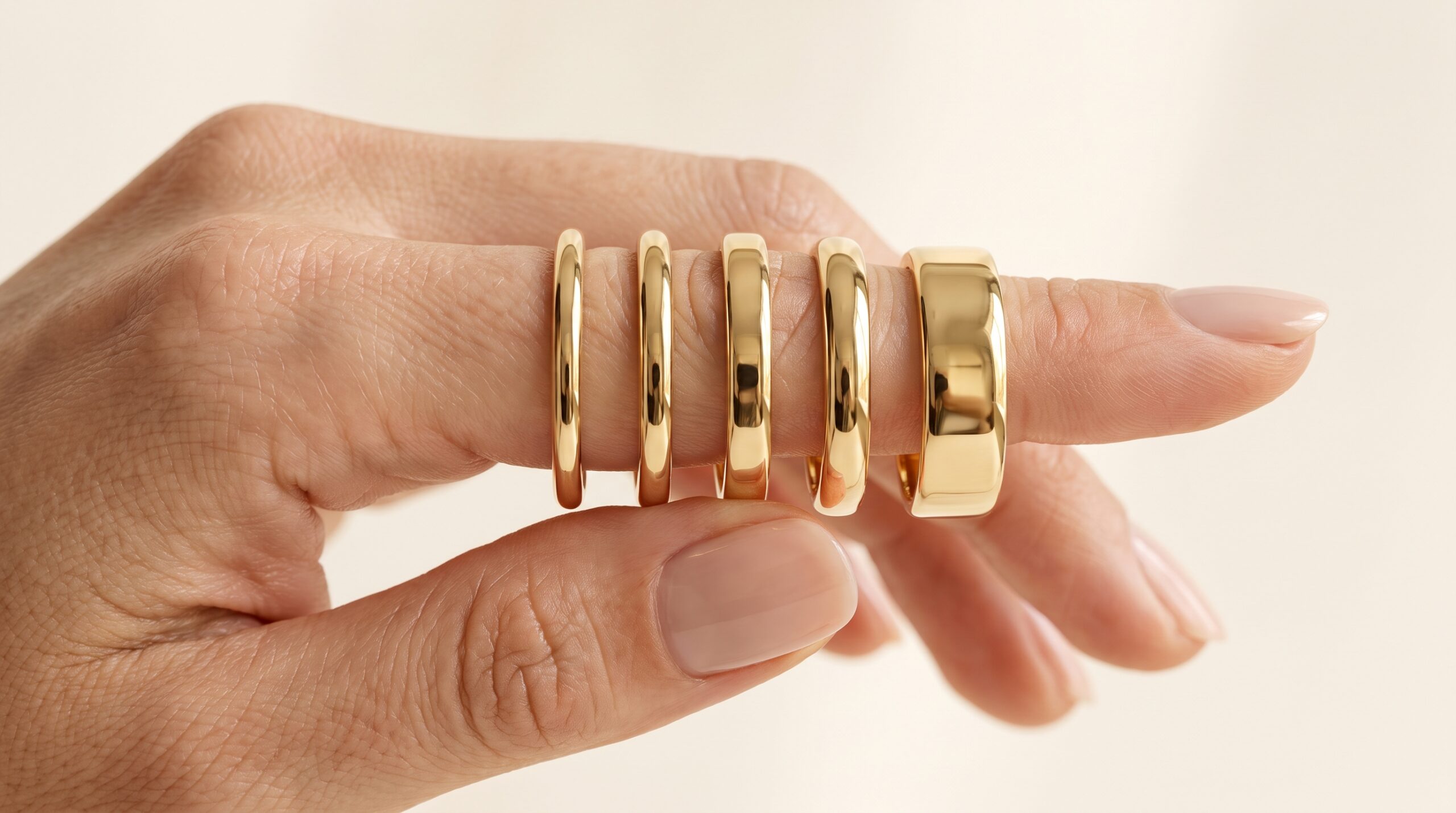
A 2mm band and an 8mm band sound like a minor difference on paper. On the hand, they’re almost different categories of ring. One reads as a thin line of metal. The other has real visual weight and covers a noticeable portion of the finger. Getting the width right matters as much as getting the metal or setting right, and it’s easy to underestimate from a product listing alone.
What Does Wedding Band Width Mean?
Width Is Measured in Millimeters
Width refers to the measurement across the ring’s shank, the band of metal that wraps around the finger. It’s measured in millimeters, from one edge of the band to the other. A 4mm band is 4 millimeters tall as it sits on the finger, not around its circumference.
Why Width Matters
Width changes how a ring looks, feels, and performs in daily use. A wider band covers more of the finger, which affects proportion and how the ring reads visually against the hand. It also affects comfort, since more surface area means more contact with the skin. Width plays into stability too: a wider band generally has more resistance to rotating around the finger than a very thin one. And it factors into stacking, since a wedding band worn alongside an engagement ring interacts differently at 2mm than it does at 6mm.
Common Wedding Band Widths Explained
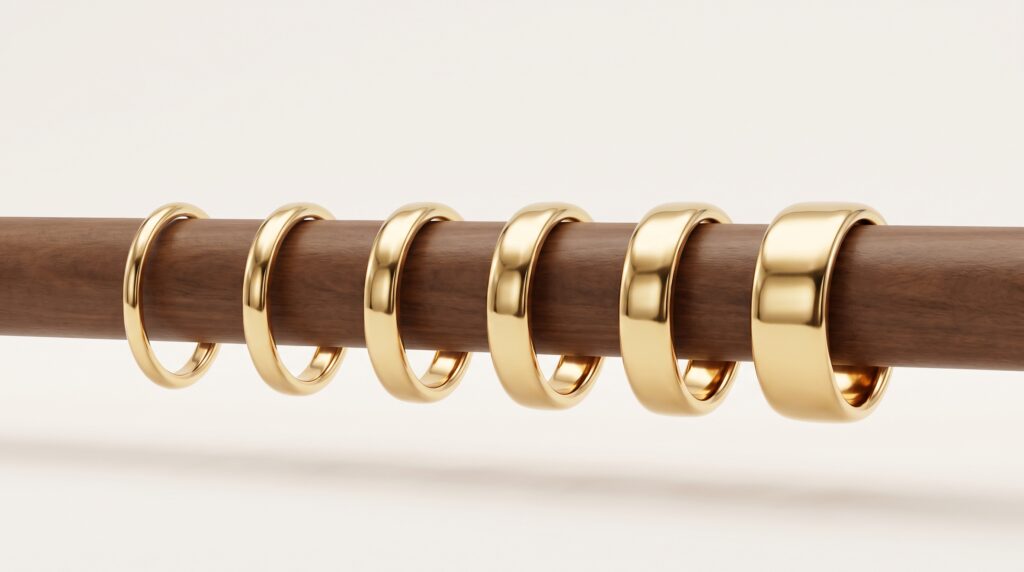
Narrow Bands: 1.5mm to 3mm
Narrow bands sit close to the finger and read as delicate. They work well for stacking with an engagement ring without overwhelming it, and they suit buyers who want a wedding band to feel like a supporting piece rather than a focal point. The tradeoff is that a narrower band has less surface contact with the finger, which can make it more prone to rotating out of position during the day.
Standard Bands: 4mm to 6mm
This range covers the most common middle ground. It has enough surface area to feel secure on the finger without dominating the hand visually. Most buyers who aren’t strongly drawn to either a minimal or a bold look end up somewhere in this range, because it works across a wide variety of hand sizes and styles.
Wide Bands: 7mm and Above
Wide bands make a stronger visual statement and tend to feel more substantial and secure on the finger, since more metal is in contact with the skin. They suit buyers who want the ring to have real presence, and they often work well on larger hands where a narrow band could look disproportionately thin. The tradeoff is that a wide band takes up more space between other rings and can feel bulky to a wearer who isn’t used to a heavier ring.
| Width Range | Look | Typical Tradeoff | Best For |
| Narrow (1.5mm to 3mm) | Delicate, subtle | Less surface contact, can rotate more | Stacking, petite proportions |
| Standard (4mm to 6mm) | Balanced | Works across most hand sizes | Buyers without a strong preference either way |
| Wide (7mm and above) | Bold, substantial | More surface contact, can feel bulky | Larger hands, buyers who want visual presence |
Wedding Band Width Guide by Hand Size
Petite Hands
On smaller hands, a narrower band tends to look proportionate, since a wide band can visually overwhelm a slim finger. This isn’t a hard rule, since personal style varies, but it’s a starting point worth trying on before assuming a specific width will work.
Average Hands
Standard widths in the 4mm to 6mm range tend to look balanced on average-sized hands without requiring much second-guessing. This is part of why that range is so common across retailers.
Larger Hands or Larger Knuckles
Wider bands often create better visual proportion on larger hands, and they can also make it easier to get a ring past a larger knuckle without needing a size that’s loose on the rest of the finger. A jeweler measuring for a band on a hand with prominent knuckles will often account for that difference directly.
Men’s vs Women’s Wedding Band Widths
Common Women’s Widths
Women’s wedding bands are commonly chosen in the 2.5mm to 4mm range, particularly when the band will be stacked with an engagement ring and shouldn’t visually compete with it.
Common Men’s Widths
Men’s wedding bands are commonly chosen in the 5mm to 8mm range, reflecting both larger average hand size and a preference for a band with more visual presence when worn alone.
Why These Are Guidelines, Not Rules
These ranges reflect common patterns, not requirements. Plenty of women choose wider bands for the presence they offer, and plenty of men prefer a narrower, more understated width. Hand size, personal style, and how the ring will be worn matter more than which category it’s “supposed” to fall into.
How Width Affects Comfort and Fit
Why Wider Bands Can Feel Tighter
A wider band puts more metal in contact with the finger, which means more surface area pressing against the skin at a given size. Two rings in the same numerical size, one narrow and one wide, can feel different on the same finger because the wider one contacts more of the finger’s width. This is why jewelers often recommend sizing a wider band slightly larger than a narrow one would need to be for the same finger.
Comfort-Fit vs Standard Fit
Comfort-fit refers to a ring with a rounded, domed interior rather than a flat one. The curved inside edge means less of the band’s interior surface touches the finger at any given point, which can reduce the feeling of tightness, particularly in wider bands where a flat interior would otherwise create more contact.
Court Profile and Flat Court Profile
A court profile has a rounded exterior and interior, giving the ring a smooth, comfortable feel similar to comfort-fit shaping. A flat court profile has a flat outer surface with a slightly rounded interior, offering a more modern, angular look on the outside while keeping some of the comfort benefit on the inside.
When to Size Carefully
Finger size shifts slightly with temperature and time of day, typically appearing a bit larger when warm and smaller when cold. It’s worth getting sized at a temperature and time similar to when the ring will most often be worn. This matters more with wider bands, where a small sizing miscalculation is more noticeable than it would be on a narrow band.
Wedding Band Width and Engagement Ring Stacking
How Stacking Changes Perceived Width
A band worn on its own reads differently than the same band worn next to an engagement ring. Two rings side by side add up visually, so a narrow wedding band can look more substantial once it’s paired with an engagement ring’s shank, and a wide band can start to feel crowded against a ring with its own wide setting.
Matching Engagement Ring Proportions
A wedding band doesn’t need to match the engagement ring’s width exactly, but it helps to consider the engagement ring’s shank width when choosing. A very wide wedding band next to a delicate, thin engagement ring can look mismatched, just as a very thin wedding band can get visually lost next to a substantial engagement ring setting.
Avoiding Rotation and Imbalance
Stacked rings can shift or rotate against each other over the course of a day, particularly if there’s a significant width difference between them. Trying the pairing on together before buying is the most reliable way to check whether the two rings sit flush and stay in place, rather than judging width and profile from photos alone.
Width, Durability, and Long-Term Wear
Narrow Bands and Bending Risk
A very narrow band has less metal supporting its shape, which can make it feel more delicate to the touch and slightly more prone to bending out of round with heavy impact compared to a wider band of the same metal and thickness. It’s also more likely to rotate on the finger during the day, simply because there’s less surface area holding it in place.
Wider Bands and Stability
More metal in contact with the finger generally means a wider band holds its position better and can feel more resistant to everyday knocks. That added stability comes with more bulk, which some wearers find comfortable and others find heavier than they’d like on a daily basis.
Annual Inspection
Rings worn every day are subject to gradual wear, and the American Gem Society recommends periodic professional inspection to catch thinning, shape changes, or structural wear before they become a problem, regardless of band width.
Cost Considerations by Width
Why Wider Bands May Cost More
A wider band uses more metal by volume than a narrower one in the same style and metal type, which typically means a higher material cost. The exact difference depends on the metal, the ring’s profile shape, and the retailer’s pricing structure, so it’s not possible to state a fixed percentage or dollar difference that applies universally.
Avoid Unsupported Cost Guarantees
Be skeptical of any claim promising an exact price increase per millimeter of width. Metal type, purity, and manufacturing method all affect the final cost, so the relationship between width and price varies by product rather than following one formula.
Balancing Budget and Comfort
Choosing a width based on price alone can backfire if the resulting ring doesn’t feel right on the hand. It’s worth deciding on a comfortable width range first, then comparing costs within that range, rather than choosing the narrowest option to save money if it isn’t the width that actually suits the hand or lifestyle.
Buying Wedding Bands Online by Width
Product Details to Look For
Check for the exact width in millimeters rather than a general size label, the profile type (court, flat court, or another shape), whether the ring is offered in comfort-fit, side-view images that show the band’s actual thickness, photos on a hand model for scale, and any reference measurements or size charts provided.
Red Flags
Be cautious of listings with no scale reference at all, only a single flat product photo with no side angle, vague descriptive terms like “slim” or “bold” without a millimeter measurement attached, and no information about profile shape or comfort-fit options.
Frequently Asked Questions
What is the most popular wedding band width?
There’s no single width that dominates across all buyers, since men’s and women’s preferences differ and personal style varies widely. Standard widths in the 4mm to 6mm range are common because they work across a broad range of hand sizes and don’t lean strongly toward either a minimal or bold look, which makes them a frequent default rather than a definitive most-popular choice.
Is 2mm too thin for a wedding band?
Not inherently. A 2mm band is a legitimate, commonly chosen width, particularly for buyers who want a delicate look or plan to stack it with an engagement ring without adding visual bulk. It will have less surface contact with the finger than a wider band, which can make it more prone to rotating during the day, but that’s a tradeoff rather than a flaw specific to that width.
Is 6mm or 8mm better for men?
Neither is objectively better. A 6mm band sits in the standard range and works well for most hand sizes without feeling overly bold. An 8mm band has more visual presence and can suit larger hands particularly well, but it will also feel heavier and cover more of the finger. The right choice depends on hand size and how much visual weight the wearer wants the ring to have.
Do wider bands fit tighter?
Often, yes, at the same numerical ring size. A wider band has more metal in contact with the finger, which can make it feel snugger than a narrow band sized the same way. This is why it’s common for jewelers to size a wide band slightly larger than they would size a narrow band for the identical finger.
What width is best for stacking?
Narrower widths, generally in the 2mm to 3mm range, tend to work well for stacking because they add to the overall look without competing with an engagement ring’s shank or setting. That said, the right stacking width also depends on the engagement ring’s own proportions, since a wedding band that’s too thin can get visually lost next to a substantial engagement ring.
What width works best with an engagement ring?
It depends on the engagement ring’s shank width and setting style. A wedding band that’s roughly proportionate to the engagement ring’s shank, rather than dramatically thinner or wider, tends to create the most balanced look when the two are worn together. Trying the pairing on in person is the most reliable way to judge this, since photos don’t always convey how two bands sit against each other.
What is comfort-fit?
Comfort-fit describes a ring with a rounded, domed interior rather than a flat one. The curved interior reduces the amount of the band’s surface that presses against the finger at any single point, which can make the ring feel less snug than a flat-interior band of the same width and size.
Should I try on different widths before buying?
Trying on a few different widths in person, even if the final ring is bought online, gives a much clearer sense of how a specific width feels and looks than measurements or product photos alone. Width differences of even 1mm or 2mm can change how a ring feels on the hand, and that’s difficult to judge accurately without direct comparison.