
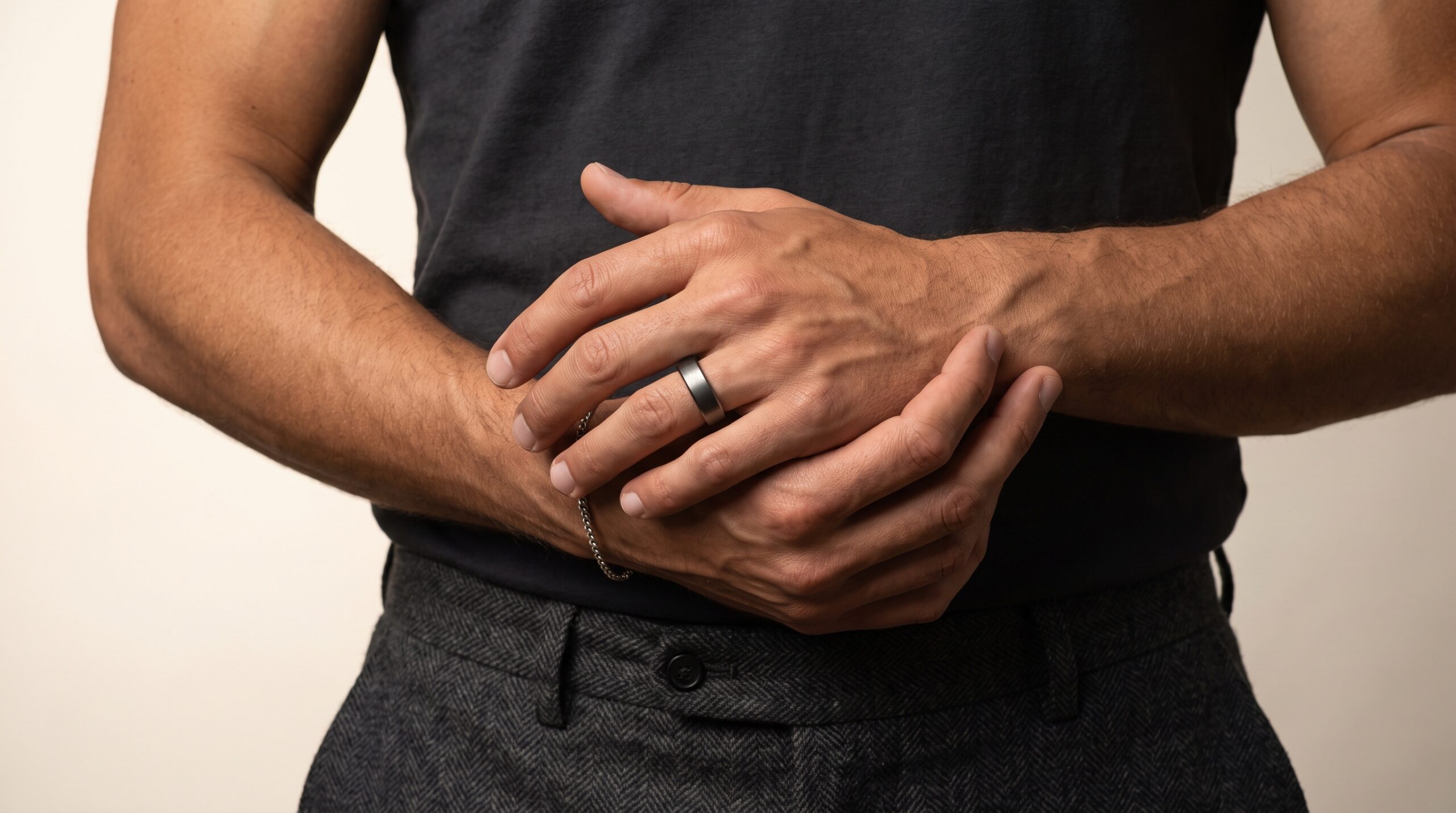
Tungsten and titanium wedding bands get lumped together as “durable alternative metals,” but they don’t behave the same way on your hand. Tungsten resists scratches better than almost anything else on the market. Titanium is a fraction of the weight and flexes instead of cracking under pressure. Neither fact makes one metal universally better. It makes them suited to different daily routines, different hands, and different tolerances for weight and wear.
This guide compares the two across the factors that actually affect how a ring feels and holds up over years of wear: hardness, impact behavior, weight, resizing, skin sensitivity, and finish.
Tungsten vs Titanium Wedding Bands at a Glance
| Feature | Tungsten | Titanium | What It Means for Buyers |
| Hardness | Very high (8.5-9.0 Mohs) | Moderate (5.5-6.0 Mohs) | Tungsten resists scratches far better |
| Weight | Heavy, substantial | Light, barely noticeable | Titanium suits buyers who dislike heavy jewelry |
| Impact behavior | Can crack or shatter under a hard blow | Bends or dents rather than breaking | Tungsten’s hardness comes with brittleness |
| Resizing | Not possible | Difficult, not always available | Sizing accuracy matters more with these metals |
| Hypoallergenic potential | Depends on binder metals used | Strong, in appropriate grades | Titanium is generally the safer bet for sensitive skin |
| Best lifestyle fit | Low-impact daily wear, office settings | Active work, sports, manual labor | Match the metal to what your hands actually do |
What Is a Tungsten Wedding Band?
Most tungsten rings aren’t pure tungsten. They’re tungsten carbide, a compound made by combining tungsten powder with carbon and a binder metal, then sintering it under heat and pressure into a solid ring blank. The result is one of the hardest materials used in jewelry, which is why tungsten carbide is also used in cutting tools and industrial drill bits.
Buyers gravitate toward tungsten for three reasons. It holds a polished finish for years without visible scratching. It has noticeable heft, which some wearers associate with quality. And it has a clean, modern look that suits both brushed and high-polish finishes.
Before choosing tungsten, know what you’re committing to. A tungsten ring cannot be resized, cut, or reshaped after manufacturing because the material is too hard for standard jewelry tools. It can also crack or shatter if struck hard enough, against a steering wheel in a crash, a barbell, or a piece of machinery. The binder metal used in the carbide, which is sometimes cobalt or nickel, can be a problem for buyers with metal allergies, so checking composition matters more than it does with a plain gold band.
Pros: exceptional scratch resistance, a polished appearance that lasts, substantial weight, and a lower price than platinum or palladium for a similar look.
Cons: cannot be resized, brittle under strong impact, binder content needs to be checked for allergy risk, and not ideal for jobs involving heavy machinery or repeated impact.
What Is a Titanium Wedding Band?
Titanium is the metal aerospace engineers use when they need strength without weight, and the same properties that make it useful in aircraft frames and surgical implants make it a practical ring material. It’s roughly 40% lighter than steel for comparable strength, and grades used in jewelry (commonly grade 5 titanium alloy) are strong enough to hold their shape under normal daily wear.
Buyers who try on a titanium ring after handling a gold or tungsten one usually notice the weight difference immediately. That lightness is the main draw, along with titanium’s flexibility. Rather than cracking on impact, titanium is more likely to dent or bend slightly, which for many wearers is a preferable failure mode. Titanium in suitable grades also has a strong track record for hypoallergenic wear, which is part of why it’s used in medical implants.
The tradeoff is surface durability. Titanium is noticeably softer than tungsten, so it picks up visible scratches faster, especially with daily contact against tools, gym equipment, or rough surfaces. Resizing a titanium ring is technically possible in some cases but is difficult and not something every jeweler will attempt, so it shouldn’t be treated as a fallback plan. Buyers should also confirm the specific alloy grade, since not all titanium used in cheaper rings is the aerospace or medical grade associated with hypoallergenic performance.
Pros: lightweight comfort, strong hypoallergenic potential in the right grade, better resistance to cracking, and a practical choice for people who work with their hands.
Cons: shows surface scratches more readily than tungsten, resizing is difficult and not guaranteed, alloy grade needs to be disclosed and verified, and some wearers find it feels too light for a wedding band.
Scratch Resistance: Which Metal Holds Its Finish Better?
Tungsten wins this comparison by a wide margin. On the Mohs hardness scale, which measures a material’s resistance to being scratched by another material, tungsten carbide sits around 8.5 to 9.0. Titanium sits around 5.5 to 6.0. For reference, a material with a higher Mohs rating will scratch one with a lower rating, which is why a tungsten ring can be worn for years and still look freshly polished, while a titanium ring picks up fine surface marks within months of regular wear. The International Gem Society’s overview of Mohs hardness explains how the scale works and why it’s a useful, if imperfect, predictor of everyday scratch resistance.
| Metal | Scratch Resistance | What Buyers Should Expect |
| Tungsten | Very high | Maintains its polish through years of daily wear |
| Titanium | Moderate | Develops visible surface wear over time |
Scratch resistance and durability aren’t the same thing, though, and that distinction trips up a lot of first-time buyers.
Impact Resistance: Hardness Is Not the Same as Toughness
A material that resists scratches isn’t automatically tough. Hardness measures resistance to surface abrasion. Toughness measures resistance to cracking or breaking under a sudden force. Tungsten carbide scores high on the first and low on the second, which is the opposite of what most buyers assume when they hear “durable.”
Tungsten behaves something like a ceramic tile: very difficult to scratch, but capable of cracking or shattering if it takes a hard direct hit, such as getting caught in machinery or slamming into a hard surface. Titanium behaves more like a lightweight metal tool. It picks up nicks and surface marks more easily, but it flexes and dents rather than breaking outright, which makes it more forgiving in situations involving repeated impact.
This is the tradeoff that should drive the decision for anyone working with their hands, playing contact sports, or operating equipment regularly. Scratch resistance matters less than what happens when the ring actually gets hit.
Weight and Comfort: Which Ring Feels Better?
Tungsten rings feel noticeably heavier on the hand than titanium rings of the same size, largely because tungsten carbide is much denser. Some buyers want that weight; it reads as substantial and deliberate. Others find it distracting, especially if they’ve never worn a ring before.
| Preference | Better Fit | Why |
| Lightweight feel | Titanium | Easier for all-day wear, especially for first-time ring wearers |
| Heavy, substantial feel | Tungsten | More noticeable weight on the hand |
| Active lifestyle | Titanium | Less mass to notice during movement or exercise |
| Larger knuckles | Tungsten | Some wearers find the added weight feels more stable |
Comfort-fit construction matters for both metals. A comfort-fit ring has a slightly rounded interior rather than a flat one, which reduces friction against the finger and makes a rigid metal easier to wear for long stretches. Since neither tungsten nor titanium can be adjusted easily after the fact, comfort-fit design is one of the few variables you can control before ordering.
Resizing: What Buyers Need to Know Before Ordering
Sizing accuracy matters more with tungsten and titanium than it does with gold or platinum, because neither material forgives a mistake. Tungsten carbide cannot be resized under any circumstances; the hardness that makes it scratch-resistant also makes it impossible to cut, stretch, or reshape with standard jewelry tools. Titanium can sometimes be resized, but the process is difficult, not every jeweler offers it, and it isn’t something to count on.
Before ordering either metal online:
- Get professionally sized in person rather than estimating from an old ring, since finger size can shift over time.
- Confirm whether the retailer’s sizing chart accounts for comfort-fit construction, which can fit differently than a standard flat-band size.
- Check the return, exchange, and replacement policy before you buy, not after.
- Account for finger swelling and band width. Wider bands generally fit tighter than narrow ones at the same stated size.
- Don’t assume a size from years ago still applies.
Hypoallergenic Considerations and Skin Sensitivity
Titanium has a strong track record for hypoallergenic wear, which is part of why it’s used in medical and dental implants. In the right grade, it’s often preferred by buyers with known metal sensitivities. Tungsten carbide rings are typically bonded with a binder metal, which can include cobalt or nickel, both common allergy triggers. A tungsten ring can still be a reasonable choice for sensitive skin, but only if the binder content is disclosed and verified as cobalt-free or nickel-free.
Neither metal should be marketed as universally hypoallergenic. Whether a specific ring is suitable depends on its exact composition, not just the base metal name on the product listing.
Before buying, check:
- Is the titanium grade disclosed on the product page?
- Is the tungsten binder content specified?
- Is the ring labeled cobalt-free or nickel-free, if that matters to you?
- Are any allergy-related claims backed by actual material specifications rather than general marketing language?
Appearance and Style Differences
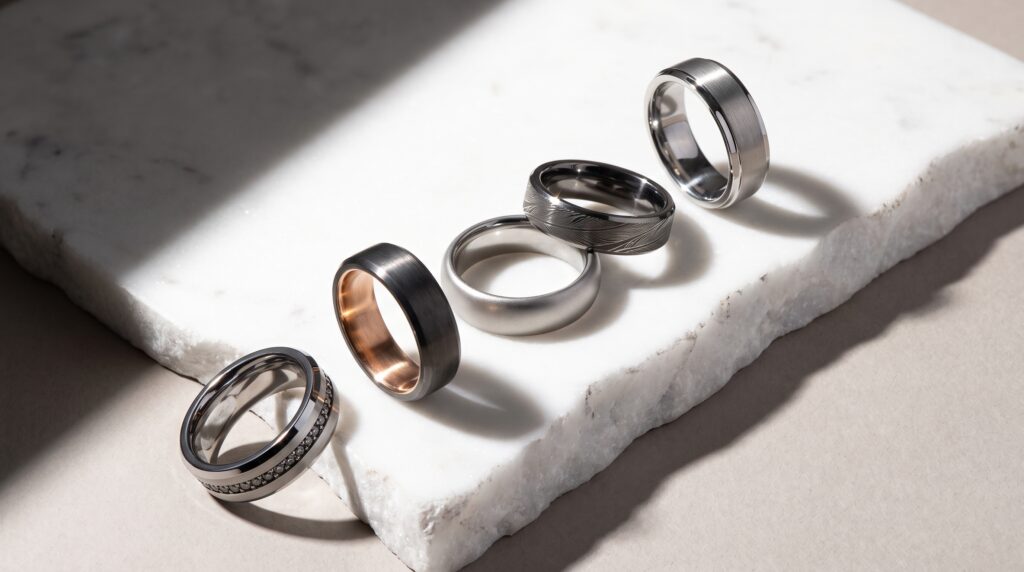
Tungsten typically reads as a darker, more saturated gray with a hard polished shine that holds up well over time. Titanium tends toward a lighter, more matte gray with a more understated, technical look. Both metals are available in brushed, polished, matte, and black-coated finishes, along with beveled edges and inlay details in wood, carbon fiber, or precious metal accents.
Black finishes on either metal are usually achieved through a PVD (physical vapor deposition) coating, a thin layer bonded to the surface. PVD coatings look sharp out of the box but are a surface treatment, not a solid-through color, and can show wear at high-friction points over years of use.
Care and Maintenance
Both metals are low-maintenance compared to precious metals that require regular professional polishing. Mild soap and water handle routine cleaning for either one.
| Care Factor | Tungsten | Titanium |
| Cleaning | Mild soap and water | Mild soap and water |
| Scratches | Highly resistant | More visible over time |
| Impact | Avoid hard blows | More flexible, dents rather than cracks |
| Coatings | May wear if coated | May wear if coated |
Tungsten vs Titanium: Which Is Better for Your Lifestyle?
| Buyer Need | Recommended Metal | Reason |
| Maximum scratch resistance | Tungsten | Holds its polish through years of daily wear |
| Lightweight comfort | Titanium | Minimal weight on the hand |
| Manual work or active lifestyle | Titanium | More flexible under impact, less likely to shatter |
| Substantial ring feel | Tungsten | Noticeably heavier |
| Sensitive skin concerns | Titanium | Strong hypoallergenic track record in verified grades |
| Lower-impact office wear | Tungsten | Scratch resistance matters more than flexibility here |
| Long-term sizing flexibility | Neither | Consider gold or platinum if resizing is a priority |
What to Check Before Buying Tungsten or Titanium Online
Before ordering either metal from an online retailer, confirm:
- The specific metal grade (for titanium) or binder composition (for tungsten)
- Whether comfort-fit construction is used and how it affects sizing
- The return policy and whether it covers sizing mistakes
- Whether resizing or exchange is offered, and under what conditions
- Whether there’s a warranty covering cracking or impact damage
- What finish and coating process was used, and whether the coating is guaranteed
- What happens if the exact style is discontinued and a future replacement is needed
Frequently Asked Questions
Is tungsten better than titanium?
Neither metal is better in an absolute sense. Tungsten is harder and holds a polished finish longer, which suits buyers who prioritize a scratch-free look and don’t mind extra weight. Titanium is lighter and more resistant to cracking, which suits buyers who are active or work with their hands. The right choice depends on which tradeoff matters more to the person wearing the ring daily.
Does tungsten really shatter?
Tungsten carbide can crack or shatter if it takes a hard, direct impact, such as getting caught in machinery or striking a hard surface at speed. This happens because the same hardness that resists scratching also makes the material brittle rather than flexible. It’s not a common everyday occurrence, but it’s a real risk for anyone in manual labor, contact sports, or jobs involving heavy equipment.
Does titanium scratch easily?
Titanium scratches more easily than tungsten because it sits lower on the Mohs hardness scale, roughly 5.5 to 6.0 compared to tungsten’s 8.5 to 9.0. It will pick up fine surface marks from daily contact with tools, gym equipment, or rough surfaces faster than tungsten does. Some wearers polish out light scratches over time, though this depends on the specific finish and coating.
Can tungsten rings be resized?
No. Tungsten carbide is too hard for standard jewelry resizing tools to cut, stretch, or reshape. Getting an accurate size before ordering is the only way to avoid an unwearable ring, since there’s no fallback adjustment available afterward.
Can titanium rings be resized?
Sometimes, but it’s difficult and not every jeweler offers the service. Titanium’s strength and hardness make it more resistant to standard resizing methods than gold or silver. Treat accurate initial sizing as essential rather than assuming resizing will be available later.
Which metal is better for active jobs?
Titanium generally holds up better for active jobs and manual labor because it bends or dents under impact rather than cracking. Tungsten’s scratch resistance is appealing, but its brittleness under hard impact makes it a riskier choice for anyone regularly working with tools, machinery, or in physically demanding conditions.
Which metal is better for sensitive skin?
Titanium, in medical or aerospace grade, has a strong track record for hypoallergenic wear and is commonly used in surgical implants for that reason. Tungsten carbide rings use a binder metal that can include cobalt or nickel, both known allergy triggers, so buyers with sensitivities should confirm the binder composition before purchasing rather than assuming the ring is safe.
Which ring feels heavier?
Tungsten feels noticeably heavier than titanium at the same ring size, because tungsten carbide is significantly denser. Buyers who want a ring with substantial presence on the hand generally prefer tungsten, while those who dislike the feel of jewelry often prefer titanium’s lighter weight.
Are black tungsten or titanium rings permanent in color?
Black finishes on both metals are typically achieved through a PVD coating, a thin bonded layer rather than a solid-through color. The coating can show wear at points of repeated friction over years of use, so it shouldn’t be treated as permanent regardless of which base metal it’s applied to.
Which one lasts longer?
Both metals can last decades with normal care, but “lasting” means different things for each. Tungsten holds its polished appearance longer because it resists scratching, but it carries a small risk of cracking under hard impact. Titanium is less likely to crack but will show more surface wear over the same period. Neither should be resized as a long-term fix, so getting the initial size right matters more than the metal choice itself.