
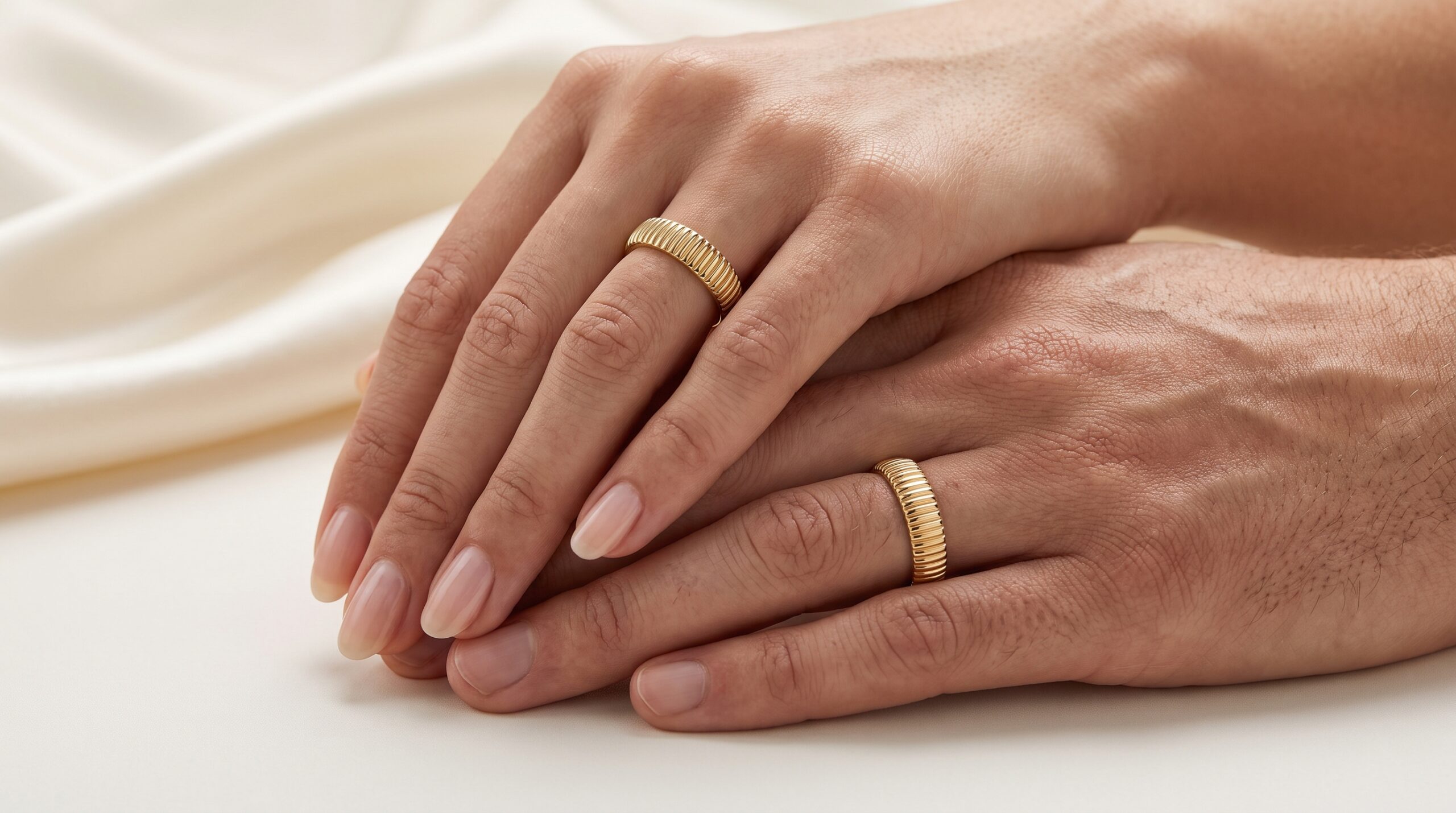
Yellow gold is the wedding band metal most people picture when they think of a wedding ring, but that familiarity hides a real decision: which karat. 10K, 14K, and 18K all look similar under store lighting, yet they differ enough in color, hardness, and price that picking the wrong one can mean a ring that scratches faster than expected or one that costs more than it needed to for the durability you actually wanted.
This guide walks through what karat means, how 10K, 14K, and 18K compare, and how yellow gold stacks up against white gold and platinum, so the choice comes down to your priorities rather than guesswork.
What Is a Yellow Gold Wedding Band?
Pure gold, 24K, is too soft for a ring that gets worn every day. It dents and scratches easily under normal contact, so jewelers alloy it with other metals, typically copper and silver, to increase hardness and give the ring enough structural integrity for decades of wear. That alloy mixture is also what determines the exact shade of yellow: more copper pushes the color warmer, while silver can lighten and cool it slightly.
The karat number stamped inside the band tells you how much of that alloy is actual gold. Higher karat means more gold and a richer color, but also a softer metal, since gold itself is the softest component in the mix. That tradeoff between color and hardness is the central decision in choosing a yellow gold band, and it’s why “more gold” doesn’t automatically mean “better ring” for every buyer.
What Does Karat Mean in Yellow Gold?
Karat measures the proportion of pure gold in the alloy, out of 24 total parts. 10K gold is 41.7% pure gold. 14K is 58.3%. 18K is 75%. The remaining percentage in each case is made up of alloy metals that add strength and, in yellow gold specifically, contribute to the final color.
| Karat | Gold Content | Color | Durability | Best For |
| 10K | 41.7% | Paler yellow | Most durable of the three | Budget-conscious or active buyers |
| 14K | 58.3% | Balanced yellow | Strong for daily wear | Everyday wedding bands |
| 18K | 75% | Rich, deep yellow | Softer, needs more care | Heirloom pieces or lower-impact wear |
None of these is objectively the “right” karat. The International Gem Society’s overview of relative material hardness helps explain why gold, even at lower karats, sits well below harder jewelry materials like tungsten carbide or sapphire on a hardness scale, which is part of why band thickness and daily wear conditions matter regardless of which karat you choose.
10K vs 14K vs 18K Yellow Gold Wedding Bands
10K is the most durable of the standard karats because it has the highest proportion of alloy metal relative to gold. It’s also the most affordable and holds up well to scratches and dents, though its color runs noticeably paler than higher karats, closer to a muted gold than the warm tone most people associate with “yellow gold” jewelry. It’s a reasonable choice for buyers prioritizing budget and resistance to daily wear over the deepest possible color.
14K sits in the middle and is the most common choice for wedding bands specifically because it balances the two priorities that matter most for daily wear: a warm, recognizably gold color and enough hardness to withstand years of contact with tools, water, and other surfaces. If you’re not sure which karat fits your life, 14K is the reasonable default rather than a compromise.
18K has the richest, deepest yellow color of the three because it contains the most gold, but that same gold content makes it the softest of the standard karats. An 18K band is more prone to fine scratches and, in thinner designs, more prone to bending than 10K or 14K. It suits buyers who prioritize color above all else, or who plan to wear the ring in lower-impact conditions, and who are willing to do more frequent maintenance to keep the surface looking fresh.
Does Yellow Gold Fade?
No, not in the way a plated metal can. Yellow gold’s color comes from the alloy itself, meaning the copper and silver mixed into the gold, not from a surface coating that can wear away. White gold, by comparison, often relies on a rhodium plating for its bright white finish, and that plating does wear down over years of contact, which is why white gold sometimes needs replating. Yellow gold has no equivalent coating to lose.
What can change is surface luster. Scratches and general wear can dull a yellow gold band’s shine over time, and periodic polishing restores that shine, but the underlying yellow color itself stays intact because it’s mixed into the metal rather than applied to its surface.
Is Yellow Gold Durable Enough for Daily Wear?
Yes, particularly at 14K, which is the karat most commonly recommended for wedding bands worn every day. Durability comes down to a few interacting factors rather than karat alone.
| Factor | Why It Matters |
| Karat | Higher karat means more gold and a softer metal |
| Thickness | A thicker band resists bending better than a thin one, especially at higher karats |
| Lifestyle | Manual work, sports, and frequent hand-washing all increase wear exposure |
| Finish | Polished surfaces show scratches more visibly than brushed or matte finishes |
An 18K band in a thin design worn by someone doing manual labor will show wear faster than a 10K band worn in an office setting. Karat is one variable among several, not the only one that determines how a ring holds up.
Yellow Gold vs White Gold vs Platinum
| Feature | Yellow Gold | White Gold | Platinum |
| Color | Warm yellow | Bright white, usually plated | Natural white |
| Maintenance | Occasional polishing | May require rhodium replating | Develops a natural patina |
| Weight | Lighter than platinum | Lighter than platinum | Heaviest of the three |
| Durability | Depends on karat | Depends on alloy | Very durable, retains mass when scratched |
| Style feel | Classic, warm | Modern white metal | Premium, substantial |
None of these three metals is a straightforward upgrade over the others. Yellow gold offers warmth and a color that doesn’t rely on any surface treatment. White gold gives a similar bright look to platinum at a lower cost, with periodic replating as the tradeoff. Platinum costs more and weighs more, but needs the least color-related maintenance over time. The right choice depends on which of those tradeoffs you’d rather live with.
Comfort, Fit, and Resizing
Yellow gold is lighter than platinum at the same dimensions, which some wearers prefer, especially if they haven’t worn a ring regularly before. A comfort-fit interior, where the inside of the band is slightly rounded rather than flat, makes any metal easier to wear for long stretches, and it’s worth asking about specifically when comparing bands online.
One practical advantage yellow gold has over platinum and tungsten: it’s generally easier to resize. Gold’s malleability allows jewelers to adjust the band size up or down within a reasonable range using standard tools, which isn’t true of tungsten (impossible to resize) or platinum (possible but more resource-intensive due to its density and higher melting point).
Before buying, it’s worth asking a few direct questions: What width actually feels comfortable on your hand? Is the band comfort-fit or standard-fit? Is the karat appropriate for how you’ll wear it day to day? Can it be resized later if needed? Is the band thick enough to hold its shape over years of wear?
Is Yellow Gold Good for Diamond Wedding Bands?
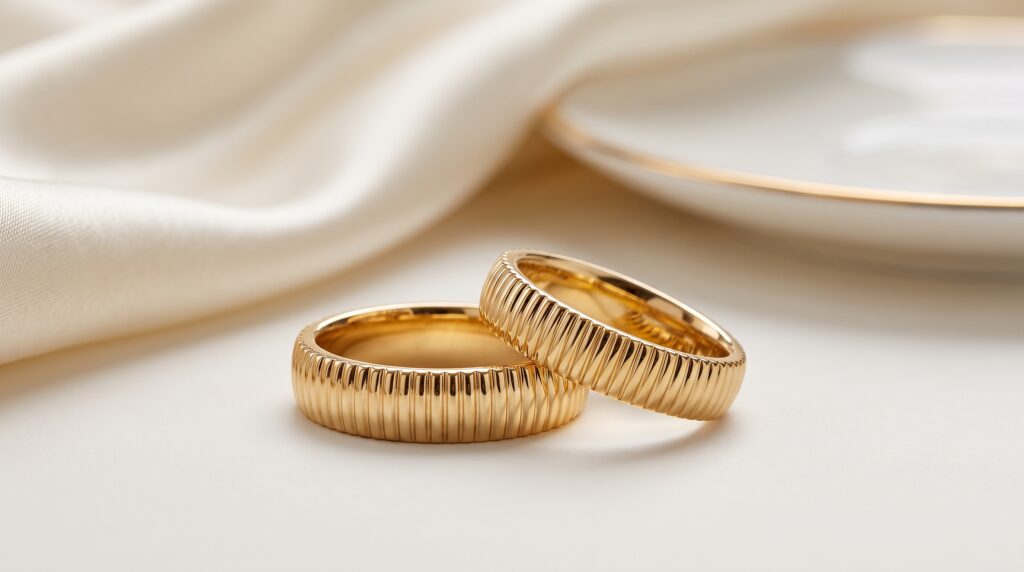
Yellow gold works well for diamond settings, and it’s a traditional pairing that predates white metal wedding jewelry by a long stretch. What matters more than the metal choice is the construction: prong security, adequate band thickness around the setting, and proper alignment of the stone. Softer, higher-karat gold in particular needs sufficient thickness around a diamond setting to keep prongs from loosening over years of wear.
Before buying a yellow gold diamond band, check that the prongs are secure with no visible gaps around the stone, confirm the band has enough thickness to support the setting long-term, and look for smooth, even finishing around the diamond. For any diamond above a minimal carat weight, ask whether the stone comes with grading documentation from a recognized laboratory such as the Gemological Institute of America, which evaluates cut, color, clarity, and carat weight against standardized criteria.
How to Care for a Yellow Gold Wedding Band
Clean the ring weekly with mild soap and warm water to remove everyday buildup from lotion, soap residue, and skin oils. Periodic polishing, whether at home with a soft jewelry cloth or professionally, restores shine that dulls from daily surface wear. Avoid exposing the ring to chlorine, since chlorine can weaken gold alloys over repeated exposure, particularly in pools and hot tubs. An annual professional inspection catches loose prongs or thinning bands before they become a real problem. Storing the ring separately from other jewelry reduces surface-to-surface contact that causes avoidable scratching.
What to Check Before Buying Yellow Gold Online
Confirm the karat is clearly listed and that a visible 10K, 14K, or 18K hallmark is stamped inside the band. Alloy details should be disclosed, not just the karat number, since the specific mix of copper and silver affects both color and skin sensitivity for some wearers. Width and thickness should be listed in millimeters rather than described vaguely. Look for clear, well-lit product images that show the actual finish rather than a rendering. Review the return and resizing policy before ordering, and if the band includes a diamond, check whether grading documentation is provided.
Be cautious of listings with no visible karat hallmark, claims of 24K gold marketed as suitable for daily-wear wedding bands (pure gold is too soft for that use), no alloy information at all, missing thickness or width details, or vague color descriptions that don’t specify karat.
A yellow gold wedding band chosen with the right karat for your lifestyle, adequate thickness, and clear sizing information will hold up for decades. The karat that’s “best” is the one that matches how you’ll actually wear the ring, not the one with the highest gold content.
Frequently Asked Questions
Is 14K or 18K yellow gold better for wedding bands?
Neither is universally better. 14K balances durability and color, making it a practical choice for daily wear across most lifestyles. 18K has a richer, deeper yellow color but is softer, so it scratches more easily and may need more frequent polishing to maintain its finish. The better choice depends on whether you prioritize color depth or lower-maintenance durability.
Does yellow gold fade over time?
No. Yellow gold’s color comes from the alloy mixed into the metal itself, not a surface coating, so it doesn’t fade the way plated white gold can lose its rhodium finish. What can happen is a dulling of surface shine from scratches and daily wear, which periodic polishing restores without affecting the underlying color.
Is yellow gold durable enough for everyday wear?
Yes, particularly at 14K, which is commonly recommended specifically for daily-wear wedding bands. Durability depends on more than karat alone: band thickness, lifestyle, and finish all affect how quickly a ring shows wear. A well-constructed 14K band in adequate thickness holds up well to years of regular use.
Can yellow gold wedding bands be resized?
Yes, and gold is generally easier to resize than many alternative metals like tungsten or titanium. A jeweler can adjust the band size within a reasonable range using standard tools, which makes yellow gold a practical choice for anyone uncertain about long-term sizing changes.
Is 10K yellow gold good for wedding bands?
10K is a reasonable choice for buyers who prioritize durability and budget over the deepest possible gold color. It’s the most scratch- and dent-resistant of the standard karats because it contains the highest proportion of alloy metal, though its color runs paler than 14K or 18K.
Is 18K yellow gold too soft?
Softer than 10K or 14K, yes, but not too soft to wear daily if the band is constructed with adequate thickness. Thin 18K designs are more prone to bending and surface scratching than thicker ones, so buyers drawn to 18K for its color should pay attention to band thickness and expect more frequent polishing over the ring’s lifetime.
How do I care for a yellow gold wedding band?
Clean it weekly with mild soap and warm water, polish it periodically to restore shine, and avoid chlorine exposure from pools or hot tubs, which can weaken the alloy over repeated contact. An annual professional inspection helps catch loose prongs or thinning metal before they become a real issue, and storing the ring separately from other jewelry reduces scratches from surface contact.
Is yellow gold good for diamond settings?
Yes. Yellow gold is a traditional and practical choice for diamond wedding bands, provided the setting is constructed with adequate band thickness and secure prongs. The metal choice matters less than the quality of the setting itself, so check prong security and band thickness around the stone rather than assuming the metal alone guarantees a secure setting.
How does yellow gold compare with platinum?
Yellow gold is lighter, less expensive, and offers a warm color that platinum doesn’t replicate. Platinum is heavier, more expensive, and develops a natural patina rather than losing color over time, while also being generally more resistant to structural wear. Neither is a strict upgrade over the other. The choice comes down to whether you prefer a warm or white metal and how much you’re willing to pay for platinum’s added weight and durability.
Can yellow gold cause skin sensitivity?
It’s possible, depending on the specific alloy metals used. Some people react to nickel, which occasionally appears in gold alloys, though it’s more commonly associated with white gold than yellow gold. If you have known metal sensitivities, ask the retailer which alloy metals are used in the specific karat you’re considering rather than assuming all yellow gold is equally safe for sensitive skin.