
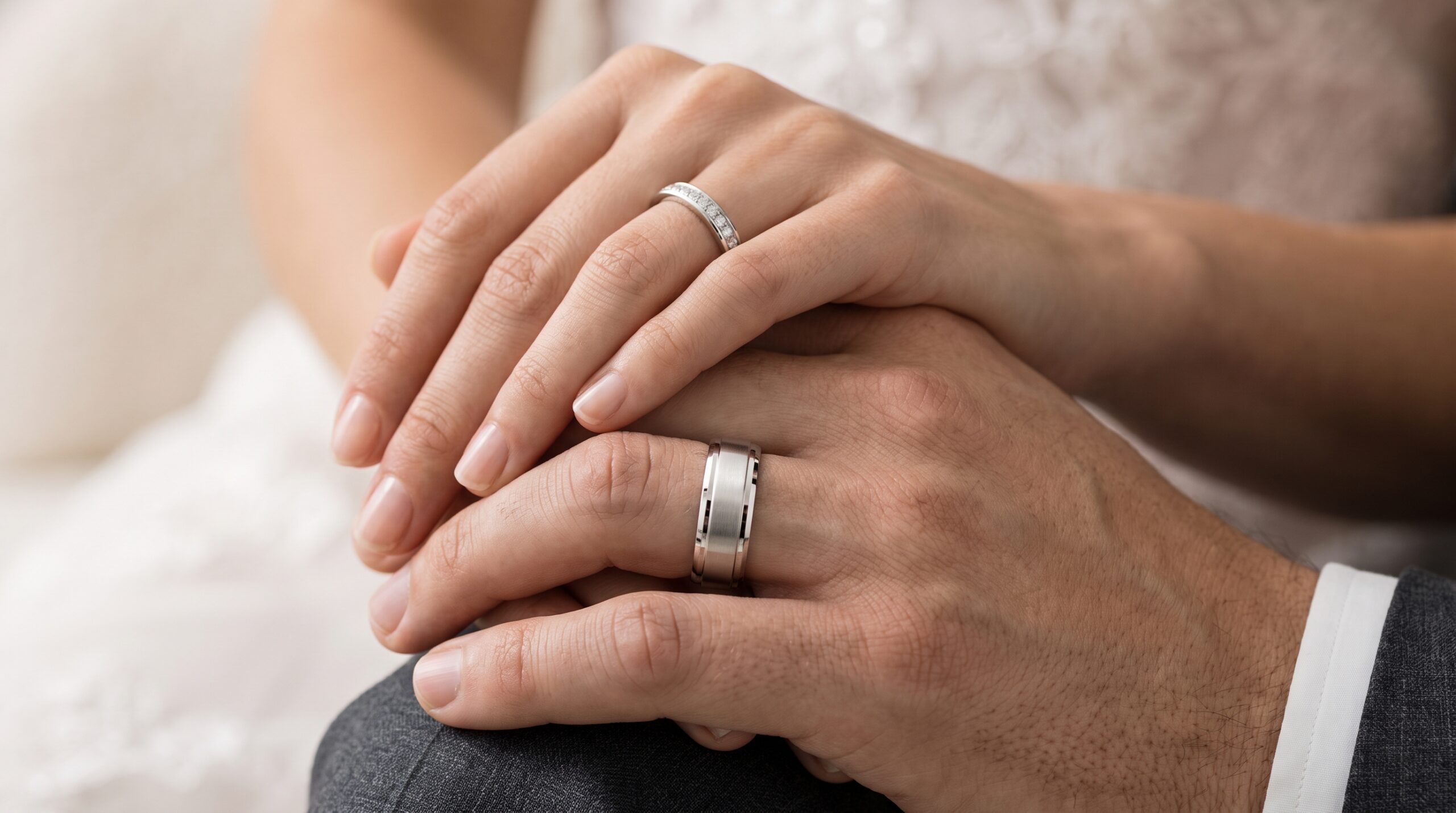
White gold looks a lot like platinum sitting in a display case, and that’s exactly the confusion that trips up most buyers. It isn’t. White gold gets its bright white shine from a plating process, not from the metal itself, and understanding that one fact changes how you should think about karat, maintenance, and what to expect five or ten years into wearing the ring.
This guide explains what white gold actually is, how 14K compares with 18K, what rhodium plating does and doesn’t do, and what ongoing care looks like once the ring leaves the store.
What Is a White Gold Wedding Band?
White gold starts as pure gold, which is naturally yellow, alloyed with white-toned metals such as palladium, nickel, silver, or zinc to shift the color toward a paler, cooler tone. Even with that alloying, the resulting metal usually isn’t a bright, reflective white on its own. It tends to land somewhere between pale yellow and a soft gray, depending on the specific alloy mix.
To get the crisp white shine most buyers picture when they think of white gold, jewelers apply a rhodium plating, a thin surface layer of a bright white metal from the platinum family. That plating is what creates the polished, platinum-like look, and it’s a separate step from the base alloy underneath. This is the core distinction between white gold and platinum: platinum is naturally white all the way through, while white gold’s brightness comes from a coating applied after the ring is formed.
What Does Karat Mean in White Gold?
Karat measures how much of the alloy is pure gold, out of 24 total parts. 14K white gold contains 58.3% gold, with the remainder made up of white alloy metals. 18K contains 75% gold. As with any gold alloy, more gold generally means a softer metal, since gold itself is softer than the metals it’s mixed with.
| Karat | Gold Content | Durability | Appearance | Best For |
| 14K | 58.3% | Stronger for daily wear | Bright when rhodium plated | Everyday wedding bands |
| 18K | 75% | Softer | Richer base tone, bright when plated | Lower-impact wear or thicker designs |
Both karats look essentially identical once plated, since the rhodium finish sits on top of the base alloy and masks most of the underlying color difference. The real distinction between them shows up in durability and, eventually, in how the metal ages once the plating starts to wear thin.
14K vs 18K White Gold Wedding Bands
14K white gold contains more alloy metal relative to gold, which makes it harder and generally more practical for a ring worn every day. It’s also usually more affordable than 18K. For buyers who want a durable daily-wear band and don’t have a strong reason to prioritize higher gold content, 14K is the more practical default.
18K white gold contains more pure gold, which some buyers associate with higher quality or a more “authentic” gold feel, but that additional gold content comes at the cost of softness. An 18K band is more prone to surface wear and, in thin designs, more prone to bending than 14K. It suits buyers who want maximum gold purity and are willing to take more care with the ring, or who choose a thicker band design to offset the reduced hardness.
What Is Rhodium Plating?
Rhodium plating is a thin surface layer of rhodium, a metal in the platinum family known for its bright white color and reflective shine. It’s applied to white gold jewelry specifically to create the crisp white finish that the base alloy alone doesn’t provide.
Rhodium plating does a few things well. It gives the ring a brighter, whiter look than the base alloy would have on its own. It resists surface dullness better than unplated gold. And it creates a finish that closely matches the visual brightness of platinum or other white metals, which is part of why white gold has become a popular, lower-cost alternative to platinum.
It also comes with expectations that buyers should know upfront. The plating is a surface layer, not a permanent part of the metal, so it wears down with friction and contact over time. As it thins, the base alloy’s true color, that paler yellow or grayish tone, can start to show through, especially at points of high contact like the underside of the band. Resizing the ring will typically remove some or all of the plating in the affected area, meaning a fresh coat of rhodium is usually needed afterward.
How Often Does White Gold Need Replating?
There’s no fixed schedule, because plating wear depends on several variables specific to how the ring is worn.
| Factor | How It Affects Replating |
| Daily wear | More frequent friction wears the plating down faster |
| Ring width | Areas of high contact on the band may show wear sooner than others |
| Skin chemistry | Some wearers’ skin chemistry affects how quickly the finish dulls |
| Lifestyle | Active daily use, manual work, or frequent hand-washing increases wear |
| Resizing | Almost always requires replating afterward |
Some wearers go two to three years before noticing enough wear to want a replating. Others, particularly those with more active hands-on lifestyles, may notice it sooner. This is a normal part of owning a white gold ring rather than a sign of poor quality, and most jewelers offer replating as a routine service.
Is White Gold Durable Enough for Daily Wear?
Yes, white gold is one of the more common metals used specifically for daily-wear wedding bands, and 14K in particular strikes a reasonable balance of strength and cost.
| Durability Factor | Why It Matters |
| Karat | Affects how soft or hard the base metal is |
| Alloy composition | Influences both strength and skin sensitivity |
| Rhodium plating | Affects surface appearance, not structural strength |
| Band thickness | Supports long-term shape and resists bending |
| Lifestyle | Determines how much wear the ring is exposed to |
It’s worth separating two different kinds of durability here. The base metal’s structural strength, which depends on karat and alloy, determines whether the ring holds its shape over decades. The rhodium plating’s durability, which is much shorter-lived, determines how long the ring keeps its bright white finish before needing maintenance. A well-made 14K white gold band can last a lifetime structurally while still needing periodic replating to stay looking fresh.
White Gold vs Platinum vs Yellow Gold
| Feature | White Gold | Platinum | Yellow Gold |
| Color | Bright white when plated | Naturally white | Warm yellow |
| Maintenance | Requires periodic replating | No rhodium plating needed | Polishing as needed |
| Weight | Lighter than platinum | Heaviest | Lighter than platinum |
| Skin sensitivity | Depends on alloy, nickel is a concern for some | Often suitable in high-purity grades | Depends on alloy |
| Cost profile | Usually less than platinum | Highest | Depends on karat |
| Best for | A modern white-metal look at a lower cost than platinum | Long-term natural white color with minimal upkeep | Classic, warm traditional style |
White gold isn’t a downgrade from platinum, it’s a different tradeoff. You get a similar bright white appearance at a lower upfront cost, in exchange for periodic replating that platinum doesn’t require. Whether that tradeoff makes sense depends on your budget and how much ongoing maintenance you’re willing to take on.
White Gold and Skin Sensitivity
Some white gold alloys use nickel to achieve their pale color and added hardness, and nickel is a well-documented allergy trigger for a portion of the population. Palladium is a common alternative alloy metal that achieves a similar whitening effect without the same allergy risk, which is why palladium-based white gold is often recommended for buyers with known metal sensitivities.
No white gold ring should be marketed as universally hypoallergenic without specifying the alloy. If you have sensitive skin, ask directly whether the ring is nickel-free, whether palladium is used in the alloy, whether the full alloy composition is disclosed, whether the karat is clearly marked, and what the return policy covers if the ring causes irritation.
Comfort, Fit, and Resizing
White gold is lighter than platinum at the same dimensions, which some wearers find more comfortable, particularly if they’re new to wearing a ring daily. A comfort-fit interior, where the inside of the band is slightly rounded rather than flat, reduces friction and makes any karat easier to wear over long stretches.
White gold is generally resizable using standard jeweler’s tools, similar to yellow and rose gold. The detail worth remembering is that resizing typically disturbs the rhodium plating in the resized area, so plan on a replating afterward if you want the finish to look consistent across the whole band.
Before buying, ask whether the band is comfort-fit, what width feels right for your hand, whether the band is thick enough for how you plan to wear it daily, whether it can be resized, and whether resizing will require a fresh rhodium coat.
Is White Gold Good for Diamond Wedding Bands?
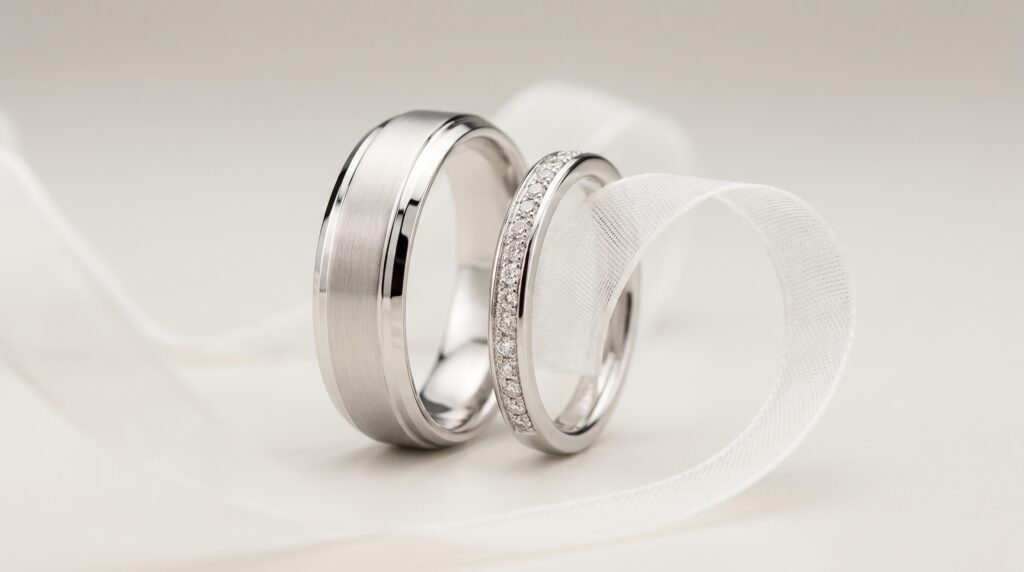
White gold’s bright rhodium finish pairs well with diamonds, creating a clean, neutral backdrop that doesn’t compete with the stone’s color the way yellow gold sometimes can. This is one of the main reasons white gold became popular for diamond engagement and wedding bands in the first place.
As with any metal, stone security depends on the setting construction rather than the metal choice alone. Check for secure prongs with no visible gaps, adequate band thickness around the setting, and an even rhodium finish with no obvious inconsistencies near the stone. Plating wear right around a setting is worth monitoring over time, since that’s often a higher-friction area than the rest of the band. For diamonds above a minimal carat weight, ask about grading documentation from a recognized laboratory such as the Gemological Institute of America, which evaluates cut, color, clarity, and carat weight against standardized criteria.
How to Care for a White Gold Wedding Band
Clean the ring with mild soap and warm water, using a soft cloth rather than anything abrasive, since rough cleaning tools can wear down the rhodium plating faster than normal use would. Plan for periodic rhodium replating as routine maintenance rather than an unexpected expense; ask your jeweler what interval they’d recommend based on how you wear the ring. When practical, remove the ring during activities involving heavy friction or chemical exposure, such as certain manual tasks or cleaning with harsh chemicals, since both can accelerate plating wear. Store the ring separately from other jewelry to reduce surface-to-surface scratching.
What to Check Before Buying White Gold Online
Confirm the karat is clearly listed with a visible 14K or 18K hallmark stamped inside the band. The full alloy composition should be disclosed, not just the karat number, particularly whether the ring is nickel-free if it’s marketed that way. Ask whether rhodium plating is explained clearly, including any details on plating thickness or expected maintenance intervals. Width and thickness should be listed in millimeters. Look for a stated replating policy or general care guidance from the retailer, and review return, resizing, and warranty terms before ordering.
Be cautious of listings with no visible karat hallmark, no alloy disclosure, no mention of replating or maintenance expectations, claims that the ring is naturally bright white with no plating involved, vague “hypoallergenic” claims with no alloy specifics, a visible yellow tint in product photos with no explanation, or missing width and thickness details.
A white gold band chosen with clear alloy disclosure, an appropriate karat for your lifestyle, and a straightforward replating policy from the retailer will give you a realistic picture of what ownership actually looks like. The maintenance isn’t a flaw in the metal, it’s simply part of what a rhodium-plated ring requires.
Frequently Asked Questions
Is white gold good for wedding bands?
Yes. White gold is one of the most widely used metals for wedding bands specifically because it offers a bright, modern white-metal look at a lower cost than platinum. The tradeoff is that it requires periodic rhodium replating to maintain that finish, which buyers should factor into their long-term care expectations rather than treating it as a surprise.
Is 14K or 18K white gold better?
Neither is universally better. 14K contains less gold and more alloy metal, making it harder and generally more practical for daily wear. 18K contains more gold, giving it a richer base tone, but it’s softer and more prone to surface wear. The right choice depends on whether you prioritize durability or higher gold content.
Does white gold need rhodium plating?
Most white gold jewelry is rhodium plated because the base alloy on its own is usually a pale yellow or grayish tone rather than a bright white. The plating is what creates the crisp white finish most buyers associate with white gold, and it needs periodic renewal since it’s a surface layer that wears down with use over time.
How often does white gold need replating?
There’s no fixed timeline, since it depends on how the ring is worn. Daily wear, ring width, skin chemistry, and lifestyle all affect how quickly the plating shows wear. Some wearers go a few years before needing a replating, while others with more hands-on daily activity notice wear sooner. Ask your jeweler about a reasonable expectation based on your specific ring and habits.
What color is white gold underneath rhodium?
Underneath the rhodium layer, white gold’s base alloy typically ranges from a pale yellow to a soft gray tone, depending on the specific alloy metals used. It’s not the bright white color most people associate with the finished ring; that brightness comes entirely from the rhodium plating on top.
Is white gold hypoallergenic?
Not universally. Some white gold alloys use nickel, which is a known allergy trigger for a portion of the population, while others use palladium as an alternative that’s generally considered safer for sensitive skin. If you have known metal allergies, ask specifically whether the ring is nickel-free and what the full alloy composition includes rather than assuming all white gold is safe.
Is nickel-free white gold worth considering?
For buyers with known nickel sensitivity, yes, it’s worth seeking out specifically. Nickel-free white gold typically uses palladium as the whitening alloy metal instead, which reduces the risk of an allergic reaction. If you don’t have a known sensitivity, it’s less of a priority, though it doesn’t hurt to ask about alloy composition regardless.
Can white gold wedding bands be resized?
Yes, white gold can generally be resized using standard jeweler’s tools, similar to yellow and rose gold. One detail to plan for: resizing typically disturbs the rhodium plating in the affected area, so the ring will likely need a fresh coat of rhodium afterward to look consistent.
Is white gold better than platinum?
Neither is strictly better. Platinum is naturally white and doesn’t require plating, which means lower long-term maintenance, but it costs significantly more and weighs more on the hand. White gold costs less upfront and feels lighter, but needs periodic replating to maintain its bright finish. The better choice depends on your budget and how much ongoing maintenance you’re willing to take on.
How do I care for a white gold wedding band?
Clean it with mild soap and warm water using a soft cloth, and avoid abrasive cleaning tools that can wear down the rhodium plating faster. Plan for periodic professional replating as routine maintenance. Remove the ring during activities involving heavy friction or harsh chemicals when practical, and store it separately from other jewelry to reduce scratching from contact.