
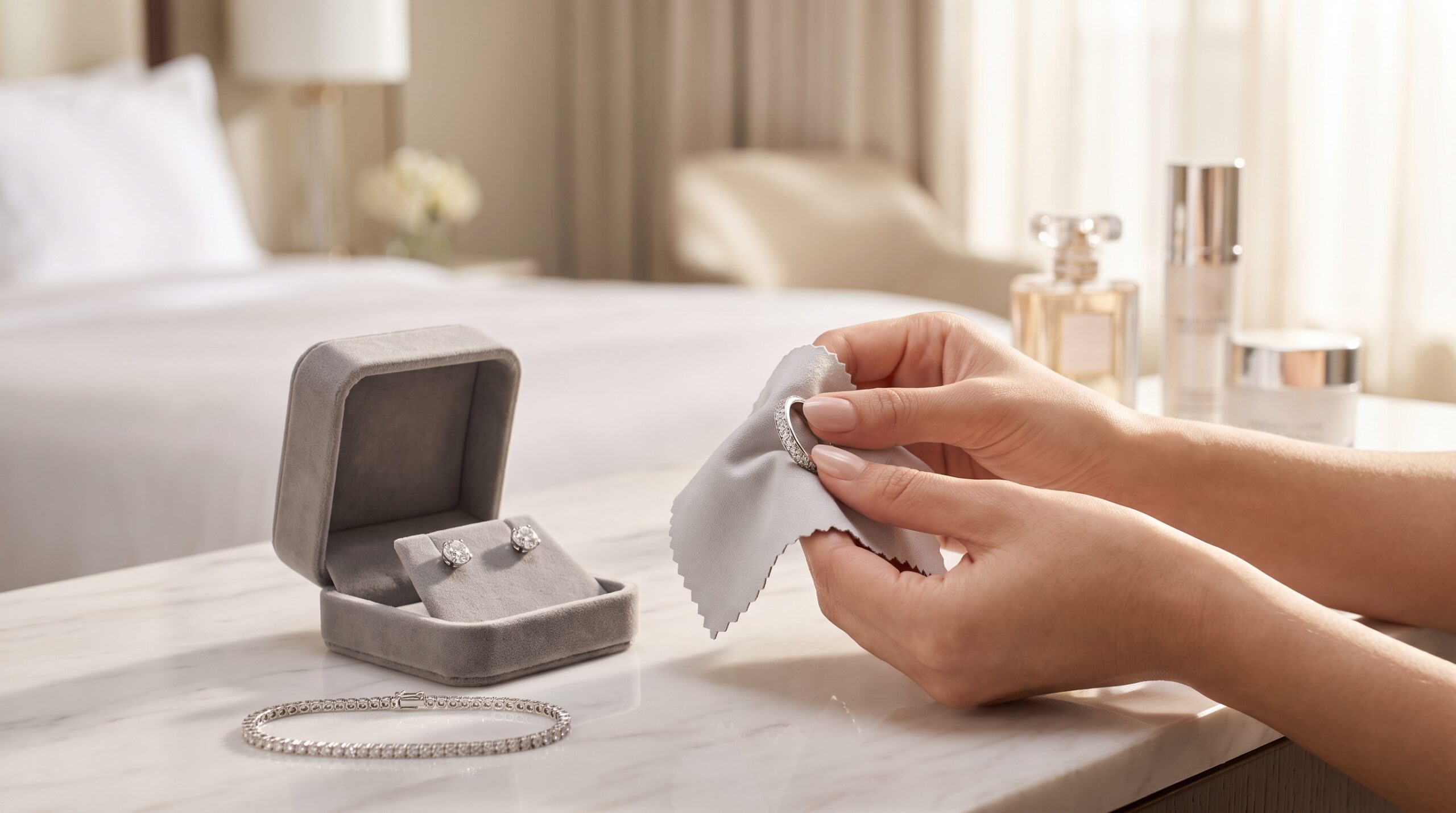
A wedding band goes through more daily wear than almost any other piece of jewelry. It’s exposed to soap, lotion, dish water, gym equipment, and constant friction against everything the hand touches. Durable doesn’t mean maintenance-free, and rings that look permanently damaged after a few years often just missed a few basic habits along the way.
This guide covers cleaning routines, material-specific care, daily wear habits, and when a ring needs a jeweler’s attention rather than a home fix.
Why Wedding Band Care Matters
Oils from skin, residue from soap and lotion, and small particles of dust build up on a ring’s surface every day, which is why a band that looked bright at the store can start to look dull within weeks of regular wear. That buildup is cosmetic and reversible with cleaning, but the bigger risks come from what regular wear does to the ring’s structure: prongs on a stone-set band can loosen gradually, plating on white gold wears thin, and metal surfaces pick up scratches from contact with countertops, tools, and other jewelry.
Routine care addresses both problems. Cleaning keeps the surface bright, and periodic inspection catches structural wear before it turns into a lost stone or a ring that needs major repair.
Basic Wedding Band Cleaning Routine
Daily Care Habits
Wiping the ring with a microfiber cloth after removing lotion, sunscreen, or hand cream keeps residue from building up between full cleanings. This takes a few seconds and prevents the dulling that comes from repeated product buildup on the metal’s surface.
Weekly Cleaning Process
A simple soak works for most plain metal bands: warm water mixed with a small amount of mild dish soap, a 15 to 20 minute soak, then a gentle scrub with a soft-bristled brush (a clean, soft toothbrush works well) focused on any grooves or detailing where residue collects. Rinse thoroughly and dry completely with a soft cloth before putting the ring back on or storing it.
What to Avoid
Abrasive cleaners and rough brushes can scratch metal surfaces, particularly softer metals like gold. Chlorine, found in pools and some household cleaners, can weaken gold alloys over time and cause pitting. Ammonia-based cleaners are too harsh for regular use on precious metals. Vinegar, sometimes suggested as a home remedy, is too acidic for gold and can damage the surface or any plating.
Wedding Band Care by Material
Gold Wedding Bands
Gold is a relatively soft metal, especially at higher purities, which makes it more prone to scratches and surface wear than harder alternatives. White gold adds another layer of maintenance: it’s typically coated with a thin rhodium plating to achieve its bright white color, and that plating gradually wears thin with regular contact and friction. When a white gold band starts to look dull or takes on a faint yellow tint, it’s usually a sign the plating needs to be refreshed by a jeweler rather than a sign of damage.
Platinum Wedding Bands
Platinum ages differently than gold. Instead of scratching away, it develops a soft, matte surface called a patina as the metal shifts slightly under daily wear rather than being worn away. Some owners like this aged look and leave it alone, while others prefer the original high-polish finish and have it restored periodically through professional polishing.
Tungsten and Titanium Bands
Both metals resist surface scratches significantly better than gold or platinum, which is a large part of their appeal for people who work with their hands or wear a ring daily without much thought. The tradeoff is that tungsten in particular is brittle rather than malleable: it can crack under a sharp, direct impact in a way that a softer metal would simply dent or bend instead. Cleaning both metals is straightforward, using the same mild soap and water approach as other bands, without special products or techniques.
Silver Wedding Bands
Silver tarnishes through a natural chemical reaction with sulfur compounds in the air, which shows up as a dulling or darkening of the surface over time. This is different from the buildup that affects other metals and generally needs a silver-specific polishing cloth or cleaner designed to reverse tarnish rather than just remove surface residue.
Wood or Carbon Inlay Bands
Rings with wood or carbon fiber inlays need more caution around moisture than solid metal bands, since prolonged water exposure can affect the inlay material over time. Wiping with a barely damp cloth, rather than soaking, is generally the safer approach, and these bands are usually better removed before swimming or extended water exposure.
Silicone Bands
Silicone bands need very little maintenance beyond an occasional wash with soap and water. They’re a common choice for situations where a metal ring would be unsafe or impractical, such as heavy manual labor, though they trade that low maintenance for a shorter overall lifespan and less resistance to cuts and tears compared to metal.
| Material | Cleaning Frequency | Main Risks | Recommended Cleaning Method | Professional Maintenance Needs |
| Gold | Weekly | Scratches, plating wear on white gold | Mild soap and water soak | Rhodium replating for white gold, periodic polishing |
| Platinum | Weekly | Patina buildup (cosmetic, not damage) | Mild soap and water soak | Optional polishing to restore high-shine finish |
| Tungsten / titanium | As needed | Cracking under strong impact | Mild soap and water | Rarely needed beyond initial fit check |
| Silver | Weekly, plus tarnish care | Tarnish and oxidation | Silver-specific polishing cloth or cleaner | Occasional professional polishing |
| Wood or carbon inlay | As needed | Moisture damage to inlay | Damp cloth wipe, avoid soaking | Inlay inspection if damage appears |
| Silicone | As needed | Cuts, tears, general wear | Soap and water | None; replacement rather than repair |
Daily Habits That Help Protect Wedding Bands
Removing a ring before workouts protects it from impact against gym equipment and reduces the chance of a stone catching on something during a lift. Chlorine from pools and hot tubs can damage gold alloys over repeated exposure, so it’s worth taking the ring off before swimming rather than assuming a quick swim is harmless. Handwashing with soap builds up residue in grooves and under stone settings over a day, which is part of why the weekly soak matters even for rings that look clean. Showering with a ring on is generally low-risk for plain bands, though soap residue can dull the finish over time, and some people prefer to remove rings before showering out of habit rather than necessity. When traveling or storing a ring temporarily, a separate pouch or ring box slot prevents it from scratching against other jewelry or hard surfaces.
| Activity | Safe to Wear? | Potential Risk | Recommendation |
| Gym or weightlifting | Not ideal | Impact damage, scratching against equipment | Remove before workouts |
| Swimming or hot tubs | Not ideal | Chlorine exposure can damage gold alloys | Remove before swimming |
| Handwashing dishes | Generally fine | Residue buildup over time | Wear is fine, but factor into weekly cleaning |
| Showering | Generally fine | Minor residue buildup | Personal preference, low risk for plain bands |
| Gardening or manual labor | Not ideal | Scratching, impact, dirt buildup | Remove for heavy manual tasks |
| Applying lotion or sunscreen | Fine, with care | Product buildup on the ring’s surface | Wipe the ring afterward |
Caring for Diamond and Gemstone Wedding Bands
Stone-set bands need more attention to the setting itself, not just the metal surface. Checking prongs periodically for looseness matters because a loose prong is how stones are lost, and catching it early means a simple tightening rather than a replacement. Ultrasonic cleaners, while common in jewelry stores, aren’t universally safe: the vibrations can loosen prongs that are already slightly worn, and they can damage certain gemstones that are more fragile or have internal fractures, including emeralds and some treated stones. A soft brush and mild soap soak is a safer default for most stone-set bands unless a jeweler has specifically confirmed the setting and stones can handle ultrasonic cleaning.
At-home cleaning works well for routine maintenance, but it doesn’t replace a professional check. A jeweler can inspect the setting under magnification, spot early wear that’s invisible to the naked eye, and safely handle stones that need more specialized cleaning methods than a home soak provides.
Professional Maintenance and Inspections
An annual inspection is a reasonable baseline for most wedding bands, particularly those with stones, since it catches loose prongs, worn plating, or thinning metal before they become bigger problems. White gold typically needs rhodium replating every year or two depending on how often it’s worn and how much daily contact it gets, though wear varies enough between individuals that there’s no fixed schedule that applies to everyone. Stone tightening should happen whenever an inspection identifies a loose setting, rather than on a fixed schedule. Polishing restores a bright finish to metal that’s picked up fine scratches over time. Checking fit matters too, since finger size can change gradually with weight fluctuations or aging, and a ring that’s become loose is easier to address before it’s lost than after.
| Maintenance Type | Recommended Frequency | Applies To | Why It Matters |
| General inspection | Annually | All wedding bands | Catches wear before it becomes a bigger repair |
| Rhodium replating | Every 1 to 2 years, as needed | White gold bands | Restores bright white finish as plating wears thin |
| Stone tightening | As identified during inspection | Diamond and gemstone bands | Prevents stone loss |
| Polishing | As needed or during inspection | Gold and platinum bands | Restores shine, removes fine surface scratches |
| Fit check | Periodically, or if the ring feels different | All wedding bands | Identifies resizing needs before the ring is lost |
Common Wedding Band Care Mistakes
| Mistake | Why It’s Harmful | Better Alternative |
| Using harsh household cleaners | Chlorine, ammonia, and vinegar can damage metal and plating | Use mild dish soap and warm water |
| Assuming all metals clean the same way | Silver, gold, and platinum have different care needs | Match the cleaning method to the specific material |
| Ignoring dull or yellowing white gold | Usually a sign the rhodium plating has worn thin, not something that resolves on its own | Schedule replating with a jeweler |
| Wearing rings during heavy manual labor | Increases risk of scratching, denting, or impact cracks | Remove the ring before yard work, lifting, or similar tasks |
| Storing jewelry together in one pile | Rings can scratch each other and other jewelry | Store in a separate pouch or ring box slot |
Conclusion
None of this requires much time. A quick wipe after applying lotion, a weekly soak in mild soap and water, and an annual check from a jeweler cover most of what a wedding band needs to hold up over years of daily wear. The material determines the specifics, whether that’s rhodium replating for white gold, a gentler touch for wood inlays, or just accepting platinum’s natural patina instead of fighting it. Match the care to the metal, and the ring should look close to how it started for a long time.
Frequently Asked Questions
How often should wedding bands be cleaned?
A quick wipe after applying lotion or sunscreen helps daily, and a full soak in warm water with mild dish soap once a week is a reasonable routine for most plain metal bands. Stone-set bands benefit from the same weekly routine, plus a soft brush around the setting to clear buildup that collects near the prongs.
Can I shower with my wedding band?
Showering with a plain metal band is generally low-risk. Soap and shampoo residue can dull the finish slightly over time, which the weekly cleaning routine addresses, but there’s no significant damage risk from regular showering for most gold, platinum, tungsten, or titanium bands. Wood inlay bands are the exception, since repeated water exposure can affect the inlay material over time.
Are ultrasonic cleaners safe?
Not universally. Ultrasonic cleaners work well for plain metal bands with secure settings, but the vibrations can loosen prongs that are already slightly worn, and certain gemstones, including emeralds and some treated stones, can be damaged by the process. A jeweler can confirm whether a specific ring and its stones are safe for ultrasonic cleaning before it’s used at home or in a store.
How often does white gold need re-plating?
This varies by how often the ring is worn and how much daily friction it gets, but every one to two years is a reasonable general expectation. A dulling finish or a faint yellow tint showing through the white surface is the clearest sign that replating is due.
Should I remove my ring at the gym?
Yes, generally. Weightlifting and other gym equipment create a real risk of impact damage or scratching, and a ring can also interfere with grip during certain exercises. Removing it before a workout and storing it somewhere secure avoids both problems.
What causes tarnish?
Tarnish happens when silver reacts with sulfur compounds naturally present in the air, which gradually dulls or darkens the metal’s surface. It’s a chemical reaction rather than dirt or residue, which is why it needs a silver-specific polishing cloth or cleaner rather than the standard soap and water routine used for other metals.
How often should rings be professionally inspected?
Once a year is a reasonable baseline for most wedding bands, and stone-set rings in particular benefit from this schedule since a jeweler can spot loose prongs or worn settings under magnification before a stone is at real risk of falling out.