
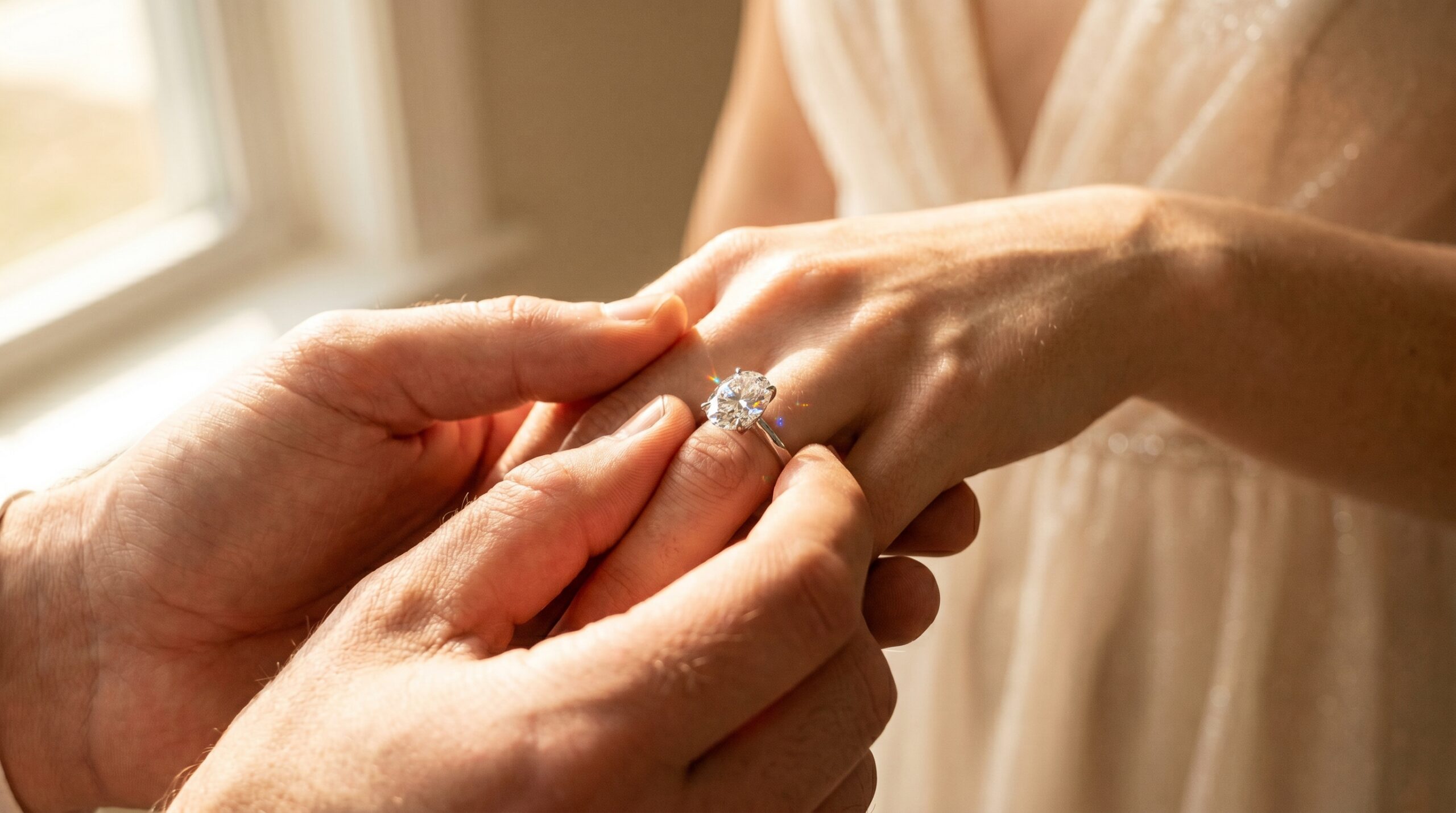
Choosing an engagement ring means making a series of smaller decisions, style, stone quality, setting, metal, budget, all at once, often with limited knowledge of what any of it actually means. That’s the real difficulty. It’s not that the decision is emotionally loaded (though it is), it’s that most buyers are asked to evaluate diamonds and settings using vocabulary they’ve never needed before, on a purchase they don’t want to get wrong.
The good news is that none of it requires becoming an expert. A handful of factors determine whether a ring looks good, holds up over decades of wear, and fits the life of the person wearing it. This guide walks through those factors in the order they typically need to be decided, starting with style and ending with how to verify quality before buying, especially online.
Start with Personal Style and Lifestyle
Why Personal Preference Matters More Than Trends
Ring trends shift. Halo settings dominate one decade, thin pavé bands the next, then a swing back toward simple solitaires. A ring bought to match a trend often looks dated within a few years, while a ring chosen because the wearer genuinely likes it tends to hold up regardless of what’s popular.
The more useful distinction isn’t trendy versus classic. It’s minimalist versus statement. A thin band with a single stone draws less attention and pairs easily with other jewelry. A wide halo or a large center stone with a decorative band reads as more formal and is harder to layer with everyday pieces like stacking rings or a simple wedding band. Neither is a better choice. It depends on whether the wearer already gravitates toward simple jewelry or bolder pieces in their existing collection.
Consider Lifestyle Before Choosing a Setting
The setting has to survive daily life, not just look good in a store. A few practical questions narrow the options fast:
Does the wearer work with their hands, in a lab, kitchen, gym, or job involving frequent glove use? Prong settings that lift the stone up and away from the band snag more easily on gloves, clothing, and equipment. Does the person wash their hands often throughout the day? Intricate settings with lots of small crevices, like pavé bands, collect soap residue and need more frequent cleaning to keep their sparkle. Does the wearer travel or exercise regularly? A low-profile setting sits closer to the finger and is less likely to catch on luggage straps or gym equipment.
None of these rule out a particular style entirely, but they should influence how the setting is built. A bezel or low-profile solitaire can deliver the same visual impact as a high-set halo while being considerably more practical for someone whose hands are in constant use.
| Lifestyle | Recommended Settings | Less Ideal Settings |
| Active or hands-on work | Bezel, low-profile solitaire | High-prong halo, pavé |
| Frequent hand washing | Bezel, flush settings | Pavé, filigree |
| Gym or frequent glove use | Bezel, cathedral (low set) | Tall prong settings |
| Minimal daily wear-and-tear | Any setting, including halo and pavé | N/A |
Understand the Diamond 4Cs
The 4Cs, cut, color, clarity, and carat weight, are the standard framework jewelers and gemological labs use to describe diamond quality. The GIA’s 4Cs education is the most widely referenced source for how each factor is graded. Understanding what each one actually affects, rather than just knowing the terms, makes it much easier to prioritize spending.
Cut
Cut refers to how well a diamond’s proportions and facets are shaped to reflect light, and it’s the single factor with the most direct effect on sparkle. Two diamonds can be the same size and color, and one will look noticeably brighter than the other because of how precisely it was cut. A diamond graded “Excellent” or “Very Good” for cut will generally outperform a larger, poorly cut stone in brilliance, even though it costs more per carat.
Color
Diamond color is graded on a scale from D (colorless) to Z (noticeably yellow or brown), and most jewelry-grade diamonds fall in the near-colorless range, roughly G through J. At that range, any tint is difficult to detect with the naked eye, particularly once the stone is set. Buyers chasing a D or E grade are often paying a premium for a difference only visible under a jeweler’s loupe.
Clarity
Clarity measures internal and surface characteristics, called inclusions and blemishes, that occur naturally as diamonds form. Most diamonds sold for engagement rings fall into the “eye-clean” range, meaning any inclusions are invisible without magnification. Paying for a flawless or internally flawless grade rarely changes how the ring looks in daily wear; it mostly affects resale value and rarity.
Carat Weight
Carat measures weight, not size, and two diamonds of the same carat weight can look different in diameter depending on their cut and shape. A well-cut diamond a bit under a round number, say 0.9 carats instead of 1.0, often looks nearly identical to the eye while costing meaningfully less, since diamond prices jump at round-number thresholds.
| Factor | What It Affects | Most Important For | Common Buyer Mistake |
| Cut | Sparkle and brilliance | Overall visual impact | Prioritizing carat over cut |
| Color | Tint visible in the stone | Warmth or coolness of appearance | Overpaying for near-invisible differences |
| Clarity | Internal characteristics | Long-term value and rarity | Paying extra for flawless grades that look the same as eye-clean |
| Carat Weight | Size and perceived value | Overall scale of the stone | Chasing round numbers instead of the best-cut option |
Choosing the Right Diamond Shape
Shape and cut are different things. Shape is the outline of the diamond, round, oval, princess, and so on. Cut is the quality of the craftsmanship within that shape. A round diamond can be poorly cut, and a pear-shaped diamond can be excellently cut. Confusing the two leads buyers to compare shapes on the wrong basis.
Round brilliant diamonds are cut specifically to maximize light return and are, on average, the most sparkly shape available, which is part of why they carry the highest price per carat. Oval and pear shapes have a larger visible surface area per carat than round diamonds, so they tend to look bigger for the same weight, and their elongated outline can visually lengthen the finger, similar to how a vertical seam or line does in tailored clothing. Princess and cushion cuts sit between round and fancy shapes in both sparkle and price efficiency. Emerald cuts prioritize clarity and clean lines over brilliance, which means inclusions are more visible in an emerald cut than in a round diamond of the same clarity grade, so buyers choosing this shape often need to size up in clarity grade to keep the stone eye-clean. Marquise diamonds, with their narrow, pointed outline, maximize apparent size per carat more than almost any other shape.
| Shape | Look | Sparkle Level | Visual Size Effect | Best For |
| Round | Classic, symmetrical | Highest | Standard | Maximum brilliance |
| Oval | Elongated, soft | High | Larger, lengthening | Elongating the finger |
| Princess | Square, angular | High | Standard | Modern, geometric styles |
| Cushion | Rounded square | Medium-high | Slightly larger | Vintage-inspired styles |
| Emerald | Rectangular, stepped | Lower | Standard | Clean lines, clarity emphasis |
| Pear | Teardrop | High | Larger, lengthening | Unique silhouettes |
| Marquise | Elongated, pointed | High | Largest apparent size | Maximizing perceived size |
Engagement Ring Settings Explained
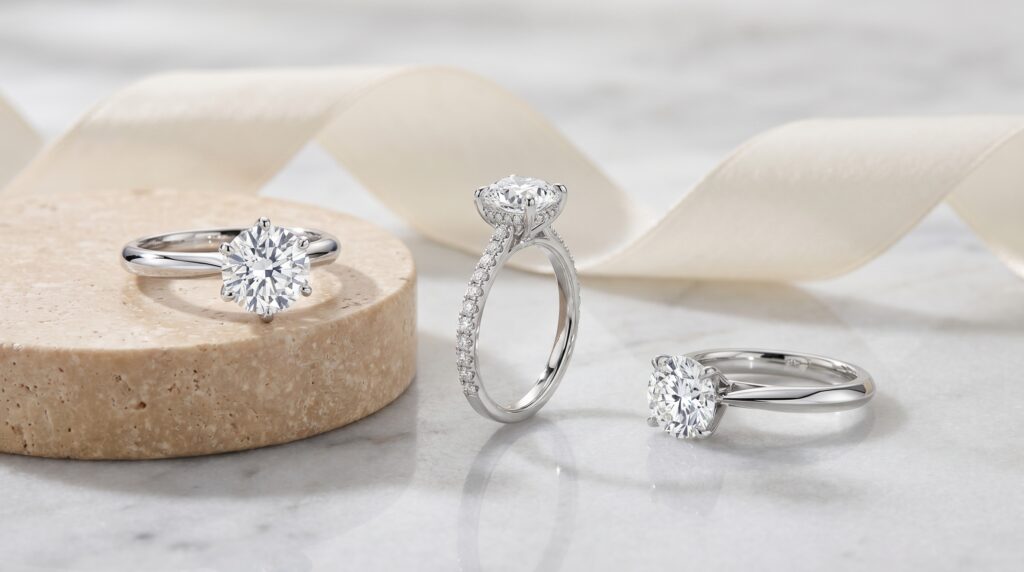
The setting determines how the stone is held in place, and it has more influence on daily practicality than most buyers expect going in. Ritani’s engagement ring setting guide breaks down how each style balances security, visibility, and upkeep.
A solitaire setting holds a single stone with prongs and is the easiest to clean and maintain, since there are no small stones or crevices to collect debris. A halo setting surrounds the center stone with a ring of smaller diamonds, which increases apparent size and sparkle but adds more surfaces that need regular cleaning. Pavé settings line the band itself with small diamonds; they look continuous and glamorous but require the most maintenance of the common setting types, since the tiny prongs holding each stone can wear down or catch on fabric over years of wear. Three-stone settings symbolize past, present, and future and offer strong visual presence, though the side stones raise the profile of the ring, which can affect comfort for people who wear gloves or work with their hands. Bezel settings encircle the stone in a metal rim, functioning much like a phone case protects the edges of a device, trading some light exposure to the stone for significantly better protection against chips and knocks. Cathedral settings raise the center stone using arching metal supports, which adds elegance but also height, meaning the same snag risk that applies to high-prong settings applies here too.
| Setting | Pros | Cons | Maintenance Level | Best Lifestyle Fit |
| Solitaire | Easy to clean, timeless, cost-efficient | Less sparkle than halo | Low | Most lifestyles |
| Halo | More apparent size and sparkle | More surfaces to clean | Medium | Lower-impact daily wear |
| Pavé | Continuous sparkle along the band | Small prongs wear over time | High | Lower-impact daily wear |
| Three-stone | Symbolic, strong presence | Higher profile | Medium | Moderate activity |
| Bezel | Highly secure, snag-resistant | Less light enters the stone | Low | Active or hands-on work |
| Cathedral | Elegant, elevated look | Higher profile, more snag risk | Medium | Moderate activity |
Choosing the Right Metal
Metal choice affects how the ring wears over years, not just how it looks on day one. Platinum is the most durable common choice for engagement rings: it’s dense, naturally white, and highly resistant to tarnish, though it will develop a soft patina with wear that some people polish away and others leave as is. According to maintenance guidance from Janvier Jewelers, platinum requires less frequent professional upkeep than white gold because it doesn’t need replating to maintain its color.
Gold purity is measured in karats, with 24K representing pure gold. Pure gold is too soft for daily-wear jewelry, so engagement rings are typically made in 14K (58.3% gold) or 18K (75% gold), alloyed with other metals for strength. 14K gold is more scratch-resistant and holds up better under daily wear; 18K gold has a richer color and higher gold content but is comparatively softer. Neither is objectively better; it’s a tradeoff between durability and gold content.
White gold is yellow gold alloyed with white metals and typically finished with a rhodium plating to achieve its bright white color. That plating wears down over time, usually within one to two years depending on wear, and needs to be reapplied by a jeweler to keep the ring looking white rather than showing the warmer natural tone underneath. This is a real maintenance cost that buyers considering white gold should factor in, and it’s a point covered under general disclosure principles in the FTC’s jewelry guidance, which sets standards for how metal content and treatments are represented to consumers.
Rose gold gets its color from a higher copper content in the alloy, which also makes it somewhat more durable than yellow gold in the same karat weight. Some individuals with sensitive skin have reactions to the nickel sometimes used in white gold alloys; platinum and higher-karat golds are generally better tolerated by those with metal sensitivities.
| Metal | Durability | Maintenance | Color | Price Range | Best For |
| Platinum | Highest | Low (no replating) | Naturally white | Highest | Long-term durability, sensitive skin |
| 14K Gold | High | Low-medium | Yellow, white, or rose | Moderate | Daily durability at lower cost |
| 18K Gold | Medium | Low-medium | Richer, deeper tone | Higher | Color depth over scratch resistance |
| White Gold | Medium | Medium (rhodium replating) | Bright white | Moderate-high | Classic white look, budget-conscious buyers |
| Rose Gold | Medium-high | Low | Pink-toned | Moderate | Distinct color, added durability from copper |
Prioritizing Comfort and Everyday Wear
Ring Height and Profile
A ring that sits high off the finger, whether from a tall setting, a large stone, or both, is more prone to snagging on clothing, hair, and fabric, and it’s more likely to get knocked against hard surfaces during ordinary tasks. This doesn’t mean high settings should be avoided, but buyers who type all day, work with their hands, or have young children should weigh the visual payoff against the daily friction of a taller ring.
Band Width and Stability
A thin band puts more of the ring’s weight and pressure on a smaller area of the finger, which some people find less comfortable over a full day of wear, particularly with a heavier center stone. Wider bands distribute that weight more evenly and also tend to feel more stable, resisting rotation on the finger. The right width is largely a matter of comfort preference and finger size rather than a fixed rule.
Wedding Band Compatibility
Rings that will be worn stacked with a wedding band need to be considered together, not separately. A curved or contoured engagement ring may leave a visible gap next to a straight wedding band unless the two are designed to nest together. Buyers planning to wear both rings daily should check whether the engagement ring’s profile allows a flush fit, or budget for a custom-shaped wedding band later.
| Comfort Factor | Consideration | Who It Matters Most For |
| Ring height | Snag risk, knock risk | Hands-on work, small children at home |
| Band width | Pressure distribution, stability | All-day wearers, larger center stones |
| Stacking fit | Gaps between rings, flush fit | Buyers planning to wear a matching wedding band |
Budgeting Without Following Outdated Rules
The idea that an engagement ring should cost a specific multiple of salary isn’t a standard grounded in anything but marketing history, and it doesn’t account for the wide range of financial situations buyers are actually in. A more useful approach is setting a total budget based on what’s comfortable to spend without financial strain, then deciding where within that budget to concentrate quality.
Cut quality has the largest visible impact per dollar spent, since it directly affects how much a diamond sparkles regardless of its size. Setting quality affects how securely the stone is held and how well the ring survives years of wear, so cutting corners here can lead to loose stones or bent prongs down the line. Metal durability matters most for buyers who plan to wear the ring daily for decades without frequent professional maintenance.
| Budget Priority | Recommended Focus |
| Maximum visual impact | Prioritize cut quality over carat size |
| Long-term durability | Prioritize platinum or 14K gold and a secure setting |
| Lower maintenance over time | Avoid pavé and high-prong settings; consider bezel |
| Balancing size and cost | Choose a diamond just under a round carat threshold |
Buying an Engagement Ring Online with Confidence
Online buying removes the ability to inspect a stone in person, which makes documentation and return policies more important, not less. A diamond sold with a grading report from an independent lab, such as the GIA or the American Gem Society Laboratories, has had its cut, color, clarity, and carat weight independently verified rather than self-reported by the seller. That report should specify the grading lab, not just claim a grade without documentation.
Before buying online, check for high-resolution images and, ideally, video of the actual stone rather than a stock photo representing the “type” of diamond. Confirm exact measurements and weight are listed, not just a general size description. Read the return policy in full, including whether return shipping is covered and how long the window is. Check the resizing policy separately, since ring size often needs adjustment after the ring arrives, and some sellers charge for this while others include one resizing. Finally, confirm what warranty coverage exists for loose stones, prong repair, or manufacturing defects, and for how long.
There Is No Single Perfect Ring
The ring that works best is the one that fits how someone actually lives day to day, not the one with the largest stone or the most decorative setting. A secure, well-cut diamond in a durable metal and a practical setting will hold up better and look better over time than a ring chosen primarily for size or trend. Buyers who understand the tradeoffs between cut, setting, and metal are in a much stronger position to spend their budget where it actually shows, and to skip paying for differences that won’t be visible on the hand.
Frequently Asked Questions
What diamond shape looks biggest?
Marquise and pear shapes tend to have the largest visible surface area per carat because of their elongated outlines, which makes them appear larger than a round diamond of the same weight. Oval diamonds offer a similar, slightly less pronounced effect. Round diamonds, by comparison, concentrate their weight in a more compact shape, so a round stone often looks smaller than a marquise or oval of the same carat weight.
Is round always best?
Round brilliant diamonds are cut specifically to maximize light return, so they generally produce more sparkle than other shapes at the same clarity and color grade. That doesn’t make them the best choice for every buyer. Round diamonds carry a higher price per carat than fancy shapes, and buyers who prioritize apparent size, a distinct silhouette, or a lower cost per carat may find another shape suits them better.
Halo or solitaire?
A halo setting increases the apparent size and sparkle of the center stone by surrounding it with smaller diamonds, but it adds more surfaces that need regular cleaning and can make the ring feel visually busier. A solitaire setting is easier to maintain and puts the full focus on the center stone itself. The choice comes down to whether the wearer prefers a bolder, more embellished look or a cleaner, simpler one, and how much upkeep they’re willing to do.
Platinum or gold?
Platinum is denser and more durable than gold and doesn’t require replating to maintain its color, which makes it a lower-maintenance long-term choice, though it costs more upfront. Gold, particularly 14K, offers strong durability at a lower price point, with the tradeoff of needing occasional replating if a white gold finish is chosen. Neither is a wrong choice; the decision depends on budget and how much maintenance the wearer is willing to take on over the years.
Is 14K gold durable enough?
Yes. 14K gold contains a higher proportion of alloy metals than 18K gold, which makes it more scratch-resistant and better suited to daily wear. It’s a common choice specifically because it balances gold content with the durability needed for a ring worn every day for years.
Which setting is safest?
Bezel settings are generally considered the most secure and snag-resistant, since the metal rim fully encircles the stone and protects its edges from knocks. Solitaire settings with well-maintained prongs are also fairly secure and far easier to clean than more elaborate settings. Settings with many small stones or high-set prongs, like pavé and tall halo designs, carry a higher risk of snagging or stone loss over time if not regularly inspected.
Can engagement rings be resized?
Most engagement rings can be resized, typically within one or two sizes up or down, depending on the metal and setting. Rings with eternity bands (diamonds set all the way around) or intricate pavé work are more difficult and sometimes impossible to resize without disturbing the stones. It’s worth asking a jeweler about resizing limitations before buying a ring with a heavily decorated band.
Are pavé rings harder to maintain?
Yes, relative to simpler settings. Pavé rings use small prongs to hold numerous tiny diamonds along the band, and those prongs can wear down or loosen faster than the larger prongs on a solitaire setting. Pavé rings also collect more soap residue and everyday grime in the small gaps between stones, so they need more frequent cleaning to keep their sparkle.
Do I need certification?
Certification from an independent grading lab isn’t legally required to buy a diamond, but it’s the most reliable way to confirm that a stone’s cut, color, clarity, and carat weight match what the seller claims, particularly when buying online without the ability to inspect the stone in person. A diamond without a report from a recognized lab may still be accurately described, but there’s no independent verification to confirm it.