
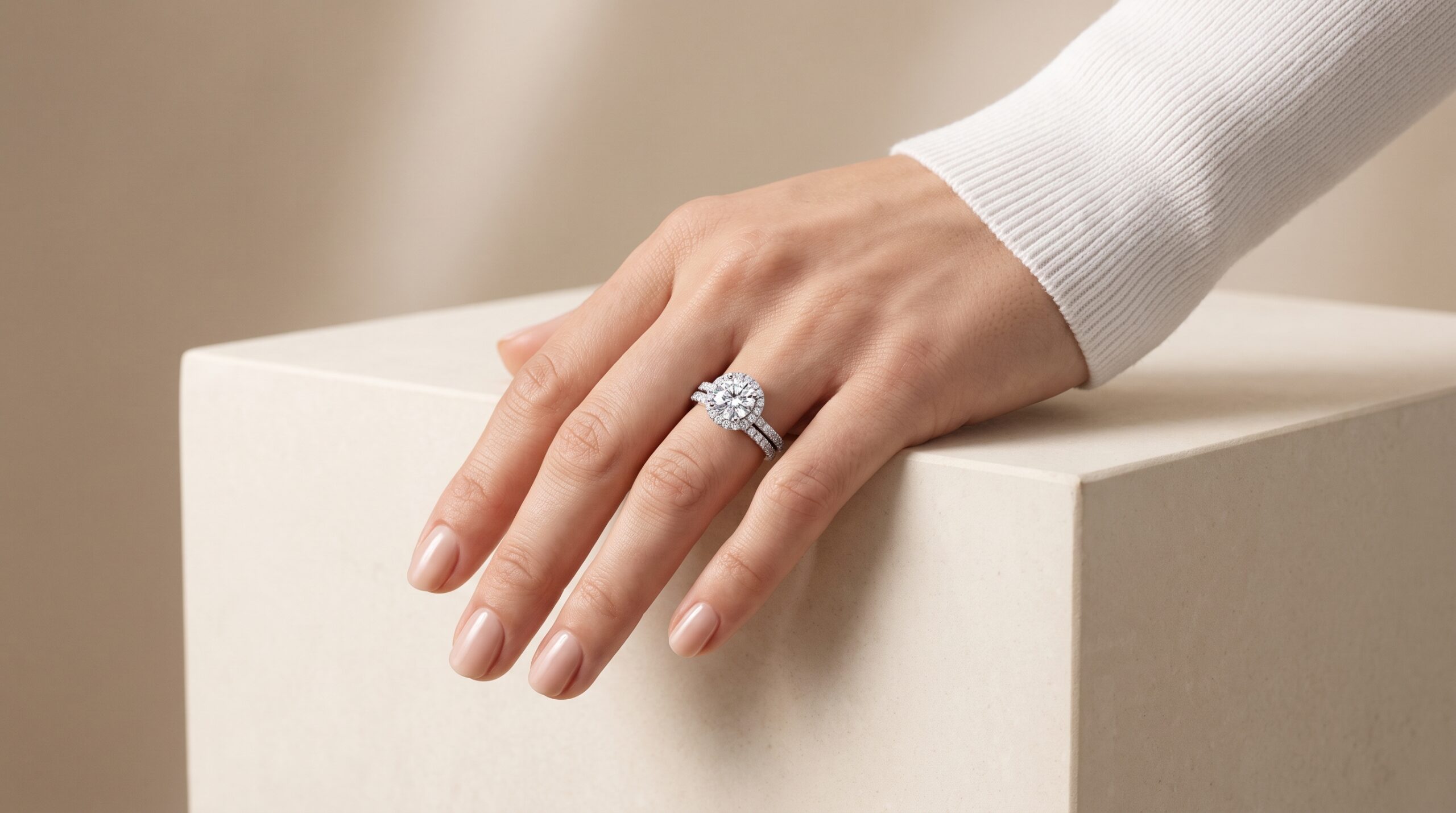
There’s no dollar figure that makes an engagement ring “right.” The number that matters is the one that fits your finances, reflects what you and your partner actually value, and doesn’t leave you paying off a purchase for years while resenting it. If you’ve been searching for a rule that tells you exactly what to spend, the honest answer is that the rule doesn’t exist, and most of the ones circulating online were never based on financial planning in the first place.
Is There a “Right” Amount to Spend on an Engagement Ring?
No single number works for every buyer, because no two buyers share the same income, savings, debt load, or priorities. A budget that’s comfortable for one couple could be reckless for another, even at the exact same dollar amount.
Myth: A bigger number means a bigger commitment. Reality: The size of the number has no bearing on the relationship. What matters is whether the purchase was made thoughtfully and within means both partners can live with.
Myth: There’s a standard percentage of income you’re supposed to spend. Reality: Salary-based guidelines are cultural conventions repeated so often they sound like financial rules. They aren’t. Your actual budget depends on income, existing savings, debt, upcoming wedding costs, and what you and your partner want the ring to represent.
Why the One-Month or Three-Month Salary Rule Is Outdated
Where Salary Rules Come From
The idea that a ring should cost one, two, or three months of salary wasn’t derived from any financial study. It gained traction through decades of diamond industry advertising that tied ring price to the size and seriousness of a commitment. The rule persists because it’s easy to repeat, not because it reflects sound budgeting.
Why They Do Not Work for Everyone
A salary percentage ignores nearly everything that actually determines what someone can afford: existing debt, cost of living, savings goals, whether a wedding is being planned at the same time, and whether the couple has other financial priorities like a home down payment. Two buyers earning the same salary can have completely different amounts of disposable income once these factors are accounted for.
| Budget Rule | What It Suggests | Why It May Not Fit Everyone |
| One month’s salary | A modest, “reasonable” spend | Ignores debt, rent, and cost-of-living differences between buyers |
| Two months’ salary | A mid-range, traditional spend | Assumes a fixed percentage is appropriate regardless of savings or other goals |
| Three months’ salary | A larger, more “serious” commitment | Can push buyers toward debt or drained savings with no financial upside |
How to Set a Comfortable Engagement Ring Budget
A workable budget starts with your actual financial picture, not a percentage pulled from somewhere else. Before setting a number, it helps to answer a few direct questions.
Five questions to ask before setting your budget:
- What can you pay for in full, without touching an emergency fund or taking on debt?
- Do you have upcoming expenses, such as a wedding, that this purchase needs to coexist with?
- Is either partner carrying high-interest debt that should be paid down first?
- What does your partner actually value: a larger stone, a particular cut quality, a specific metal, or something else entirely?
- What number would you still feel good about a year from now, once the moment of the proposal has passed?
Once you have honest answers, set a maximum before you start shopping. Retailers and jewelers will show you options across a wide price range, and it’s easier to hold a limit before you’ve fallen for a ring that’s outside it.
What Affects the Cost of an Engagement Ring?
Center Stone
The stone itself is usually the largest cost driver. A natural diamond, a lab-grown diamond, moissanite, and colored gemstones like sapphire, ruby, and emerald all sit at different price points for a comparable visual size, and the differences can be substantial.
The 4 Cs
For diamonds specifically, cut, color, clarity, and carat weight determine price. Cut has the largest effect on how the stone looks in person, since it controls how the diamond reflects light, according to GIA’s diamond grading standards. Color and clarity can often be adjusted downward from the top of the scale with little visible difference, while carat weight has the most direct and predictable effect on price.
Metal Choice
14K gold, 18K gold, and platinum all differ in cost and durability. Platinum is denser and more durable than gold but typically carries a higher price for the same design, since more raw material is needed and the metal is harder to work with. 18K gold contains more pure gold than 14K, which raises both its cost and its softness, making it slightly more prone to scratching over time.
Setting Complexity
A simple solitaire setting costs less than a halo, pavé, or three-stone design, both at the time of purchase and over the life of the ring. More stones and more intricate metalwork mean more points of potential wear, which can mean more maintenance down the road.
| Cost Factor | How It Affects Price | Buyer Tip |
| Center stone type | Often the single largest cost variable | Compare natural, lab-grown, and moissanite side by side before deciding |
| Cut quality | Drives visible brilliance more than any other factor | Prioritize cut before color or clarity if the budget is tight |
| Metal | Platinum costs more than gold for comparable durability | 18K gold offers a middle ground between 14K’s price and platinum’s density |
| Setting style | More stones and detail mean higher upfront and maintenance cost | A simple solitaire keeps both purchase price and upkeep lower |
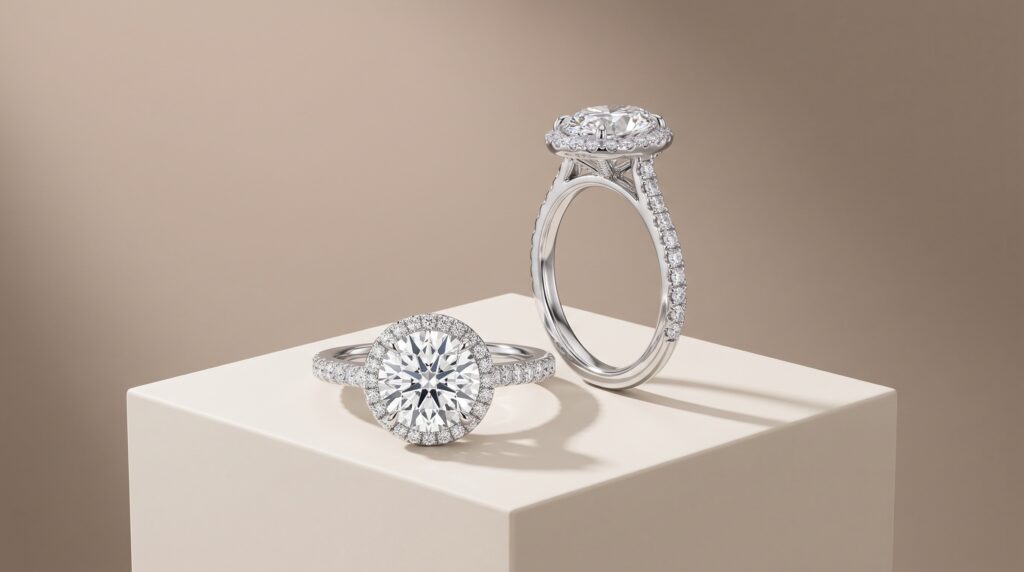
Engagement Ring Budget Ranges
These ranges describe what’s realistic to expect at different price points. They’re not targets, and none of them is inherently the “correct” choice.
| Budget Range | What It Can Typically Cover | Best For |
| Under $1,500 | Moissanite or a small lab-grown diamond in a simple setting, often in 14K gold | Buyers prioritizing affordability without sacrificing a clean, finished look |
| $1,500 to $4,000 | A modest natural diamond or a larger lab-grown diamond, moderate setting detail | Buyers who want a natural diamond option while keeping costs controlled |
| $4,000 to $10,000 | A well-cut natural diamond in the half-carat to one-carat range, platinum or 18K gold options | Buyers prioritizing a natural stone with strong cut quality and metal durability |
| $10,000 and above | Larger carat weights, higher color and clarity grades, platinum settings, custom design work | Buyers with more flexibility who want to maximize multiple factors at once |
Where to Spend More and Where to Save
Not every dollar in a ring budget buys the same amount of visible quality. Some choices are worth paying for. Others cost more without changing how the ring looks or wears.
Spend more on: cut quality, since it has the largest effect on brilliance; a secure setting, since prongs and mountings protect the stone from loss or damage; a durable metal suited to daily wear; documentation from a recognized grading lab; and craftsmanship, since a well-constructed setting holds up better over decades of wear.
Save on: color grades one or two steps below the top of the scale, which are often indistinguishable to the eye; clarity grades that are eye-clean rather than flawless; carat weights just under round-number thresholds like 1.00 or 1.50 carats, where prices tend to jump; simpler setting styles with fewer stones and less detail; and lab-grown diamonds or moissanite, which cost a fraction of natural diamonds at a comparable size.
Natural Diamond, Lab-Grown Diamond, or Moissanite?
These three options differ in price, origin, and how they’re documented, though all three can look bright and clean in a finished setting.
| Stone Type | Typical Price Position | Appearance | Best For |
| Natural diamond | Highest price for a given carat weight and quality | Classic brilliance, wide range of quality grades | Buyers who want a mined diamond and are willing to pay for it |
| Lab-grown diamond | Substantially lower price than natural for the same specs | Chemically identical to natural diamond, same 4 Cs grading applies | Buyers who want diamond material and documented quality at a lower cost |
| Moissanite | Lowest price of the three | High brilliance, though its light dispersion differs slightly from diamond | Buyers prioritizing affordability and durability over diamond specifically |
Lab-grown diamonds are graded using the same cut, color, clarity, and carat framework used for natural stones, since the material itself is chemically identical, per GIA’s grading resources. A lab-grown diamond’s report will typically state its origin explicitly, which is part of the disclosure standards covered under the FTC’s guidance on jewelry marketing.
Hidden Costs to Include in Your Budget
The sticker price on a ring rarely reflects the full cost of owning it. Building these into your budget upfront avoids surprises later.
Costs to plan for before checkout: sales tax, which varies by state and can add a meaningful amount on a larger purchase; ring insurance, typically an annual policy separate from homeowner’s or renter’s coverage; resizing, which some jewelers include and others charge for; engraving, usually a flat fee; routine cleaning and prong checks, which help prevent stone loss over time; repairs from wear or damage; the cost of a matching wedding band, which is a separate purchase; and shipping or return costs if you’re buying online, especially for high-value items that may require signature confirmation or insured shipping.
How Lifestyle Should Influence Budget
A ring that photographs beautifully isn’t automatically the right choice if it doesn’t hold up to how you actually live. Someone who works with their hands, plays sports regularly, or washes their hands dozens of times a day puts more daily stress on a ring than someone with a desk job and a low-key routine.
| Lifestyle | Budget Priority | Recommended Ring Features |
| Active or manual work | Durability over size | Lower-profile setting, durable metal like platinum, protected stone placement |
| Frequent handwashing or cleaning | Low-maintenance materials | Simple prong or bezel setting that’s easy to clean, fewer small accent stones |
| Frequent travel | Practicality and peace of mind | Insured piece, simpler design that draws less attention |
| Low daily wear and tear | More flexibility in design | Room to consider more detailed settings, such as halo or pavé, without added maintenance risk |
Buying Online Without Budget Regret
Buying a ring online adds convenience but removes the ability to inspect the piece in person before paying, so a few checks matter more than they would in a physical store.
Online engagement ring budget confidence checklist: a clear, itemized price breakdown that separates the stone, setting, and any add-ons; an independent grading report from a lab such as GIA rather than only an in-house description; visible metal stamps confirming karat or platinum content; a written return policy with a specific window; a stated resizing policy, including whether it’s free or charged; a warranty covering setting defects; verifiable customer reviews; and high-resolution photos or video of the actual stone, not a stock image representing the grade.
Frequently Asked Questions
How much should I spend on an engagement ring?
There’s no fixed amount that applies to every buyer. A workable budget is one you can pay for without going into high-interest debt or draining savings you’ll need for other near-term goals, including a wedding if you’re planning one. Start from your actual finances rather than a percentage of income, and set a maximum before you start looking at rings.
Is spending less than one month’s salary okay?
Yes. The one-month, two-month, and three-month salary guidelines are marketing conventions, not financial benchmarks. A ring that costs less than any of these thresholds is not a lesser commitment, and there’s no financial or symbolic requirement to hit a specific percentage of your income.
Is a lab-grown diamond a good budget choice?
For many buyers, yes. Lab-grown diamonds are graded on the same cut, color, clarity, and carat scale as natural diamonds and typically cost significantly less for a comparable size and quality. The tradeoff is largely about preference and resale expectations rather than appearance, since a well-cut lab-grown diamond looks the same to the eye as a natural one of equal grade.
Should I finance an engagement ring?
This depends on the terms and your broader financial situation. A 0% promotional financing offer paid off within its term can make sense for some buyers. High-interest financing or credit card debt carried past a promotional period usually costs more than it’s worth, since the interest can add a meaningful amount to the ring’s real cost. If financing is part of the plan, it’s worth reading the terms closely and confirming what happens if the balance isn’t paid off in time.
What hidden costs should I expect?
Sales tax, insurance, resizing, engraving, cleaning and maintenance, potential repairs, and the cost of a matching wedding band are the most common costs buyers overlook. If you’re buying online, factor in shipping and return costs as well. None of these are usually large individually, but together they can add a noticeable amount to the total cost of owning the ring.
Is a bigger diamond always better?
No. Carat weight measures weight, not visual size or brilliance, and a larger stone with a poor cut can look duller and even appear smaller face-up than a smaller, well-cut diamond. Beyond a certain point, additional carat weight mainly affects price rather than how the ring actually looks on the hand.
How do I know if I am overspending?
If the purchase requires high-interest debt, depletes an emergency fund, or puts pressure on other near-term financial goals like a wedding or a home purchase, it’s worth reconsidering the budget regardless of what the ring looks like. A useful gut check is whether the amount would still feel reasonable a year after the proposal, once the moment itself has passed.