
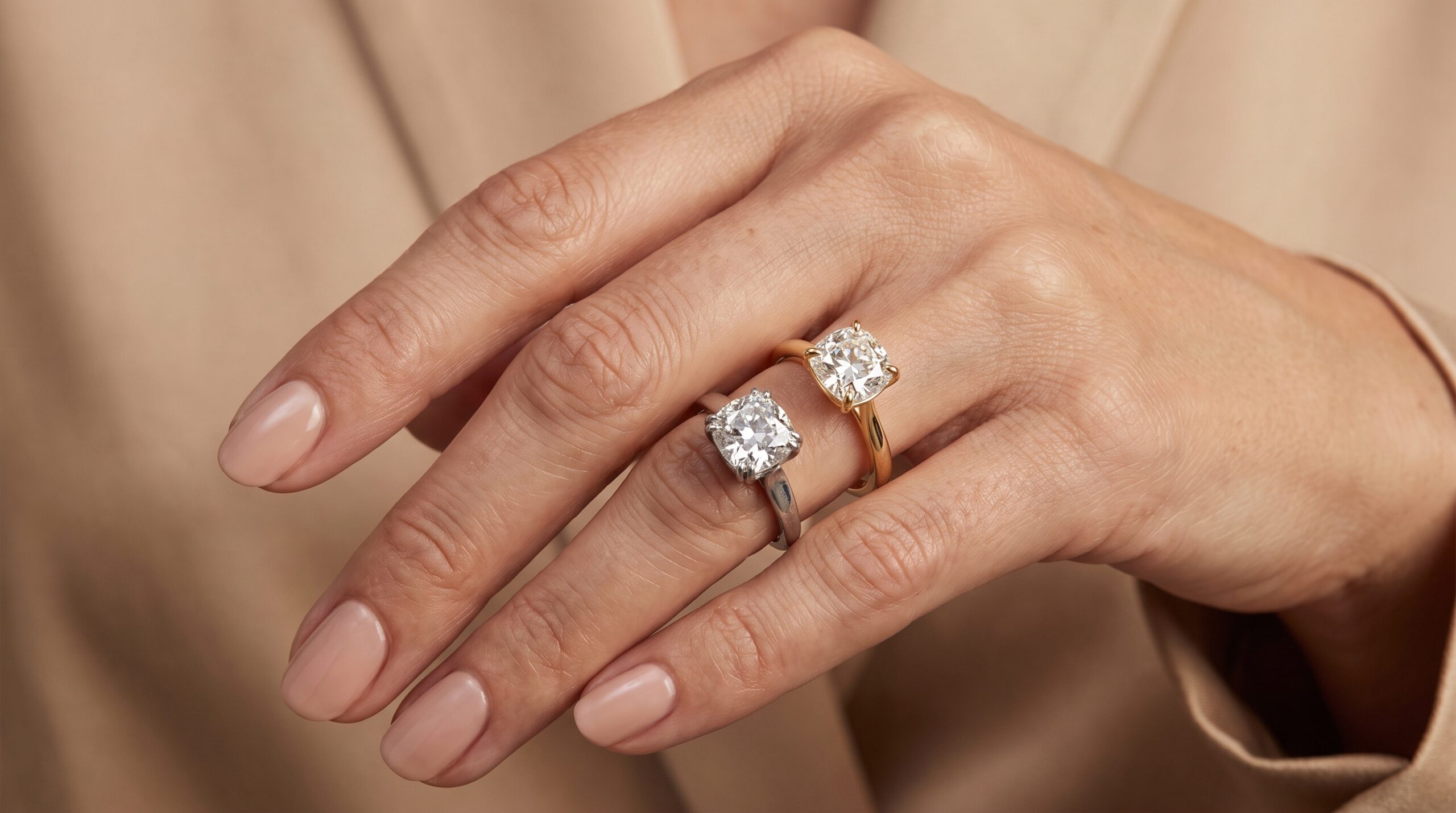
An inherited diamond carries a history the stone itself can’t communicate: whose hand it sat on, what decades it passed through, what the setting looked like when it was new. Wanting to wear it doesn’t mean wanting to freeze it exactly as it was. Most people who inherit a diamond want it in a ring they’ll actually reach for every day, which usually means a different setting than the one it came in.
That’s a more involved decision than picking a new mounting off a shelf. The stone needs to be examined before anyone commits to a design, since decades of wear can leave chips, worn edges, or a setting that isn’t holding the diamond as securely as it looks. Getting this right means treating the reset as both a craftsmanship question and a documentation question, not just a style choice.
What Does Resetting an Heirloom Diamond Mean?
Resetting means moving an existing diamond out of its current mounting and into a new one. The stone doesn’t change. The metal structure around it does.
Redesigning goes further. It might use the original diamond, but it can also incorporate side stones, melt down or repurpose the original metal, or draw on specific design details from the old piece while building something substantially different. A reset is a targeted change. A redesign is a broader one, and the line between them often comes down to how much of the original piece survives into the final ring.
People reset heirloom diamonds for a mix of reasons: modernizing a setting that feels dated, improving how comfortably the ring sits on the hand, turning an inherited stone into an engagement ring rather than leaving it as a family piece worn occasionally, honoring a relative by keeping their diamond in active use, or replacing a setting that’s actually failing, with worn prongs or a loose mounting that no longer holds the stone securely.
| Option | What Changes | Best For | Key Consideration |
| Reset | The mounting changes; the diamond stays the same | Someone happy with the stone who wants a new setting | Simpler and generally faster than a redesign |
| Redesign | Multiple elements change, possibly including metal and side stones | Heirlooms where more of the original piece needs to be incorporated thoughtfully | More design time and typically higher cost |
| Repair | Fixes damage or wear in the existing setting without changing its design | A setting that’s structurally failing but the design itself still works | Doesn’t address style, only function |
Can Any Heirloom Diamond Be Reset?
Not automatically, and this is the step worth doing before falling in love with a specific new design. An inherited diamond has usually been worn for years, sometimes decades, and it can carry chips along the edge, a worn girdle (the thin band around the stone’s widest point), or wear from a setting that was already loose before it was passed down. None of this is unusual for an older stone, but it changes what’s safe to do next.
A jeweler assessing the stone before a reset should check for chips and surface damage, cracks or inclusions that could be stressed by the resetting process, a worn or thinning girdle, how securely the current setting is actually holding the stone, evidence of previous repairs, precise measurements of the stone, and whether those measurements and the stone’s condition make it suitable for the setting style the owner has in mind.
Before choosing a design, confirm with a jeweler whether the diamond is structurally suitable for resetting into that specific style. A stone with a worn girdle, for example, might be a poor fit for a setting that exposes more of the edge, even if it would be perfectly fine in a more protective mounting.
Choosing the Right Setting for an Heirloom Diamond
A solitaire setting keeps the diamond as the sole focus, with a small number of prongs holding it in place. It’s a straightforward, timeless option and generally one of the less complex settings to execute well, which also tends to make it easier to inspect and maintain over time.
A bezel or low-profile setting surrounds the stone’s edge with a metal rim rather than exposing it through prongs alone. This offers more physical protection for a stone with any wear along the girdle, and it sits closer to the finger, which many people find more practical for daily activities.
A halo setting surrounds the center stone with smaller diamonds, adding visual size and extra sparkle. It’s a strong choice for making a smaller inherited diamond feel more prominent, but the additional small stones mean more settings to inspect and more surface area collecting residue over time.
A vintage-inspired setting uses design details, filigree, milgrain edging, engraved patterns, reminiscent of the original piece’s era, while rebuilding the structure itself to hold the stone securely today. This is often the setting style that best preserves the feeling of the original ring without carrying forward whatever structural issues the old mounting had.
A side-stone design incorporates smaller diamonds, sometimes reclaimed from the original piece or from other family jewelry, flanking the center stone. Done well, this can carry more of the family’s actual materials into the new ring, not just the design spirit of it.
| Setting Style | Best For | Benefits | Considerations |
| Solitaire | A clean, low-complexity showcase for the stone | Easier to inspect, timeless design | Less visual size than a halo for a smaller stone |
| Bezel or low-profile | Stones with girdle wear, active daily wear | More physical protection, comfortable profile | Covers more of the stone’s edge, slightly less light exposure |
| Halo | Adding visual size and sparkle to a smaller stone | Makes the center stone appear larger | More small stones to inspect and clean regularly |
| Vintage-inspired | Preserving the original piece’s feeling | Carries design continuity forward | May cost more due to detailed metalwork |
| Side-stone | Incorporating other family stones into the design | Can physically include more of the original materials | Depends on what other stones are actually available and suitable |
How to Preserve Sentimental Value
Keeping the original diamond as the ring’s centerpiece is the clearest way to preserve continuity, since the stone itself, not the setting, is usually what carries the family history.
Side stones from the original piece, if there are any, can sometimes be worked into the new band, a hidden halo beneath the center stone, or even a matching wedding band, depending on their size and condition. Whether this is practical depends on the specific stones and the new design, so it’s a conversation to have with the jeweler early rather than an assumption to make going in.
The original metal is a separate question. Depending on its condition and the new design, some of it may be reusable, though metal that’s already thin or damaged from decades of wear often isn’t a good structural candidate for a new setting. Even when it can’t be physically reused, some owners choose to keep the original mounting separately rather than have it melted down or discarded, as a way of preserving the piece as it was.
Keeping before-and-after photos, the original receipt or family paperwork if any exists, and notes on what was kept versus changed and why, turns the reset into a documented part of the ring’s story rather than a change that quietly happened.
Fit, Comfort, and Everyday Wearability
Setting height affects daily comfort more than it affects appearance in photos. A high setting shows off the stone dramatically but catches on gloves, hair, and fabric more than a low-profile setting does, which matters more for a ring intended for daily wear than for one worn occasionally.
Band width affects both comfort and visual balance. A narrower band draws more attention to the stone itself, while a wider band changes how the ring sits and feels on the hand, independent of the stone’s size.
If the reset ring will be worn alongside a wedding band, it’s worth confirming how the two are meant to sit together. Some new settings are designed to sit flush against a straight wedding band, while others use a curved profile or leave an intentional gap. Testing this pairing before finalizing the design avoids an awkward mismatch later.
It’s also worth confirming upfront whether the finished ring can be resized later if needed, since some detailed settings, particularly those with stones running along the band, are more limited in how much they can be adjusted after the fact.
What Documentation Do You Need?
An appraisal estimates what it would cost to replace the ring today and is the document insurers rely on to set coverage. For an heirloom diamond, this is often the first piece of paperwork worth getting, since older family pieces frequently don’t come with a clear record of value.
A diamond grading report from a lab such as GIA documents the stone’s specific characteristics, cut, color, clarity, and carat weight, based on standardized criteria. It’s a different document from an appraisal: the grading report describes the diamond itself, while the appraisal assigns it a monetary value. If the heirloom diamond has never been graded, getting a report before resetting gives both the owner and any future insurer a clear, independent record of what the stone actually is.
Original photos, receipts, or family paperwork, however incomplete, are worth preserving alongside the new documentation rather than discarding once the ring is reset. They’re part of the stone’s provenance even if they don’t carry formal weight with an appraiser.
Once the reset is complete, get an updated appraisal for the finished ring. A reset diamond in a new setting, particularly one with added stones or different metal, often has a different value than the original inherited piece did, and the appraisal should reflect the ring as it exists now.
| Document | Why It Matters | When to Get It |
| Grading report | Documents the diamond’s specific characteristics independently of value | Before resetting, especially if the stone has never been graded |
| Initial appraisal | Establishes a baseline value for insurance purposes | Before or shortly after inheriting the stone |
| Original photos or family records | Preserves provenance and history | As soon as available, kept regardless of what’s reused |
| Final appraisal | Reflects the completed ring’s actual replacement value | After the reset is finished |
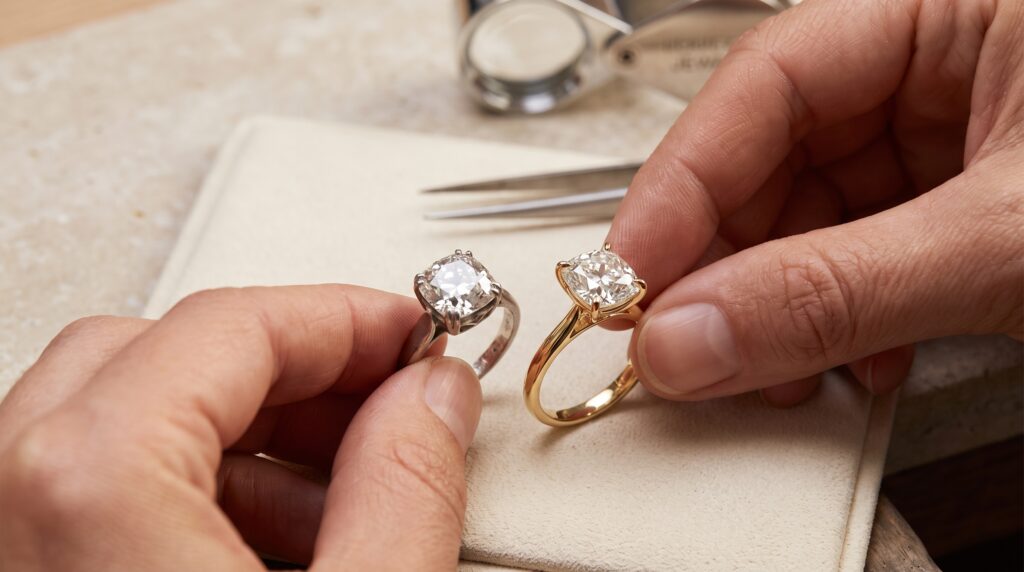
What to Ask a Jeweler Before Resetting
A short list of questions before approving any work helps avoid surprises partway through the process:
- Is this specific diamond safe to remove and reset, based on its current condition?
- Are there any chips, cracks, or worn areas I should know about?
- Which settings would best protect this particular stone?
- Can any of the original side stones or metal realistically be reused?
- Will I see a CAD rendering or another design preview before production starts?
- Is the diamond insured while it’s in the jeweler’s possession or in transit?
- Will the finished ring come with an updated appraisal?
- What happens to any original metal or stones that aren’t reused?
- Can the finished ring be resized later if needed?
- What warranty applies to the new setting and the work performed?
Online Resetting Services: What to Look For
Some jewelers now offer heirloom resetting through mail-in or online services, and the quality of the process varies. A service worth trusting will walk through a clear, specific workflow, explain insured shipping in detail, include a real stone assessment step before any design work begins, provide a CAD rendering or similar preview for approval before production, show genuine before-and-after examples of past work, provide a written estimate before committing, and include a final appraisal once the ring is complete.
Be cautious of a service that claims any diamond can be reset without qualification, since that ignores the real variation in stone condition described earlier. Also be wary of a process with no described stone inspection step, no specifics on how shipping is insured, no design approval stage before the ring is made, no documentation provided after the work is finished, or no clear explanation of what happens to the original setting or unused materials.
Care After Resetting an Heirloom Diamond
Have the finished ring inspected once it’s back in your hands, or ask the jeweler to do this as part of the final handoff. This means confirming the stone sits securely, the prongs or bezel are properly finished, and the overall setting quality matches what was promised in the design preview.
Ongoing maintenance depends on the setting chosen. A halo, pavé detailing, or an intricate vintage-inspired design generally needs more frequent professional inspection than a simple solitaire, since there’s more metalwork and more individual points where a stone could loosen over time. The GIA Gem Encyclopedia is a useful reference for understanding how a specific stone’s characteristics affect its long-term care needs.
Store the reset ring separately from other jewelry to avoid scratches, and make sure the insurance policy or appraisal on file reflects the ring as it exists now, not the inherited piece as it was before the reset.
Conclusion
The stone assessment is the step that should happen before anything else, since it determines what settings are actually safe options rather than just appealing ones. From there, the choice between a solitaire, a bezel, a halo, or a vintage-inspired design comes down to how the ring will actually be worn day to day, weighed against how much of the original piece’s feeling you want the new setting to carry.
Start with a jeweler who’s willing to explain the stone’s condition in specific terms, not just approve whatever design you bring in. That conversation, more than any single setting choice, determines whether the finished ring holds up to daily wear while keeping the diamond’s history intact.
Frequently Asked Questions
Can any heirloom diamond be reset?
Most can, but not automatically, and a professional assessment should come before any design decisions. Older diamonds can have chips, a worn girdle, or other wear that affects which settings are actually safe for that specific stone. A jeweler examining the diamond before resetting can tell you what condition it’s in and which setting styles suit it, rather than assuming any design will work.
Do I need paperwork before resetting an inherited diamond?
It helps, though it’s not always available for older family pieces. If the diamond has never been graded, getting a grading report before resetting establishes an independent record of its characteristics. An appraisal, which estimates replacement value, is also worth getting before or shortly after the reset, since many inherited stones don’t come with a documented value and insurers will need one.
What is the difference between a reset and a redesign?
A reset moves the existing diamond into a new mounting without changing much else. A redesign is broader and might incorporate the original diamond alongside repurposed metal, side stones, or design details from the old piece into something more substantially different. Which one applies to a given project depends on how much of the original ring the new design actually uses.
Can I reuse the old metal or side stones?
Sometimes, depending on their condition and the new design. Metal that’s already thin or worn from decades of use often isn’t a good structural candidate for a new setting, even if the owner would prefer to reuse it. Side stones are more often reusable if they’re in good condition and suit the new design, but this is a case-by-case decision a jeweler needs to evaluate directly rather than something to assume going in.
Is a bezel setting safer for an older diamond?
Often, yes, particularly for a stone with any wear along the girdle. A bezel setting surrounds the stone’s edge with a metal rim, offering more physical protection than a prong setting that exposes more of the stone’s perimeter. Whether it’s the right choice for a specific diamond still depends on that stone’s actual condition and the wearer’s preferences, but it’s a setting style worth considering when protection is a priority.
Should I get the diamond appraised before resetting?
Yes, if it doesn’t already have a documented value. An appraisal before the reset establishes a baseline, and getting the diamond graded independently, if it hasn’t been already, gives you a record of its characteristics that exists separately from whatever setting it ends up in. This matters especially for inherited pieces, which often arrive without any formal documentation at all.
Will resetting change the diamond’s value?
The diamond’s own value, based on its cut, color, clarity, and carat weight, doesn’t change from being reset. What can change is the overall ring’s value, since a new setting, especially one with added metal or accent stones, adds its own cost on top of the diamond. This is why a final appraisal after the reset is worth getting: it reflects the completed ring, not just the stone that started the process.
How do I preserve sentimental value?
Keeping the original diamond as the centerpiece is the most direct way, since the stone itself usually carries more of the family history than the setting around it. Beyond that, reusing side stones or original metal where the jeweler confirms it’s practical, and keeping before-and-after photos along with any original paperwork, both help preserve the connection to the piece as it was, even when the setting itself changes substantially.
Can an heirloom reset be worn every day?
Yes, and that’s often the whole point of resetting in the first place. A setting chosen with daily wear in mind, a solitaire or bezel rather than an intricate design with many small stones, tends to hold up better to regular use and needs less frequent maintenance. The stone’s own condition also matters here, which is another reason the initial assessment is worth doing carefully before committing to a design.
What should I ask before approving the design?
Confirm that the stone has been properly assessed and that the proposed setting suits its condition, ask to see a CAD rendering or similar preview before production begins, and get a written estimate that includes what happens to any original metal or stones not used in the new design. It’s also worth confirming whether a final appraisal is included once the ring is finished, since that document is what your insurance coverage will eventually be based on.