
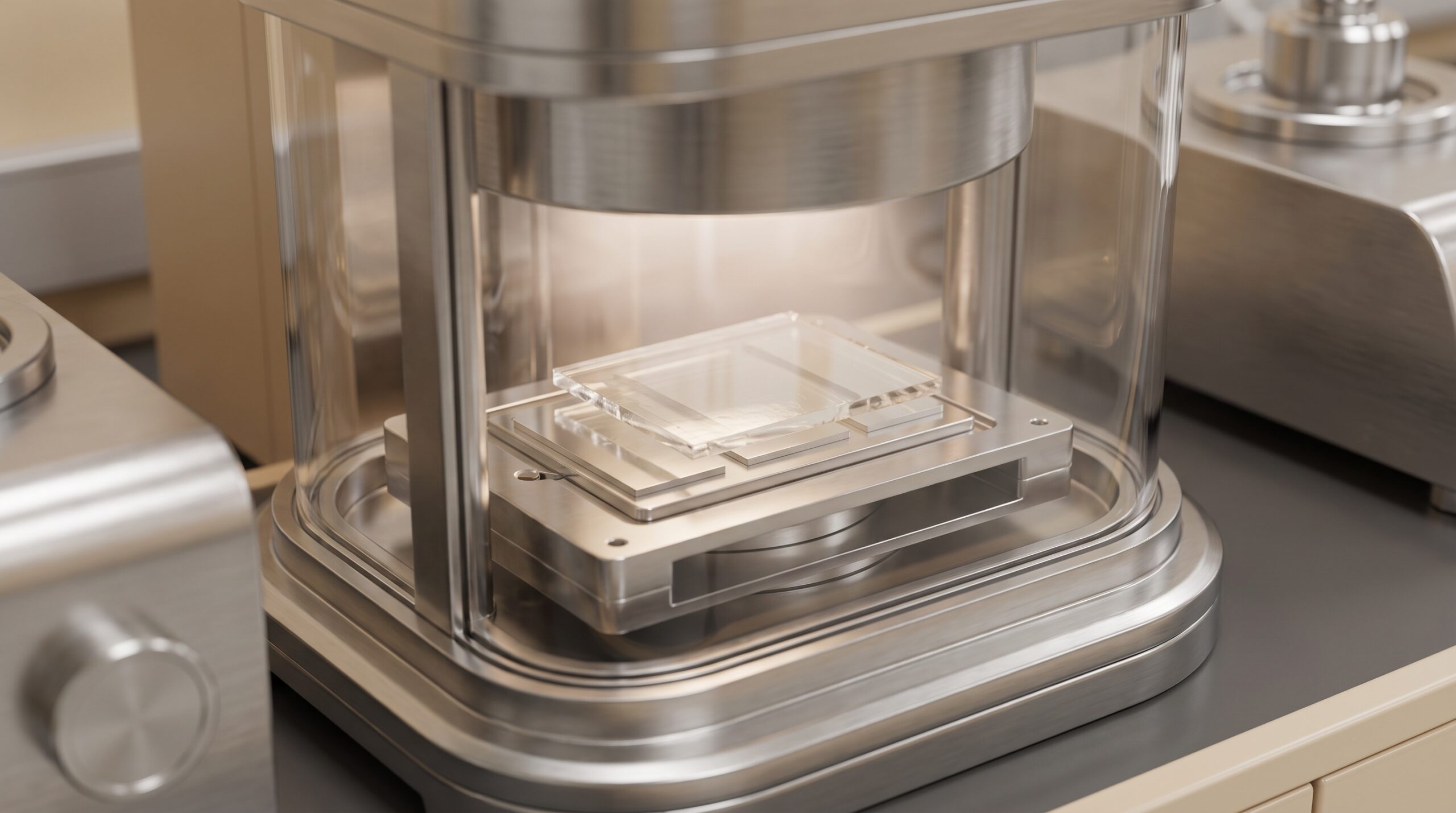
Two lab grown diamonds sit side by side. Similar carat weight, similar color and clarity grades, similar price. One is labeled HPHT. The other is labeled CVD. A shopper who has spent an hour reading about the 4Cs now has a new acronym to worry about, and no clear sense of what it means for the ring they’re about to buy.
HPHT and CVD are production methods, not quality grades. Neither one guarantees a better-looking, more durable, or more valuable diamond. What follows is a breakdown of how each method works, what tends to show up in stones grown each way, and where growth method actually matters to a buyer versus where it doesn’t.
HPHT vs CVD at a Glance
| Factor | HPHT | CVD | Buyer relevance |
| Full name | High pressure, high temperature | Chemical vapor deposition | Both describe growth, not quality |
| Growth environment | Extreme pressure and heat inside a press | Low-pressure gas chamber | Different equipment, same end material |
| Carbon source | Solid graphite | Methane or another hydrocarbon gas | Affects process, not the finished diamond’s identity |
| Role of the seed | Diamond seed placed in a growth capsule | Diamond seed plates in a chamber | Both start from existing diamond crystal |
| Pressure/temperature | Roughly 5-6 gigapascals, 1,300-1,600°C | Low pressure, moderate heat with plasma | Explains why the equipment looks so different |
| Possible inclusions | Metallic flux inclusions | Carbon inclusions, graining | Individual stone, not guaranteed by method |
| Possible undertones | Occasional blue nuance in some boron-bearing stones | Occasional brown or gray undertone | Check the actual stone under normal light |
| Post-growth treatment | Less commonly treated | Often HPHT-treated to improve color | Ask what treatment, if any, was applied |
| Typical rough form | Cube-like rough | Tabular rough | Affects cutting decisions, not final grade |
| Buyer relevance | Low, unless personally significant | Low, unless personally significant | Quality and documentation matter more |
Neither column wins across the board. A well-cut, high-clarity HPHT diamond will outperform a poorly cut CVD diamond, and the reverse is just as true.
What HPHT and CVD Diamonds Have in Common
Both processes start with a diamond seed, a thin sliver of existing diamond crystal, and build new carbon onto it in the same crystal structure as a natural diamond. That’s the part buyers sometimes miss: neither method is manufacturing a substitute. Both produce actual diamond, chemically and structurally, that then gets cut and polished the same way a mined stone would be.
That shared identity is worth separating from two other categories. A diamond simulant, such as moissanite or cubic zirconia, is a different mineral shaped to resemble diamond. A natural diamond formed underground over a long geological timescale. A lab grown diamond, whether HPHT or CVD, is diamond material grown in a controlled setting. A growth method is the specific process (HPHT or CVD) used to create that diamond. A post-growth treatment is anything done to the diamond after it’s already formed, most commonly to adjust color.
Both HPHT and CVD diamonds can vary widely in cut quality, color, clarity, and transparency, and identifying which method produced a specific stone usually requires equipment well beyond a jeweler’s loupe.
How HPHT Diamonds Are Grown
HPHT stands for high pressure, high temperature, and the name describes the growth conditions rather than anything cosmetic.
The process starts with a growth capsule containing a diamond seed, a solid carbon source such as graphite, and a metal catalyst or flux. That capsule goes into a specialized press capable of generating roughly 5 to 6 gigapascals of pressure at temperatures between about 1,300°C and 1,600°C, conditions meant to approximate what produces diamond naturally deep in the earth’s mantle, according to GIA’s overview of HPHT and CVD diamond growth processes.
Under those conditions, the metal catalyst melts and dissolves the carbon source. The molten metal then carries dissolved carbon toward the cooler diamond seed, where it crystallizes in the diamond structure. Carbon keeps building around the seed until a rough diamond has formed, at which point it’s removed from the capsule, planned for cutting, and polished like any other rough stone.
HPHT-grown diamonds can sometimes contain metallic inclusions left over from the flux, and some can show phosphorescence or, in certain boron-containing stones, a blue color nuance. None of these show up in every HPHT diamond, and high-color, high-clarity HPHT material is widely available.
How CVD Diamonds Are Grown
CVD stands for chemical vapor deposition, and the process looks almost nothing like HPHT despite producing the same material.
Thin diamond seed plates go into a low-pressure chamber, and the chamber is filled with hydrogen and a hydrocarbon gas, usually methane. Microwave energy then activates that gas mixture into plasma, an energized gas containing reactive carbon particles. Carbon atoms from the plasma settle onto the seed plates and build the diamond crystal structure outward in thin layers, a process detailed in GIA’s Gems & Gemology review of CVD-grown synthetic diamonds.
That layer-by-layer growth sometimes gets misread as evidence that CVD diamonds are somehow assembled or laminated. They aren’t. The layers form one continuous diamond crystal, the same way tree rings record a single tree’s growth rather than a stack of separate pieces glued together. Once growth is complete, the rough is removed from the chamber, inspected, planned, cut, and polished.
CVD material can sometimes show black carbon inclusions, brown or gray undertones, growth graining, internal strain, or reduced transparency. As with HPHT, these are possibilities in individual stones, not universal traits, and current CVD production regularly produces large, high-quality stones without any of them.
HPHT vs CVD: The Direct Comparison
Growth environment. HPHT grows diamond from solid carbon under extreme pressure. CVD grows it from carbon-bearing gas at low pressure. Different mechanics, same crystal structure at the end.
Inclusions. HPHT stones may carry metallic flux inclusions. CVD stones may carry carbon inclusions, graining, or internal strain. Either type of inclusion can affect a stone’s clarity grade and, depending on size and position, its transparency.
Color and undertones. Some HPHT diamonds show a blue nuance tied to boron content. Some CVD diamonds show brown or gray undertones before treatment. Neither tendency applies to every stone from either method, and color should be judged on the specific diamond rather than assumed from its label.
Size and availability. Buyers browsing larger center stones will often see more CVD inventory, while HPHT material shows up more in smaller stones and melee. That pattern reflects current production trends rather than a fixed rule, and it shifts as manufacturing capacity changes.
Durability. Both methods produce diamond material with comparable basic durability. Diamond’s hardness comes from its crystal structure, not from which process built that structure.
Price. Similar HPHT and CVD diamonds frequently land in the same price range. Where prices diverge, the driver is usually cut quality, size, shape, color, clarity, transparency, which lab issued the report, and the seller’s margin, not the growth method itself.
HPHT-Grown vs HPHT-Treated CVD Diamonds
Most of the confusion in this comparison comes from one fact: “HPHT” describes two different things depending on context.
An HPHT-grown diamond was created through the HPHT process from the start. An HPHT-treated CVD diamond was grown by CVD and later exposed to HPHT conditions, typically to reduce brown coloration and improve its color grade. Same three letters, different role in the diamond’s history.
Treatment doesn’t make a diamond less authentic. The stone is still lab grown diamond material before and after treatment. GIA’s 2024 update on laboratory-grown diamonds notes that a large share of CVD material submitted to the lab has received HPHT treatment, a finding specific to GIA’s submissions rather than a fixed percentage across the entire market. What matters for a buyer is that the color change from HPHT treatment is generally stable under normal wear, according to IGI’s guidance on post-growth treatments, though treatment doesn’t guarantee excellent cut, clarity, or transparency on its own, and it should be disclosed at the point of sale.
| Term | Growth method | Later treatment | What it tells the buyer |
| HPHT-grown | HPHT | May or may not have later treatment | How the diamond grew |
| CVD as-grown | CVD | None detected | Growth and treatment history |
| HPHT-treated CVD | CVD | HPHT treatment | Growth method plus later processing |
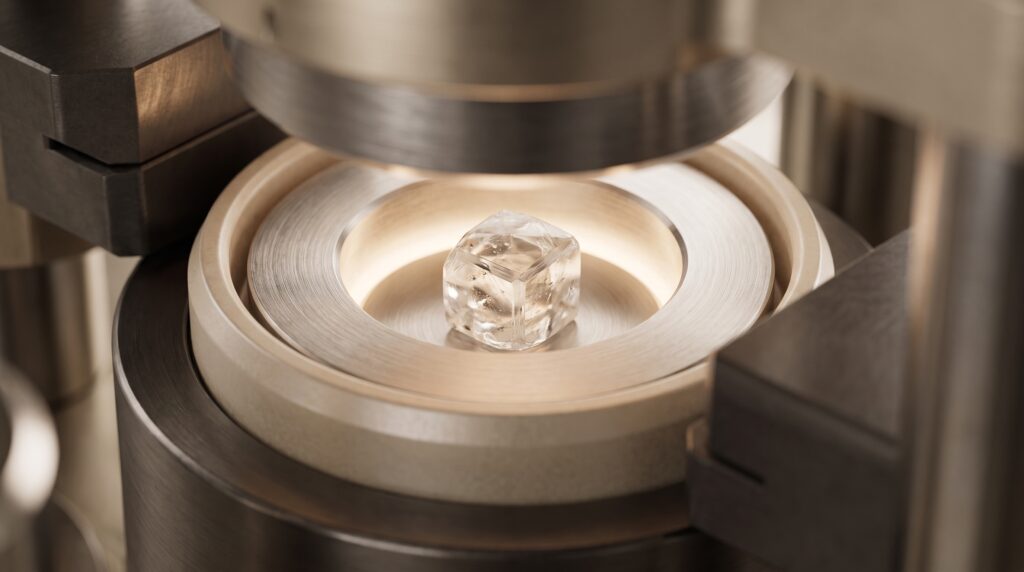
What Does As-Grown Mean?
As-grown means no treatment was detected after the initial growth process. That’s the entire meaning. It doesn’t indicate a better cut, higher color, better clarity, greater transparency, stronger durability, greater rarity, better environmental performance, or stronger resale value.
If untreated production genuinely matters to a buyer for personal reasons, as-grown status is worth paying attention to, provided it’s documented on a verifiable report. Paying a premium for as-grown status without that documentation, or paying it simply because the term sounds more exclusive, isn’t supported by any quality difference.
Which Method Produces Better-Looking Diamonds?
Neither one, reliably. Appearance comes down to what happens after growth, not the growth method itself.
Cut is the biggest factor. Cutting happens after the rough diamond leaves the growth chamber or press, and it’s what determines brightness, fire, and how much a stone sparkles under different lighting. A diamond can have excellent color and clarity numbers on paper and still look flat if it’s cut poorly.
Transparency matters separately from clarity grade. Strong graining or internal strain, more commonly associated with CVD material, can create a hazy look even in a stone with a clarity grade that sounds impressive on paper. This is one reason video review of the exact stone matters more than reading grades off a report.
Color and undertone should be checked under neutral, ordinary lighting rather than under a jeweler’s spotlight, which can mask a warm or gray cast. Clarity and inclusions matter less for their grade than for whether they’re visible to the eye, whether they affect transparency, or whether they sit somewhere on the stone that raises a durability concern. And carat weight measures mass, not visible size, so millimeter dimensions tell a buyer more about how large the stone will actually look on the hand.
A practical buying sequence: look at overall appearance and transparency first, then cut and proportions, then face-up measurements, then color and undertone, then eye-visible clarity, then documentation, and only then, if it matters personally, growth method.
Can You See the Difference Between HPHT and CVD?
Not reliably, and not with the unaided eye. Some inclusion patterns or growth features can suggest a method to a trained gemologist, and phosphorescence sometimes shows up more in HPHT material, but neither is a conclusive home test. Standard thermal diamond testers check for diamond versus simulant; they can’t determine growth method or origin.
GIA’s FAQ on identifying laboratory-grown diamonds notes that determining growth method and origin generally requires advanced gemological instruments in a laboratory setting. For a buyer, the practical takeaway is to rely on a verifiable report rather than attempting to identify the method independently.
Does Growth Method Affect Durability?
Not in any way that matters day to day. Both HPHT and CVD diamonds hold up well in daily-wear jewelry, and both resist scratching for the same reason: they’re diamond, structurally identical to mined stone in hardness.
Hardness isn’t the same as indestructibility, though. Either type of lab grown diamond can chip under a sharp, direct impact, particularly at a pointed corner like the tip of a princess or pear cut. GIA’s guidance on diamond care and cleaning notes that despite diamond’s resistance to scratching, careful handling still matters. In practice, the ring’s setting, the prongs, and how they’re maintained tend to need more attention over time than the diamond itself.
Setting, Fit, and Lifestyle Considerations
Growth method has no bearing on ring size, comfort, or how a stone wears day to day. Those factors come down to the setting and the wearer’s routine.
For pointed shapes like pear, marquise, or princess cuts, V-shaped prongs protect the vulnerable corners. Active wearers, or anyone working with their hands frequently, tend to do better with low-profile or bezel settings that keep the stone closer to the finger and out of the way of daily impact. Six-prong settings offer more security for larger center stones than the standard four-prong, and cathedral or basket designs, while visually appealing, can leave a gap that catches on fabric or hair.
Fit questions matter separately. Wider bands tend to feel tighter than narrow ones at the same numeric size. Stacked rings need enough room to sit together without rubbing. Eternity bands and heavily detailed designs can be difficult or impossible to resize later, since resizing usually means cutting and rejoining metal that’s already set with stones. A larger center stone can also make a ring feel top-heavy depending on band width and setting height. It’s worth confirming a ring’s permitted resizing range before ordering, particularly with eternity or pavé designs.
How Reports Describe HPHT and CVD Diamonds
A reputable laboratory report on a lab grown diamond typically includes laboratory-grown identification, a report number, carat weight, measurements, shape, and quality information. Whether it includes growth method and treatment history depends on the lab and report type.
IGI’s lab grown diamond report commonly includes the 4Cs and may note growth method and treatment. GIA currently issues Premium and Standard assessments for eligible colorless to near-colorless lab grown diamonds, a different format from a full grading report. Because formats vary, it’s worth checking exactly what a given report covers before assuming it will confirm growth method or treatment history, and verifying the report number directly through the issuing lab rather than trusting a printed copy alone.
A report isn’t an appraisal, a warranty, a guarantee of retail or resale price, proof of environmental performance, or proof of the setting’s craftsmanship. It documents the stone, nothing more.
Should HPHT and CVD Diamonds Cost Different Amounts?
Not automatically. Price differences between similar-looking HPHT and CVD diamonds usually come down to carat weight, cut and proportions, color, clarity, transparency, shape, treatment history, which lab issued the report, and how a particular seller prices inventory and margin.
Labels like CVD, HPHT, Type IIa, or as-grown don’t by themselves justify a large premium. Type IIa, in particular, is a chemical classification referring to very low nitrogen content, and it gets marketed as a mark of exceptional quality more often than the classification actually supports. If an article or listing cites specific current prices, those figures should be dated, identified as active-listing or market data rather than fixed values, and kept separate from complete-ring pricing, since loose-stone and finished-ring prices aren’t directly comparable.
Sustainability Claims and Growth Method
Neither HPHT nor CVD is automatically the more sustainable choice. The label alone doesn’t reveal enough to make that call.
What actually affects environmental impact includes the electricity source powering the reactor or press, how efficient that equipment is, how long a growth run takes, how many runs fail before producing usable material, whether the diamond underwent post-growth treatment, where production and cutting took place, and how far the finished stone traveled before reaching a retailer. The scope of any emissions calculation, whether it accounts for the full supply chain or just the growth step, changes what a given sustainability claim actually means.
The FTC’s Green Guides require that environmental marketing claims be backed by specific, substantiated evidence rather than general impressions. A buyer who cares about this should ask a seller for facility-specific information rather than accepting a general “eco-friendly” label. Independent standards like SCS-007, a sustainability standard for gemstones, exist separately from gemological grading reports and address environmental and labor practices rather than diamond quality.
How to Choose Between HPHT and CVD
Start by deciding whether growth method actually matters to you personally, separate from anything a seller has implied about it. Set a total budget that includes the stone and the setting. From there, compare exact-stone imagery and video rather than stock photos, evaluate cut, transparency, color, clarity, and measurements directly, and review growth and treatment information where it’s available. Verify the report through the issuing lab, check the setting and its compatibility with a wedding band, and review the seller’s return, resizing, and warranty terms before ordering.
Choose HPHT if the specific stone performs well and offers the strongest overall value. Choose CVD on the same basis. Reserve a preference for as-grown status for cases where untreated production matters to you personally, and treat growth method as one input among several rather than the deciding factor.
Online Buying Checklist
A trustworthy listing should provide exact-stone imagery, 360-degree video, footage under normal lighting where possible, access to the report, a verifiable report number, growth method and treatment history where relevant, carat weight and measurements, setting dimensions, metal purity, return period, resizing terms, warranty coverage, insured shipping, and the complete purchase cost.
Watch for a few warning signs: a seller claiming one growth method is universally superior, a large unexplained premium tied to Type IIa or as-grown status, stock footage presented as the actual diamond, a report that can’t be verified through the issuing lab, the term “HPHT” used without clarifying whether it refers to growth or treatment, environmental claims with no supporting evidence, and return policies that don’t allow a reasonable inspection period.
Care and Maintenance
Care for HPHT and CVD diamonds the same way: clean with warm water, a mild soap, and a soft brush, rinse thoroughly, and dry with a lint-free cloth. Store the piece separately from other jewelry to avoid scratching softer metals or gemstones, and remove it during heavy manual work or activities with a real risk of impact.
Avoid abrasive cleaners and harsh chemicals, and be cautious with home ultrasonic or steam cleaners, which can loosen certain settings or damage other gemstones nearby if the ring is a multi-stone piece. Have the setting checked periodically, and get a professional inspection after any strong impact, even if the ring looks fine. How often that periodic check should happen depends on the design, how often the ring is worn, and a jeweler’s specific recommendation, not a fixed interval that applies to every ring.
Frequently Asked Questions
Which is better, HPHT or CVD?
Neither method is better in general terms. Both produce genuine lab grown diamond material, and the finished stone’s cut, transparency, color, clarity, and documentation determine quality far more than which process grew it. A well-made stone from either method can outperform a poorly made stone from the other.
Are both methods genuine lab grown diamonds?
Yes. Both HPHT and CVD grow actual diamond, chemically and structurally identical to mined diamond, starting from a diamond seed and building new carbon in the same crystal structure. Neither is a diamond simulant like moissanite or cubic zirconia.
Can buyers see the difference between the two methods?
Not reliably. Determining growth method typically requires advanced gemological equipment used in a laboratory setting, not a visual inspection or a standard home diamond tester. Some inclusion types or growth features can hint at a method to a trained gemologist, but they aren’t conclusive on their own.
Are CVD diamonds weaker because they grow in layers?
No. CVD growth builds new carbon onto a seed plate in thin layers, but those layers form one continuous diamond crystal rather than separate pieces stacked together. The comparison to tree rings is useful here: rings record how a tree grew over time, but they aren’t detachable sections that can peel apart.
Why are some CVD diamonds HPHT-treated?
HPHT treatment is commonly applied to CVD diamonds after growth to reduce brown coloration and improve the color grade. This is a separate process from HPHT growth, even though both use the same three letters. The diamond was grown by CVD and later exposed to HPHT conditions specifically for color improvement.
Is an HPHT-treated CVD diamond lower quality than an untreated one?
Not inherently. The treatment itself doesn’t reduce authenticity, and the resulting color change is generally stable under normal wear. Treatment also doesn’t guarantee excellent cut or clarity on its own, so a treated stone still needs to be evaluated on its own merits like any other diamond.
Are as-grown diamonds more valuable?
Not automatically. As-grown describes treatment history only: no post-growth treatment was detected. It says nothing about cut, color, clarity, transparency, durability, or resale value. A premium for as-grown status makes sense only if untreated production specifically matters to the buyer, and even then it should come with documentation.
Does HPHT always produce metallic inclusions?
No. Metallic flux inclusions are possible in HPHT material because of the metal catalyst used during growth, but they don’t appear in every stone. High-color, high-clarity HPHT diamonds without visible metallic inclusions are widely available.
Is CVD automatically more sustainable than HPHT?
No. Environmental impact depends on factors like electricity source, reactor efficiency, growth duration, failed growth runs, treatment, production location, and transportation, none of which can be inferred from the growth method label alone. A specific sustainability claim needs its own supporting evidence, separate from any gemological report.
Should HPHT and CVD diamonds cost different amounts?
Similar stones from either method often land in a similar price range. Where prices do differ, the more likely drivers are carat weight, cut, color, clarity, transparency, shape, treatment history, which lab issued the report, and the seller’s margin, not the growth method itself.
Can a home diamond tester identify the growth method?
No. Standard thermal and electrical conductivity testers are built to distinguish diamond from simulants like moissanite, not to determine whether a diamond is natural or lab grown, or which growth method produced it. That level of identification requires laboratory equipment.
Does every grading report state HPHT or CVD?
Not necessarily. Report formats differ by lab. Some reports include growth method and treatment information as standard fields, while others use a different assessment structure that may not spell out the growth method directly. It’s worth checking what a specific report actually covers, or verifying details with the issuing lab, rather than assuming.