
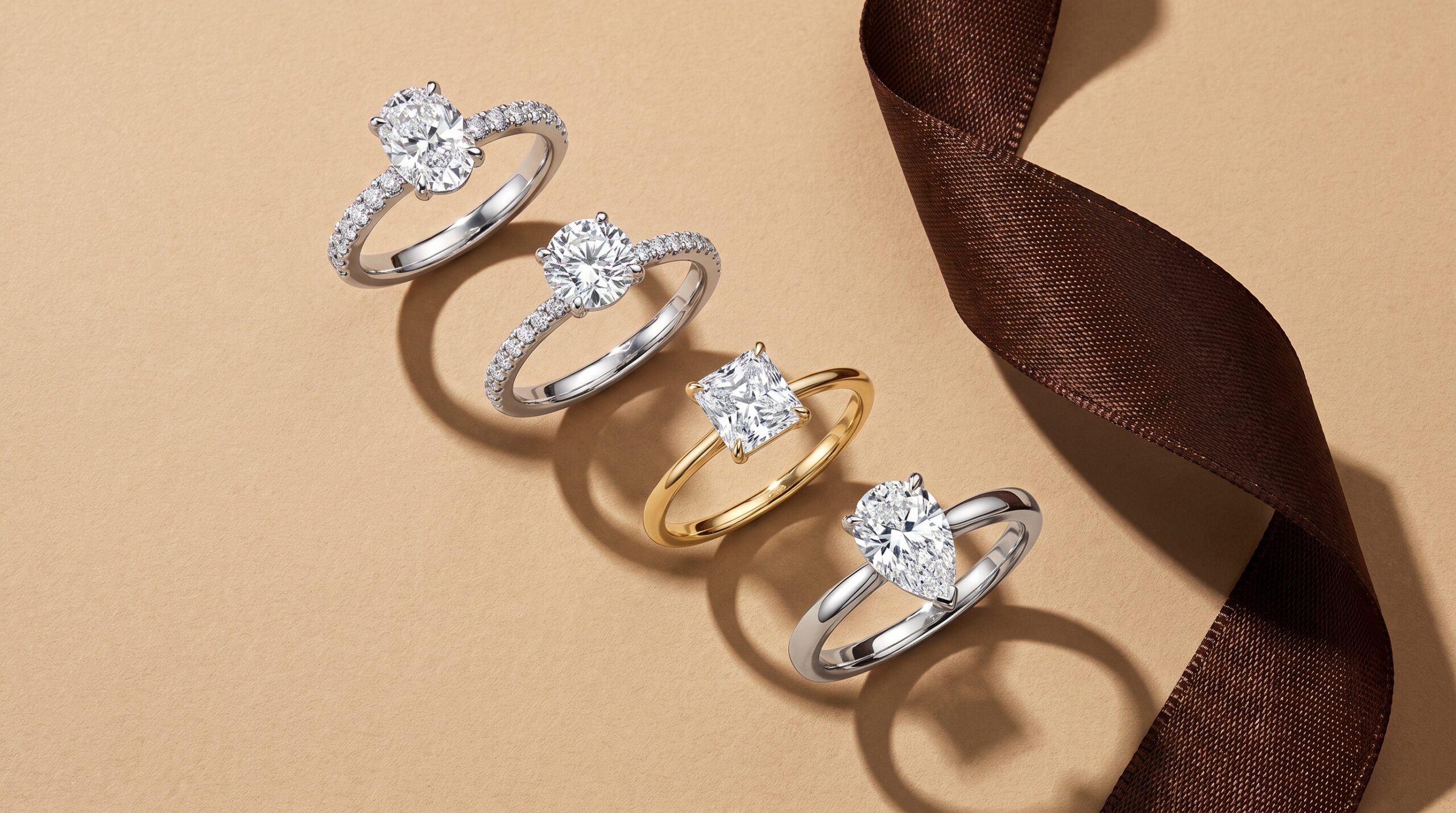
Most people shopping for their first engagement ring hit the same wall: they don’t know which decisions actually matter. Should the diamond be as large as the budget allows? Does the metal matter as much as the stone? Is a lab-grown diamond a compromise or just a different option? None of these questions have a single right answer, but they do have clear tradeoffs, and once you understand them, the rest of the shopping process moves a lot faster.
This guide walks through the decisions in the order most buyers actually face them: budget first, then stone quality, stone type, setting, metal, lifestyle fit, sizing, and finally what to check before handing over money online.
What Is an Engagement Ring?
An engagement ring is a ring given to signal a commitment to marry, typically worn on the left ring finger and later paired with a wedding band during the ceremony. Most feature a center stone, commonly a diamond, though moissanite, sapphires, and other gemstones are increasingly common. The center stone can be natural or lab-grown, and it’s set into a metal band using one of several setting styles that affect both appearance and durability.
Step 1: Set a Realistic Budget
Ignore Outdated Spending Rules
The idea that an engagement ring should cost two or three months of salary comes from a 20th-century advertising campaign, not from any financial or cultural requirement. There’s no rule buyers are obligated to follow, and treating one as fixed can push people toward spending they aren’t comfortable with.
Decide What Feels Comfortable
A more useful starting point is looking at what can be spent without disrupting savings goals, other financial obligations, or plans tied to the proposal and wedding itself. Some buyers set aside a fixed amount well in advance; others compare a few price points to see what feels reasonable once they’ve seen actual rings rather than a number in the abstract.
Where Budget Matters Most
Once a total is set, the question becomes where to allocate it. Diamond cut quality has the biggest effect on how a stone looks, so it’s usually worth prioritizing over carat size. Setting craftsmanship affects how securely the stone is held over years of wear, which matters more the longer the ring will be worn daily. A durable metal reduces how often the ring needs professional maintenance. And checking return and resizing terms before buying protects the budget from a mismatched or ill-fitting ring after the fact.
| Priority | Why It Matters | When to Spend More |
| Cut quality | Determines sparkle and brilliance | When the diamond is the visual focus of the ring |
| Setting craftsmanship | Affects security and long-term wear | When the ring will be worn daily for years |
| Durable metal | Reduces maintenance costs over time | When low upkeep is a priority |
| Return and resizing terms | Protects against fit or quality issues | Always, regardless of budget size |
Step 2: Understand the Diamond 4Cs
Cut, color, clarity, and carat weight are the four factors gemological labs use to describe and grade diamonds. The GIA’s 4Cs education is the standard reference most jewelers and labs point to when explaining how each factor is assessed.
Cut measures how well a diamond’s proportions and angles are shaped to reflect light back to the eye, and it has more effect on visible sparkle than any other factor. Color is graded on a scale from D (colorless) to Z (visibly tinted), and most diamonds used in engagement rings fall in the near-colorless range, roughly G to J, where any tint is essentially invisible without lab equipment. Clarity refers to internal and surface characteristics that form naturally inside the stone; diamonds described as “eye-clean” have no inclusions visible to the naked eye, even if they’re detectable under magnification. Carat measures weight, not size, so two diamonds of identical carat weight can look different in diameter depending on how they’re cut and shaped.
| 4C | What It Means | Why It Matters | First-Time Buyer Tip |
| Cut | Precision of proportions and angles | Determines sparkle and brilliance | Prioritize cut over carat when the budget is limited |
| Color | Presence or absence of tint | Affects warmth of appearance | Near-colorless grades (G-J) look white to the eye at a lower price |
| Clarity | Internal and surface characteristics | Affects rarity and value | Eye-clean stones look flawless without paying for a flawless grade |
| Carat | Weight of the stone | Affects size and price | A well-cut stone just under a round number often looks the same for less |
Step 3: Compare Center Stone Options
Natural diamonds form over billions of years under intense heat and pressure beneath the earth’s surface. Lab-grown diamonds are created in controlled laboratory conditions using processes that replicate that same heat and pressure. According to the GIA, lab-grown diamonds share the same chemical composition, crystal structure, and optical properties as natural diamonds. The distinction between them is origin, not physical makeup, and a trained gemologist needs specialized equipment to tell them apart. Lab-grown diamonds typically cost significantly less per carat than natural diamonds of comparable quality, which lets buyers get a larger or higher-grade stone for the same budget.
Moissanite is a different mineral entirely, originally discovered in meteorite fragments and now lab-created for jewelry use. It has a higher refractive index than diamond, which gives it a more fiery, colorful sparkle rather than diamond’s characteristically white brilliance. Moissanite is also harder to scratch than most materials short of diamond, making it a durable daily-wear option at a lower price point.
Colored gemstones like sapphire, ruby, and emerald offer an alternative for buyers who want a center stone with color rather than pursuing maximum sparkle. Sapphires in particular are quite hard and hold up well to daily wear; emeralds are softer and more prone to chipping, so they generally need a protective setting like a bezel.
| Stone Type | Look | Durability | Price Position | Best For |
| Natural diamond | Classic white brilliance | Very high | Highest | Buyers prioritizing traditional origin and resale value |
| Lab-grown diamond | Identical to natural diamond | Very high | Lower than natural, same quality | Buyers who want more size or quality per dollar |
| Moissanite | Fiery, colorful sparkle | Very high | Lowest of the three | Budget-conscious buyers who like extra sparkle |
| Sapphire | Rich color, subtle shine | High | Moderate to high | Buyers who want color over brilliance |
| Emerald | Deep green, stepped facets | Lower (more prone to chipping) | Moderate to high | Buyers drawn to emerald’s look who use a protective setting |
Step 4: Choose the Right Ring Setting
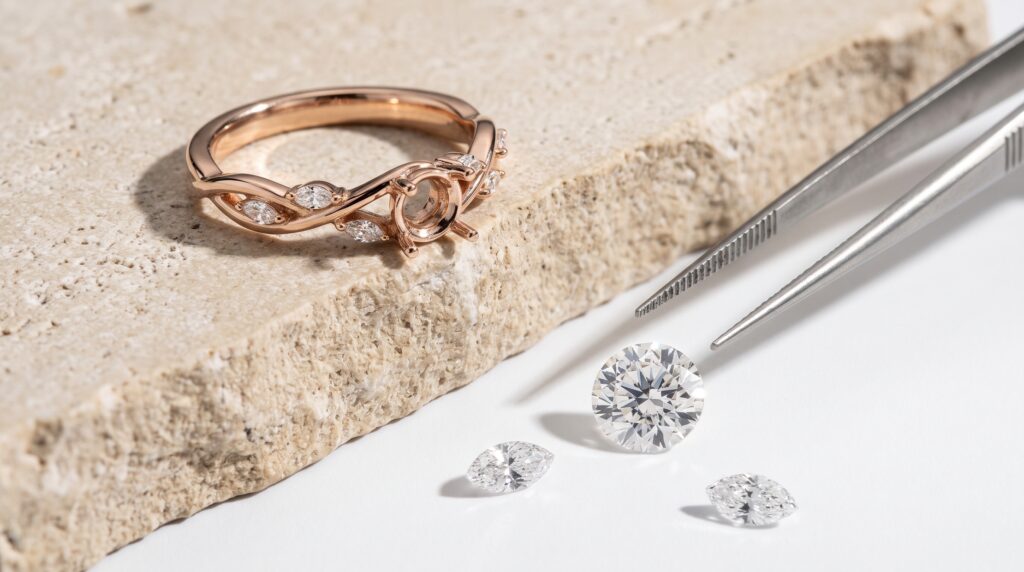
The setting holds the stone in place and shapes both how the ring looks and how well it survives daily wear. A solitaire setting uses simple prongs around a single stone, making it the easiest to clean and among the most secure, since there are no small side stones to loosen over time. A halo setting rings the center stone with smaller diamonds, increasing apparent size and sparkle at the cost of more surfaces that need regular cleaning. Three-stone settings place two side stones next to the center stone, often to represent past, present, and future, and generally sit a bit higher off the finger than a solitaire. Pavé settings line the band with small diamonds held by tiny prongs; they look continuous and detailed but need the most maintenance of the common styles, since those small prongs can wear down over years of wear. Bezel settings surround the stone in a metal rim, much like a protective frame around a piece of art, trading some light exposure for strong resistance to chips and knocks. Tension and other modern low-profile settings hold the stone using the structural pressure of the band itself, creating a minimal look, though they typically require a specialist jeweler for resizing or repair.
| Setting | Pros | Cons | Best For | Maintenance Level |
| Solitaire | Secure, easy to clean, cost-efficient | Less sparkle than halo styles | Most first-time buyers | Low |
| Halo | Increases apparent size and sparkle | More surfaces to clean | Buyers who want maximum visual impact | Medium |
| Three-stone | Symbolic, strong presence | Slightly higher profile | Buyers drawn to the symbolism | Medium |
| Pavé | Continuous sparkle along the band | Small prongs wear over time | Buyers prioritizing detail over low upkeep | High |
| Bezel | Highly secure, snag-resistant | Less light reaches the stone | Active lifestyles, hands-on work | Low |
| Tension/low-profile | Minimal, modern look | Needs a specialist for resizing | Buyers who want a distinct, contemporary style | Medium |
Step 5: Choose the Right Metal
Platinum is dense, naturally white, and highly resistant to tarnish, which makes it the lowest-maintenance option among common choices, though it costs more upfront than gold. Gold purity is measured in karats: 14K gold (58.3% gold) is more scratch-resistant and holds up better under daily wear, while 18K gold (75% gold) has a richer color but is comparatively softer. White gold is yellow gold alloyed with white metals and finished with a rhodium plating for its bright color; that plating wears down over a year or two and needs to be reapplied by a jeweler, a maintenance cost worth factoring into the decision. Rose gold gets its color and some added durability from a higher copper content in the alloy. Buyers with metal sensitivities should be aware that some white gold alloys use nickel, which can trigger reactions in sensitive skin; platinum and higher-karat golds are generally better tolerated.
Metal content claims on jewelry are subject to disclosure standards under FTC jewelry guidance, which sets rules for how karat purity and plating must be represented to consumers. It’s reasonable to expect a jeweler to state karat purity and any plating clearly rather than leaving it to be assumed.
| Metal | Strength | Look | Maintenance | Best For |
| Platinum | Highest | Naturally white | Low, no replating needed | Long-term durability, sensitive skin |
| 14K Gold | High | Yellow, white, or rose | Low to medium | Daily durability at a lower cost than platinum |
| 18K Gold | Medium | Richer, deeper tone | Low to medium | Buyers who prioritize color depth |
| White Gold | Medium | Bright white | Medium, needs rhodium replating | Classic white look at a lower cost than platinum |
| Rose Gold | Medium-high | Pink-toned | Low | Buyers who want a distinct color and added durability |
Step 6: Think About Lifestyle and Daily Wear
A ring has to survive whatever the wearer’s hands do all day, not just look good under store lighting. Someone with an active job, frequent glove use, or regular gym sessions is better served by a lower-profile setting like a bezel, since high prongs and raised stones catch more easily on equipment and fabric. Frequent handwashing works against settings with lots of small crevices, like pavé, which trap soap residue and need more frequent cleaning to stay bright. Buyers who type all day or work with their hands constantly tend to notice comfort differences in band height and width more than buyers with desk-free routines.
As a general pattern: sparkle-focused buyers tend toward halo or pavé settings, minimalist buyers toward solitaires, and buyers who prioritize practicality over decoration toward 14K gold or platinum with a bezel or low-prong setting. These are tendencies based on what each style involves, not fixed categories, and the right combination still depends on the individual’s actual daily routine.
| Lifestyle | Recommended Settings |
| Active or hands-on work | Bezel, low-profile solitaire |
| Frequent hand washing | Bezel, flush settings |
| Desk work, minimal wear-and-tear | Halo, pavé, three-stone |
| Minimalist daily style | Solitaire |
Step 7: Get the Size and Fit Right
A ring sized incorrectly is uncomfortable at best and prone to spinning or slipping off at worst, so getting an accurate size matters more than it might seem going in. Professional sizing at a jewelry store, using a sizing tool on the actual finger, is the most reliable method. For surprise proposals, a common workaround is borrowing a ring the partner already wears on the same finger and having a jeweler measure it, though sizing rings for other fingers as a proxy is less reliable.
Finger size can shift with temperature, time of day, and over the years, so a ring that fits perfectly at purchase may need adjustment later; this is normal and part of why most jewelers offer at least one resizing. Comfort-fit bands, which have a slightly rounded interior edge, tend to feel roomier than a standard band of the same marked size. Resizing isn’t unlimited, though: rings with stones set all the way around the band (eternity styles) or heavily decorated pavé work are difficult or sometimes impossible to resize without disturbing the stones, so it’s worth asking about resizing limitations before buying a heavily decorated style. If a wedding band will be worn stacked against the engagement ring later, checking whether the engagement ring’s profile allows a flush fit against a straight band avoids an awkward gap down the line.
| Fit Factor | Why It Matters | Buyer Tip |
| Professional sizing | Most accurate method available | Get sized in person when possible |
| Finger size changes | Size shifts with time and temperature | Expect at least one resizing over the ring’s life |
| Resizing limitations | Some settings can’t be resized easily | Ask before buying eternity or heavy pavé styles |
| Wedding band stacking | Affects long-term comfort and appearance | Check profile compatibility before buying |
Step 8: Know What to Check Before Buying Online
Buying online removes the ability to inspect a stone in person, so documentation carries more weight. A grading report from an independent lab confirms the diamond’s cut, color, clarity, and carat weight rather than relying on the seller’s own description; the report should name the grading lab directly. The ring’s metal stamp should state its karat or platinum purity clearly, consistent with the standards covered under FTC jewelry guidance.
High-resolution images and, ideally, video or a 360-degree view of the actual stone (not a stock photo representing the general type) let a buyer see what they’re actually purchasing. Listings should include exact measurements and weight rather than a vague size description. Read the return policy fully, including who covers return shipping and how long the window lasts, and check the resizing policy separately, since it’s often handled under different terms than returns. Confirm what warranty coverage applies to loose stones, prong repair, or manufacturing defects, and for how long. Reviews that can be verified as tied to actual purchases are more useful than general testimonials with no way to confirm they’re genuine.
Online Engagement Ring Buyer Checklist:
- Independent lab report naming the grading lab
- Metal purity stamp stated clearly
- High-resolution images of the actual stone
- Video or 360-degree view where available
- Exact measurements and weight listed
- Full return policy, including shipping terms
- Separate resizing policy
- Warranty terms for stones and settings
- Verified buyer reviews
Common First-Time Buyer Mistakes
Focusing on carat weight above all else is the most common one. A large, poorly cut diamond can look duller than a smaller, well-cut one, so cut deserves more attention than the number on the certificate suggests. Ignoring cut grade entirely while comparing color and clarity numbers is a related mistake: buyers who skip past cut miss the factor with the biggest effect on how the stone actually looks.
Choosing a setting for its appearance alone, without considering the wearer’s daily routine, is another frequent issue; a stunning halo setting that snags on gloves every day isn’t serving the person wearing it. Skipping professional sizing to save time often leads to a ring that needs resizing almost immediately. Buying without checking the return policy, especially online, leaves no recourse if the ring doesn’t match expectations. And purchasing a diamond with no independent documentation of its grade removes the ability to verify that what was paid for is what was delivered.
Frequently Asked Questions
How much should I spend on an engagement ring?
There’s no fixed amount that applies to every buyer. The commonly cited rule of spending several months’ salary comes from a marketing campaign rather than any financial standard, and it doesn’t account for individual savings goals, debt, or other priorities. A more workable approach is setting a total that’s comfortable given your own finances, then deciding where within that budget to prioritize cut quality, setting durability, and metal choice.
Is a lab-grown diamond a good choice?
Lab-grown diamonds have the same chemical composition, crystal structure, and optical properties as natural diamonds, according to the GIA, and the difference between them is origin rather than physical quality. They typically cost less per carat than natural diamonds of comparable grade, which means the same budget can buy a larger stone or a higher cut, color, and clarity grade. Whether it’s the right choice depends on whether natural origin matters to the buyer personally, since that’s the main distinction rather than durability or appearance.
What is the best setting for daily wear?
Bezel and other low-profile settings tend to hold up best for active daily wear because the metal protects the stone’s edges and there’s little to snag on clothing, gloves, or equipment. Solitaire settings are also relatively low-maintenance and secure. Settings with more surface detail, like pavé or a tall halo, look striking but need more frequent cleaning and are more prone to snagging, so the better choice depends on how demanding the wearer’s daily routine is on their hands.
Which metal is best for an engagement ring?
Platinum offers the highest durability and requires the least ongoing maintenance since it doesn’t need replating, but it costs more than gold. 14K gold is a durable, lower-cost option well suited to daily wear. White gold achieves a similar bright white look to platinum at a lower price but needs periodic rhodium replating to maintain its color. None of these is the objectively best choice; the right one depends on budget and how much maintenance the wearer is willing to take on.
Do I need a GIA report?
A GIA report or equivalent report from another independent grading lab isn’t legally required, but it’s the clearest way to verify that a diamond’s cut, color, clarity, and carat weight match what the seller claims, particularly when buying without the ability to inspect the stone in person. Without one, there’s no independent confirmation that the stone matches its description.
Can engagement rings be resized?
Most rings can be resized within a size or two in either direction, though this depends on the setting. Styles with diamonds set all the way around the band or heavy pavé detailing are harder to resize, and sometimes can’t be resized at all without disturbing the stones. It’s worth asking about resizing limits before buying a heavily decorated ring, especially if the wearer’s finger size is likely to change.
Is a halo harder to maintain than a solitaire?
Yes, generally. A halo setting has more surfaces and small stones that collect soap residue and everyday grime, so it needs more frequent cleaning to stay bright. A solitaire has a single stone and simpler prongs, which makes it easier to keep clean and, in most cases, more secure over the long run since there are fewer small settings that can loosen with wear.