
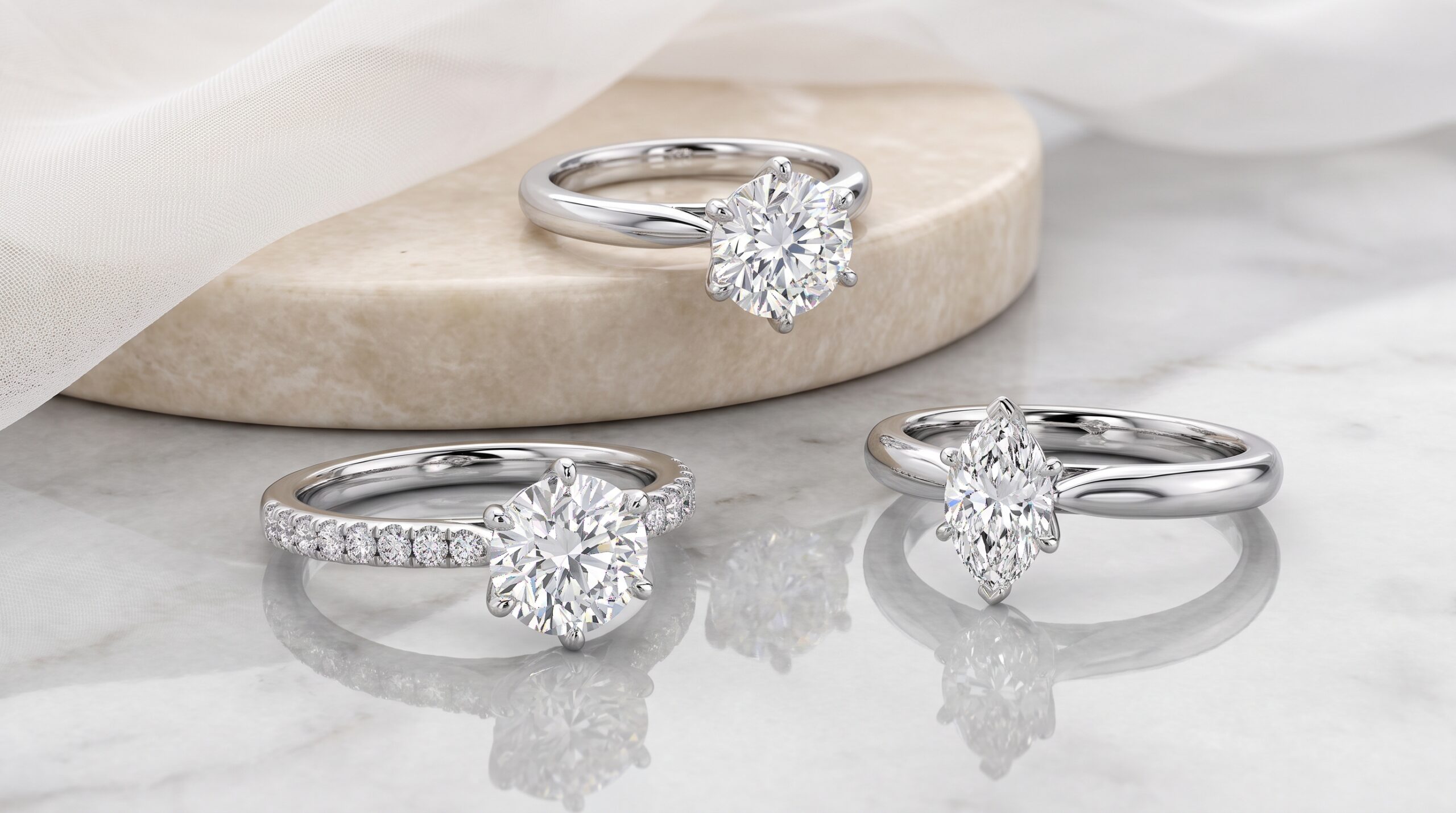
Ring inspiration is easy to find and hard to sort through. A style that looks striking in a five-second video doesn’t always translate into something comfortable to wear at a desk job, a gym, or while doing dishes every night for the next several decades. The trends worth paying attention to this year are ones grounded in real practical shifts, not just aesthetic ones: how settings protect a stone, how lab-grown diamonds have changed the size and budget conversation, and how personalization has become easier to execute well. This guide walks through what’s actually driving those choices and how to judge whether a given trend fits how you’ll wear the ring day to day.
What Makes an Engagement Ring Trend Popular?
A handful of forces shape which styles rise in popularity in a given year: celebrity engagements and red carpet rings, social media exposure to styles buyers wouldn’t otherwise encounter, growing interest in lab-grown diamonds and their effect on size and budget, a push toward personalization and one-of-a-kind design, and shifting ideas about what a “bridal” ring has to look like, including more interest in colored stones and non-traditional shapes.
None of these forces make a style automatically right for a given buyer. They just explain why certain looks are more visible right now than they were five years ago.
The Biggest Engagement Ring Trends This Year
Low-Profile and Bezel Settings
A low-profile setting keeps the stone close to the finger rather than lifted high on a cathedral or basket setting. A bezel setting takes this further, wrapping a rim of metal fully or partially around the stone’s girdle, similar to a frame around a piece of art holding the piece in place and shielding its edges. Both approaches reduce how far the stone protrudes from the hand, which lowers the odds of catching on clothing, hair, or gloves.
The tradeoff is visibility. A bezel covers part of the stone’s girdle, which can slightly reduce how much light enters and exits compared with an open prong setting, and it can make the stone look marginally smaller than the same diamond in a prong setting. For buyers who use their hands often at work or in sports, that tradeoff is usually worth it. For buyers who want maximum sparkle and don’t mind a higher-profile setting, a classic four or six-prong solitaire still shows off a stone more fully.
Lab-Grown Diamond Engagement Rings
Lab-grown diamonds are chemically, physically, and optically the same as natural diamonds; the difference is that they’re grown in a controlled laboratory setting over weeks rather than formed underground over billions of years. GIA’s explanation of synthetic diamonds confirms this directly: the material itself isn’t a substitute or an imitation, it’s real diamond with a different origin. The American Gem Society similarly notes that natural and lab-grown diamonds share the same composition and properties, though gemologists can distinguish them using specialized equipment.
What this means practically is that a lab-grown diamond doesn’t require a lower quality bar. Cut, color, clarity, and certification still matter exactly as much as they do for a natural stone, and the same buying checks apply: confirm the grading report, review the cut quality, and don’t assume a lower price point means lower scrutiny is acceptable. The main practical shift lab-grown diamonds have introduced is size flexibility. Because lab-grown stones are generally less expensive per carat than natural diamonds of comparable quality, buyers on a fixed budget can often get a larger stone, though the value tradeoffs around resale and long-term price are still being worked out across the industry and shouldn’t be assumed either way.
Coloured Gemstone Centre Stones
Sapphire, ruby, emerald, morganite, and colored diamonds have all seen more interest as center stones, largely because color feels personal in a way a colorless diamond doesn’t always convey. Each comes with a different durability profile.
Sapphire and ruby are both corundum, ranking 9 on the Mohs hardness scale, just below diamond, which makes them a genuinely durable choice for daily wear. GIA’s sapphire overview covers the stone’s hardness and care in more detail. Emerald ranks lower, generally 7.5 to 8, and typically contains more natural inclusions than sapphire or ruby, which makes it more prone to chipping and more sensitive to sudden temperature changes or impact; GIA’s emerald information explains why emeralds are usually treated with oil or resin to improve clarity and stability, a treatment that needs occasional maintenance. Morganite sits around 7.5 to 8 as well, durable enough for regular wear but softer than sapphire, and it’s worth confirming with a jeweler how a specific stone has been treated, since GIA’s morganite information notes that color in morganite is sometimes enhanced through heat treatment.
None of this means avoid emerald or morganite. It means going in with the expectation that a protective setting (bezel or a setting with a metal frame around the girdle) and more careful daily handling matter more for these stones than they would for a sapphire or diamond center.
Vintage-Inspired Rings
Milgrain edging, filigree metalwork, antique step-cuts and old European cuts, and three-stone settings all draw from earlier design eras and read as heirloom pieces even when newly made. The appeal is straightforward: these details carry more visual texture and history than a plain band and solitaire.
The tradeoff is upkeep. Fine metalwork like filigree has more surface area and more small gaps where dirt and lotion residue can build up, and milgrain’s tiny beaded edge can wear down faster than a smooth band over decades of daily contact. None of this makes vintage-inspired rings impractical, but it does mean more frequent professional cleaning and periodic inspection to catch any thinning metal before it becomes a real problem.
East-West Settings and Sculptural Designs
An east-west setting turns an elongated stone, such as an oval, marquise, or emerald cut, so its long axis runs horizontally across the finger instead of vertically toward the wrist. It’s a distinctly modern look, and it changes how the stone catches light throughout the day since the facet pattern is now oriented differently relative to the hand’s natural movement.
Sculptural and asymmetric designs extend this same idea further, using irregular metalwork, off-center stones, or non-symmetrical prong arrangements. These styles suit buyers who specifically want a ring that doesn’t look like everyone else’s, though they’re worth trying on in person if possible, since an east-west orientation can feel different on the hand than it looks in a photo.
Mixed Metals and Personalised Details
Two-tone bands, engraved inscriptions, asymmetric stone layouts, and gender-neutral styling have all become easier to execute well as more jewelers offer custom and semi-custom design options. Mixing metals, gold and platinum in the same band, for instance, works the same way pairing gold and silver jewelry intentionally does: it adds flexibility, since the ring can be worn with either metal tone in other jewelry without looking mismatched.
Trend Comparison Table
| Trend | Best for | Main benefit | Watch-out |
| Low-profile or bezel | Active hands, daily wear | Reduces snagging and catching | Slightly less light return than an open prong setting |
| Lab-grown diamond | Budget-conscious buyers wanting more size | Same material properties as natural, often lower cost per carat | Still requires checking cut, clarity, and certification; resale value differs from natural |
| Colored gemstone | Buyers who want a personal, non-traditional look | Distinct color and character | Durability and care needs vary significantly by stone |
| Vintage-inspired | Buyers who want heirloom character | Adds texture and history to the design | Fine detailing needs more frequent cleaning and inspection |
| East-west or sculptural | Buyers who want a distinctive silhouette | Stands apart from traditional settings | Worth trying on in person before committing |
| Mixed metals | Buyers who wear varied jewelry tones | Pairs with more of an existing jewelry collection | Two-toned bands can be more complex and costly to resize |
How to Choose a Trend That Will Still Feel Right Later
Start with lifestyle rather than the ring itself. Someone who works with their hands constantly, in a lab, a kitchen, or outdoors, has different practical needs than someone at a desk job, regardless of which style catches their eye first.
Choose a durable stone for the way it will actually be worn. A diamond or sapphire center stone tolerates daily knocks better than emerald or morganite, which doesn’t rule those stones out but does argue for a protective setting if daily wear is the plan.
Consider setting height honestly. A high-profile halo or cathedral setting shows off more sparkle but catches on more things; a low-profile or bezel setting trades a bit of that visual height for lower daily friction.
Think about wedding band compatibility before finalizing an engagement ring, especially with east-west settings, asymmetric designs, or wide bands, since these can be harder to pair flush against a standard band. Trying the two together, even a stand-in band, before committing to the engagement ring avoids a fitting problem later.
Review maintenance needs realistically. Filigree, milgrain, pavé, and softer colored stones all ask for more frequent professional cleaning and inspection than a plain solitaire.
Confirm certification and return policies before buying, regardless of which trend you choose. A grading report and a clear return or resizing policy protect you whether the stone is natural, lab-grown, or colored.
Which Trends Are Most Practical for Everyday Wear?
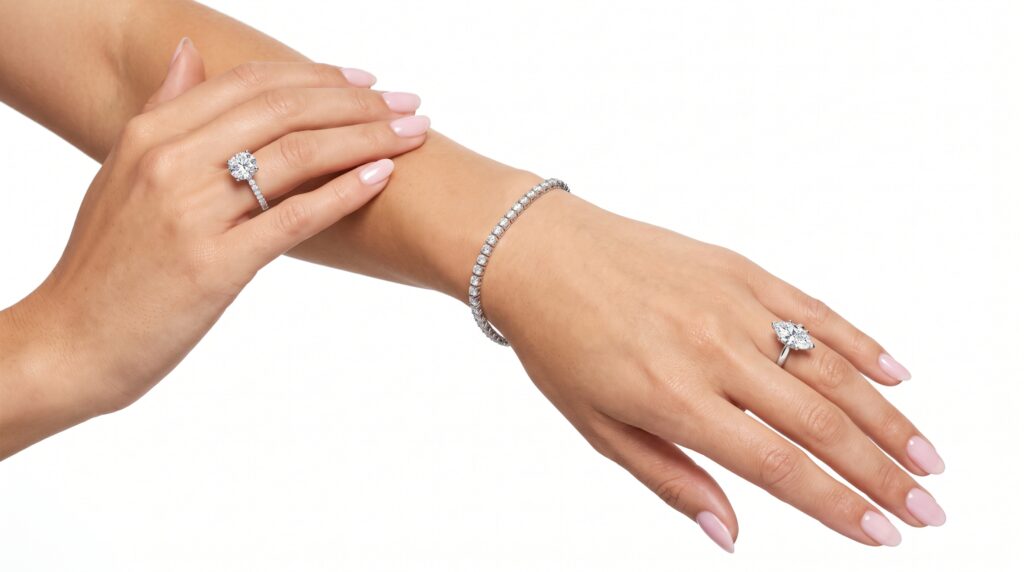
Low-profile settings, bezel settings, classic solitaires, and simple three-stone designs tend to hold up best for people who don’t want to think about their ring during the day. They sit closer to the hand, have fewer small parts to catch or loosen, and are generally easier and less costly to clean and maintain.
Ornate designs, high-profile halos, and tension settings ask more of the wearer. A tension setting, which holds the stone using pressure from the band rather than prongs, can look striking but typically requires specialized tools for resizing and is worth discussing directly with a jeweler about repair options before buying. High-profile halos add sparkle and perceived size but sit further off the hand, increasing the odds of snagging during active daily use.
Which Trends Need More Care?
Emerald and morganite center stones benefit from a protective setting and gentler daily handling, given their lower hardness and, in emerald’s case, common oiling or resin treatments that need periodic attention. Pavé bands and filigree metalwork both have more surface detail and small gaps that collect residue, and need more frequent professional cleaning to stay looking sharp. Tension settings need a jeweler familiar with that specific mechanism for any future resizing. Mixed-metal bands can also complicate resizing, since the two metals sometimes respond differently to the resizing process depending on the alloys used.
None of this means these choices are impractical, only that they come with a maintenance rhythm worth planning for rather than discovering after the fact.
Buying a Trend-Led Engagement Ring Online
Look for a 360-degree video of the actual piece rather than a stock photo, since lighting and angle in a single photo can make a setting look higher or lower profile than it actually is. Confirm setting height and band width in millimeters, since these numbers translate to comfort in a way a product photo alone doesn’t. Request a grading report for the center stone, whether it’s a diamond or colored gemstone, and confirm metal hallmarks (the small stamp indicating metal purity, such as 14K or PT950) match what’s listed. The FTC’s jewelry guidance outlines what retailers are required to disclose about metal content and any gemstone treatments, which is a useful reference if a listing seems vague. Finally, check the return policy, resizing terms, and whether customer photos or reviews are available, since real-world images tend to show more accurately how a ring wears day to day than staged product photography.
Choosing With Confidence
A trend is a starting point, not a rule. The styles covered here are popular for identifiable reasons, whether that’s practicality, personalization, or budget flexibility, but none of them suit every buyer equally. The more useful question isn’t which ring is trending, but which combination of stone, setting, and metal will still work for your hands and your routine several years from now. Start from lifestyle and durability, confirm certification regardless of stone type, and treat the visual trend as the last filter rather than the first one.
Frequently Asked Questions
What are the most popular engagement ring trends this year?
Current trends include low-profile and bezel settings, lab-grown diamonds, colored gemstone center stones such as sapphire and morganite, vintage-inspired details like milgrain and filigree, east-west and sculptural settings, and mixed-metal or personalized designs such as engraving and asymmetric layouts. Each trend appeals to a different priority, whether that’s daily practicality, budget flexibility, personal color preference, or a more distinctive silhouette.
Are lab-grown diamonds real diamonds?
Yes. Lab-grown diamonds share the same chemical composition, crystal structure, and optical and physical properties as natural diamonds; the only difference is that they’re grown in a controlled laboratory environment rather than formed underground over geological time. GIA confirms this distinction directly in its education on synthetic diamonds, and grading, cut quality, and certification matter just as much for a lab-grown stone as they do for a natural one.
Are bezel settings good for engagement rings?
Bezel settings are a strong option for anyone who wants a lower-maintenance, lower-snag ring, since the metal rim around the stone protects its edges and keeps the profile close to the finger. The tradeoff is that a bezel covers part of the stone’s girdle, which can slightly reduce light return and make the stone appear marginally smaller than the same diamond in an open prong setting. Whether that tradeoff is worth it depends on how much daily hand use the wearer expects.
Are coloured gemstones durable enough for daily wear?
It depends on the stone. Sapphire and ruby rank 9 on the Mohs hardness scale, just below diamond, and hold up well to daily wear. Emerald and morganite are softer, generally in the 7.5 to 8 range, and emerald in particular is prone to more natural inclusions and is commonly treated with oil or resin to improve clarity, both of which call for gentler handling and a protective setting. None of these stones are off the table for daily wear, but the softer ones benefit from more careful setting choices and more frequent professional checks.
Will vintage-inspired rings go out of style?
Vintage-inspired details like milgrain, filigree, and antique cuts draw from design eras that have already remained popular for decades, which suggests more staying power than a purely of-the-moment trend. The main practical consideration isn’t whether the look will age well stylistically, but whether the wearer is comfortable with the extra cleaning and inspection that fine metalwork typically needs over years of daily wear.
Are east-west rings hard to pair with wedding bands?
They can be more complex to pair than a standard vertical setting, since the horizontal stone orientation changes how a straight or curved wedding band sits against it. This is worth testing before finalizing a purchase, ideally by trying the engagement ring against a sample wedding band in person, so any gap or fit issue gets addressed before both rings are finished and sized.
Which engagement ring trend is best for an active lifestyle?
Low-profile and bezel settings, paired with a durable center stone like diamond or sapphire, tend to hold up best for people who use their hands often at work, at the gym, or in other physically active daily routines. These settings sit closer to the finger and have fewer protruding parts to catch, which lowers the odds of snagging or impact damage compared with high-profile halos or delicate pavé designs.