
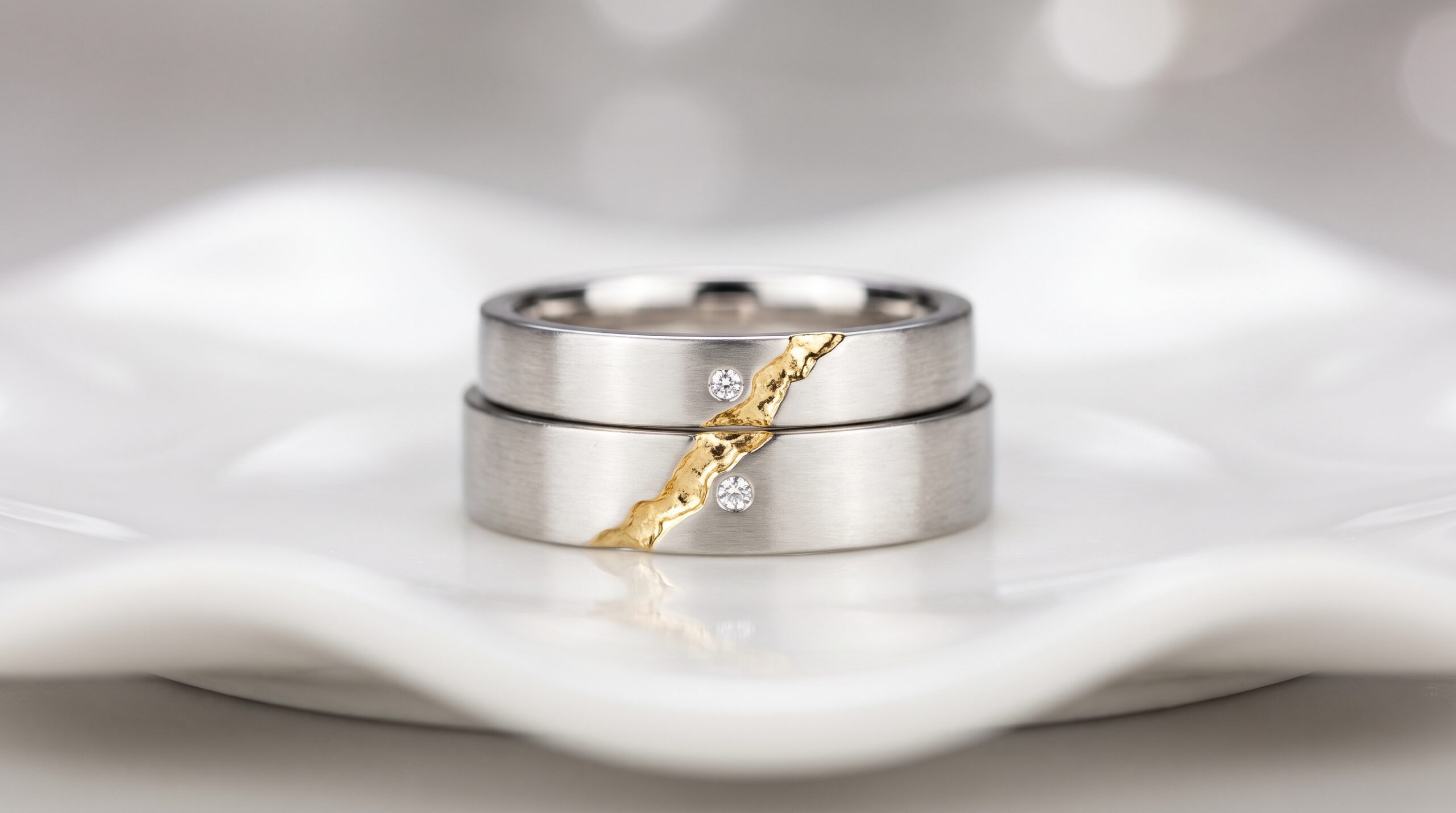
Every alternative metal wedding band gets marketed with the same word: durable. Tungsten sellers say it’s durable. Titanium sellers say it’s durable. Ceramic sellers say it’s durable. The problem is that “durable” doesn’t mean the same thing across these materials, and buyers often find that out only after their ring has already scratched, chipped, or turned out to be impossible to resize.
Choosing between titanium, tungsten, cobalt chrome, ceramic, and stainless steel isn’t about finding the toughest option on paper. It’s about matching a material’s actual wear characteristics, weight, and long-term limitations to how you’ll actually use the ring day to day.
What Are Alternative Metal Wedding Bands?
Alternative metal wedding bands are made from non-precious materials such as titanium, tungsten carbide, cobalt chrome, ceramic, or stainless steel, rather than gold, platinum, or silver. Many of these materials originated in industrial or aerospace applications before jewelers adapted them for rings, which is part of why they’re often marketed around strength and resistance to everyday damage.
The appeal isn’t only price, though alternative metals are typically less expensive than precious metals of comparable size. Buyers are also drawn to the lightweight feel of titanium, the near-scratch-proof surface of tungsten, and the modern, matte look of ceramic, none of which precious metals replicate in quite the same way.
| Feature | Traditional Precious Metals | Alternative Metals |
| Material examples | Gold, platinum, silver | Titanium, tungsten, cobalt chrome, ceramic, stainless steel |
| Typical cost | Higher, tied to metal market prices | Generally lower |
| Resizing | Usually possible | Often limited or not possible |
| Weight | Varies by metal and karat | Ranges from very light (titanium) to heavy (tungsten, cobalt) |
| Scratch behavior | Softer metals show wear more easily | Some resist scratching almost entirely; others can chip instead |
Why Buyers Choose Alternative Metal Wedding Bands
The reasons buyers give for choosing alternative metals tend to cluster around a few practical concerns rather than aesthetics alone:
- Durability, though what “durable” means depends heavily on the specific metal
- Lower cost compared to gold or platinum bands of similar width
- Modern, industrial aesthetics not typically associated with traditional metals
- Lightweight comfort, particularly with titanium
- Hypoallergenic properties for buyers with metal sensitivities
- Compatibility with active lifestyles, including manual work, gym use, or frequent hand washing
The durability point deserves more scrutiny than it usually gets. A tungsten ring resists scratches better than almost any precious metal, but that same hardness makes it more prone to cracking under a hard, direct impact. A titanium ring flexes slightly and won’t crack the same way, but its surface will show scratches over years of wear that tungsten wouldn’t. Neither metal is more “durable” in an absolute sense. They’re durable in different, sometimes opposite, ways.
Comparing the Most Popular Alternative Metals
Tungsten Wedding Bands
Tungsten carbide is the hardest material commonly used in wedding bands, which gives it exceptional resistance to surface scratching. A tungsten band can go years without showing the fine scratches that would be visible on a gold band worn the same way.
That hardness comes with a tradeoff. Tungsten is brittle rather than flexible, so instead of bending or denting under a hard impact (dropping a heavy object on it, or a direct hit against a hard surface), it can crack or shatter. Tungsten rings also can’t be resized in the traditional sense, since the material doesn’t stretch or compress the way softer metals do. Tungsten bands are noticeably heavier than titanium or precious metal bands of the same size, which some buyers like for the substantial feel and others find less comfortable over a full day of wear.
Tungsten works well for buyers who prioritize a scratch-free appearance above all else and who understand they’re accepting brittleness and non-resizability in exchange.
Titanium Wedding Bands
Titanium is lightweight, roughly a third the weight of steel for the same volume, which makes it one of the more comfortable metals for buyers who don’t like feeling a ring on their hand throughout the day. It originated in aerospace manufacturing, where its strength-to-weight ratio made it valuable for aircraft components, and that same property carried over into jewelry.
Titanium is also biocompatible, meaning it’s well tolerated by the body and rarely triggers allergic reactions. According to the Cleveland Clinic, true titanium allergies are uncommon compared to reactions to metals like nickel, which makes titanium a reasonable option for buyers with known metal sensitivities, though it’s not an absolute guarantee against any reaction for every individual.
Unlike tungsten, titanium will show visible scratches over years of wear, since it’s softer and more prone to surface marking even though it resists denting well. Most titanium rings have limited resizing options, similar to tungsten, though the degree varies by specific alloy and ring construction.
Cobalt Chrome Wedding Bands
Cobalt chrome has a bright white color that’s often compared to platinum, which makes it appealing to buyers who want that look without the platinum price. It’s heavier than titanium but generally lighter than tungsten, and it holds a polish well over time.
One practical advantage cobalt chrome has over tungsten is that some cobalt chrome rings can be resized, depending on the specific alloy and how the ring was manufactured. This isn’t universal, so it’s worth confirming with the jeweler rather than assuming resizing is possible.
Ceramic Wedding Bands
Ceramic wedding bands offer a matte, modern look available in black and white finishes that other alternative metals don’t replicate as cleanly. They’re lightweight and resist scratching well, similar to tungsten in that respect.
The tradeoff is brittleness at the edges. Ceramic can chip if it takes a hard, direct hit, particularly along the band’s edge, in the same way a ceramic dinner plate resists scratches from daily use but can chip if dropped on a hard floor. Ceramic bands generally can’t be resized.
Stainless Steel Wedding Bands
Stainless steel is the most affordable option among common alternative metals and resists tarnishing well, which makes it a practical, low-maintenance choice. It doesn’t match tungsten’s scratch resistance or titanium’s light weight, but it holds up reasonably well for casual, everyday wear and costs less than the other options discussed here.
| Metal | Weight | Scratch Resistance | Resizable | Best For | Main Drawback |
| Tungsten | Heavy | Very high | No | Buyers who prioritize a scratch-free look | Brittle, can crack under hard impact |
| Titanium | Very light | Moderate | Limited | Buyers who want comfort and skin tolerance | Shows scratches over time |
| Cobalt chrome | Medium to heavy | High | Sometimes, depending on alloy | Buyers who want a platinum-like look | Resizing not guaranteed |
| Ceramic | Light | High | No | Buyers who want a modern matte finish | Can chip at the edges |
| Stainless steel | Medium | Moderate | Limited | Budget-conscious, casual daily wear | Lower scratch resistance than tungsten or ceramic |
Scratch Resistance vs Durability: What Buyers Often Misunderstand
Hardness and toughness aren’t the same property, even though marketing copy often treats them as interchangeable. Hardness refers to a material’s resistance to scratching, and it’s typically measured on the Mohs scale, a ranking system used across gemology to compare how easily one material can scratch another. The Mohs hardness scale, maintained as a reference by the International Gem Society, ranks materials from softest to hardest based on scratch resistance specifically, not overall strength or resistance to breaking.
Toughness, by contrast, refers to how well a material withstands impact without cracking or shattering. Tungsten and ceramic both rank high in hardness, which is why they resist scratches so well, but that hardness comes at the cost of toughness. A material that’s extremely hard can still be brittle, the same way a ceramic plate resists a fork’s scratches but shatters if it hits tile flooring.
Softer metals, including titanium and most precious metals, sit lower on the hardness scale, so they pick up surface scratches more easily. In exchange, they tend to bend, dent, or deform under impact rather than cracking outright, which some buyers consider a more forgiving failure mode for a ring worn during manual work or sports.
Comfort, Weight, and Everyday Wear
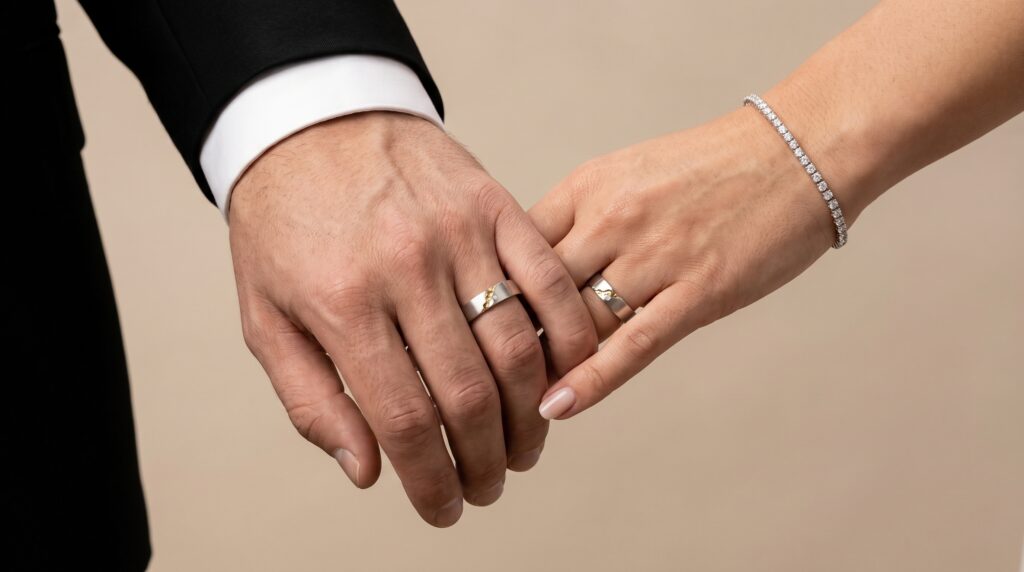
Weight changes how a ring feels over a full day, not just when you first put it on. Tungsten and cobalt chrome sit on the heavier end, which some buyers describe as reassuring and substantial, similar to the difference between a heavy steel watch and a lightweight sports watch. Titanium and ceramic sit on the lighter end, closer to barely noticing the ring is there.
Comfort-fit interiors, a slightly domed inner edge rather than a flat one, matter more with rigid metals like tungsten and ceramic than with softer, more pliable metals. Because these materials don’t flex or wear down at contact points the way softer metals can over time, a flat interior edge stays flat indefinitely, which can create pressure points during long-term wear. A rounded comfort-fit interior distributes that contact more evenly, similar to a rounded shoe insole compared to a flat one pressing against the same spot all day.
Finger size can also fluctuate with temperature, activity level, and time of day, which matters more for metals that can’t be resized. A ring that fits perfectly in the morning might feel tight after exercise or in hot weather, and for a non-resizable metal, that’s a fixed characteristic of the ring rather than something a jeweler can adjust later.
| Metal | Feel on Hand | Comfort Level | Ideal Lifestyle |
| Tungsten | Substantial, heavy | Moderate, depends on preference for weight | Buyers who like a solid, noticeable ring |
| Titanium | Barely noticeable | High | Active lifestyles, buyers sensitive to weight |
| Cobalt chrome | Medium weight | Moderate to high | Buyers who want a platinum look without the weight |
| Ceramic | Light | High | Buyers who want minimal weight and a matte finish |
| Stainless steel | Medium weight | Moderate | Casual, everyday wear |
Why Sizing Matters More With Alternative Metals
Because tungsten, ceramic, and most titanium and cobalt chrome rings can’t be resized, or can only be resized within a narrow range, getting the size right before ordering carries more weight than it does with gold or platinum. A precious metal band can usually be resized up or down a size or two after the wedding if a finger’s size shifts. Many alternative metal bands can’t.
To reduce the risk of ordering the wrong size:
- Get measured professionally rather than relying on a printable sizing chart, since paper sizers can stretch or shift and produce an inaccurate reading
- Account for the ring’s width when sizing, since wider bands generally fit slightly tighter than narrow ones at the same marked size
- Consider sizing slightly larger if you tend to wear rings during exercise or in hot weather when fingers can swell
- Ask the jeweler directly whether the specific ring you’re ordering supports any resizing, rather than assuming based on the general material
None of this means alternative metals are a risky purchase. It means the sizing step deserves more attention up front than it would with a resizable precious metal band.
How Alternative Metals Compare to Gold and Platinum
| Feature | Alternative Metals | Gold/Platinum |
| Cost | Generally lower | Generally higher, tied to metal market prices |
| Maintenance | Low, resists tarnish and scratching (varies by metal) | Periodic polishing and cleaning typically needed |
| Prestige perception | Modern, industrial association | Traditional, established association |
| Resizing flexibility | Limited or none for most alternative metals | Usually possible |
| Longevity | High scratch resistance in several metals, but some are brittle | Generally durable, softer metals show wear over decades |
| Repairability | Limited; damage often means replacement | Can often be repaired or restored by a jeweler |
Neither category is the better choice in general terms. Alternative metals offer lower cost, distinctive finishes, and in several cases better scratch resistance, while precious metals offer resizing flexibility and the ability to be repaired or restored rather than replaced if damaged. The right choice depends on which of those tradeoffs matters more for how the ring will actually be worn.
Maintenance and Long-Term Care
Alternative metal wedding bands are generally lower-maintenance than precious metals, but “lower-maintenance” isn’t the same as “no maintenance.” Basic care still applies:
- Clean with mild soap and water rather than harsh chemicals or abrasive cleaners
- Store the ring separately from other jewelry to avoid surface contact that could cause scratching, particularly with softer metals like titanium
- Avoid situations with a high risk of direct impact, especially with tungsten or ceramic bands, given their brittleness under hard force
- Have the ring checked periodically by a jeweler, particularly after any noticeable impact, to confirm there’s no hairline crack that isn’t yet visible
What to Look for When Buying Online
A trustworthy jewelry seller should clearly disclose:
- The specific material grade, such as the titanium alloy used or the tungsten carbide composition
- Hardness and durability characteristics specific to that material, not generic marketing claims
- The ring’s resize policy, stated plainly rather than implied
- Replacement or warranty policies in case of cracking or chipping
- Return windows and conditions
- Any relevant hallmarks or material certifications
Be cautious of listings that use blanket terms like “scratch-proof” or “indestructible” without qualifying what that means for impact resistance, or that don’t specify the material grade at all. A seller who’s transparent about a material’s limitations, not just its strengths, is generally more trustworthy than one who only lists advantages.
Which Alternative Metal Is Best for You?
| Lifestyle | Recommended Metal | Why |
| Active, hands-on work or frequent gym use | Titanium | Lightweight, resists denting, tolerates impact better than brittle metals |
| Wants a scratch-free look above all else | Tungsten | Highest scratch resistance among common options |
| Budget-conscious | Stainless steel | Lowest cost among alternative metals |
| Wants a platinum-like appearance | Cobalt chrome | Bright white color similar to platinum, at a lower cost |
| Prefers a minimalist, matte aesthetic | Ceramic | Distinctive matte finish not available in metallic alternatives |
| Concerned about metal sensitivities | Titanium | Generally well tolerated, though individual reactions can still vary |
This table reflects general tendencies, not fixed rules. Someone who values a scratch-free surface might still choose titanium if comfort matters more to them than avoiding occasional surface marks, and someone drawn to tungsten’s weight might accept the resizing limitation as a reasonable tradeoff. The right material is the one whose specific tradeoffs match how you’ll actually wear the ring, not the one that scores highest on a single metric.
Frequently Asked Questions
Can tungsten rings shatter?
Yes, under enough direct force. Tungsten’s hardness gives it excellent scratch resistance, but that same hardness makes it brittle rather than flexible, so a hard impact, such as being struck directly against a hard surface, can cause it to crack or shatter rather than bend or dent the way a softer metal would.
Are titanium rings hypoallergenic?
Titanium is generally well tolerated and rarely causes allergic reactions, which is why it’s often recommended for buyers with known metal sensitivities. According to the Cleveland Clinic, true titanium allergies are uncommon compared to reactions triggered by metals like nickel, though no metal can be guaranteed to cause zero reaction in every individual.
Which alternative metal scratches least?
Tungsten and ceramic both rank high in scratch resistance due to their hardness. Neither is scratch-proof under all conditions, but both hold up better against everyday surface marking than titanium, cobalt chrome, or stainless steel.
Can alternative metal rings be resized?
In most cases, no, or only within a limited range. Tungsten and ceramic generally can’t be resized at all because the materials don’t stretch or compress. Titanium has limited resizing options depending on the specific alloy and construction. Cobalt chrome can sometimes be resized, depending on the ring, but this isn’t guaranteed across all cobalt chrome bands. Because of these limits, accurate sizing before ordering matters more with alternative metals than with gold or platinum.
Are alternative metals good for everyday wear?
Yes, for most lifestyles, though the right choice depends on what “everyday wear” involves for you specifically. Titanium suits active, hands-on daily use well because of its light weight and resistance to denting. Tungsten and ceramic suit buyers who want to avoid scratches but who aren’t doing regular high-impact manual work where cracking is a real risk. Stainless steel works well for casual daily wear at a lower cost, with less scratch resistance than tungsten or ceramic.
Which alternative metal feels most like platinum?
Cobalt chrome is generally the closest match to platinum’s bright white color and polished appearance among common alternative metals, at a lower cost. It won’t replicate platinum’s density or the specific way platinum develops a patina over time, but visually it’s the closest comparison.
Do alternative metal wedding bands last?
They can last for decades with reasonable care, though “lasting” means something different depending on the metal. Tungsten and ceramic resist scratching well over long periods but carry a risk of chipping or cracking under hard impact. Titanium shows more surface wear over time but resists denting and cracking better. None of the common alternative metals require the kind of regular polishing that softer precious metals do, which is part of their long-term appeal.
Are alternative metal rings suitable for women too?
Yes. Alternative metals are often marketed toward men, largely because of their association with industrial durability, but the materials themselves aren’t gendered. Titanium, tungsten, cobalt chrome, ceramic, and stainless steel are all available in widths and finishes suited to any wearer, and the same durability and comfort considerations apply regardless of who’s wearing the ring.