
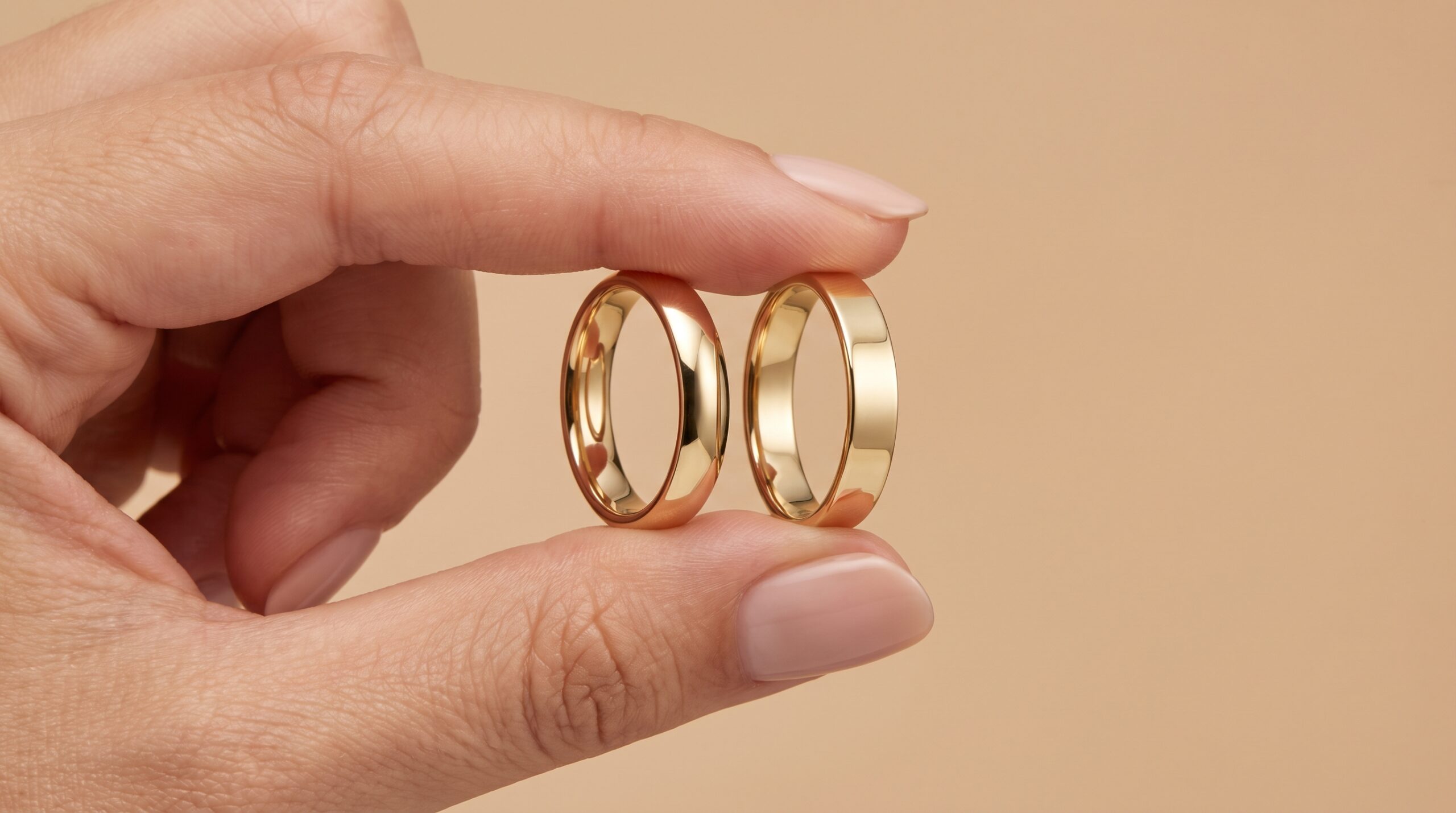
Two wedding bands can look identical from across the counter and feel completely different on the hand. The difference isn’t the metal or the width. It’s the interior shape, the part of the ring nobody photographs and few buyers think to ask about until they’ve already worn one for a few weeks.
That interior shape has a name: fit profile. The two main types, comfort fit and standard fit, affect how a ring sits on the finger, how it goes on and off, and how it feels after eight hours of wear. Here’s how they actually differ.
What Is the Difference Between Comfort Fit and Standard Fit Bands?
Comfort Fit Explained
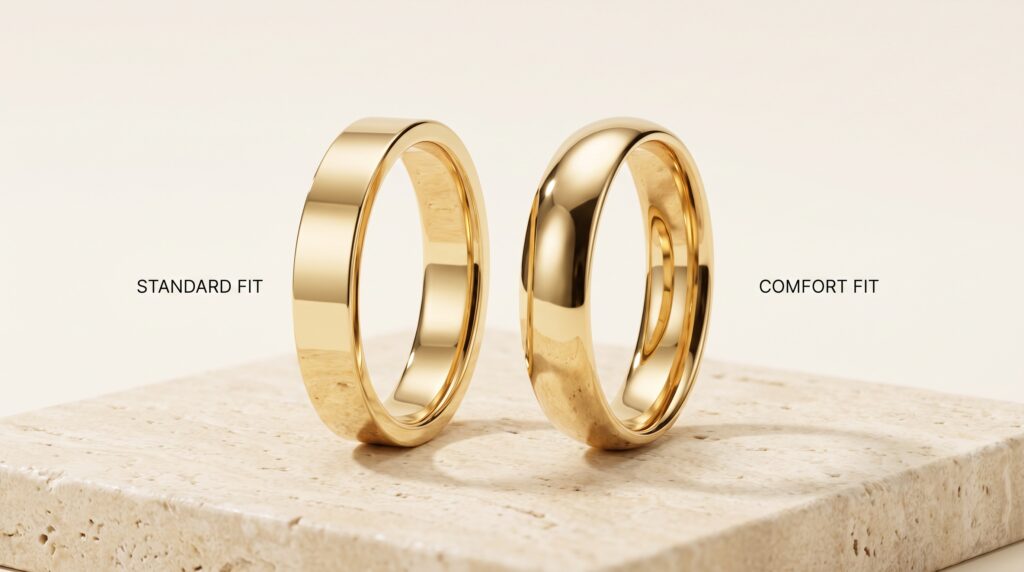
A comfort fit band has a domed, convex interior, curved rather than flat where it meets the finger. That curve reduces how much of the ring’s interior surface actually touches the skin at any given point, since only the peak of the curve makes full contact rather than the entire inner width of the band. This also makes the ring easier to slide over the knuckle in both directions, since the rounded edges don’t catch the way a flat edge can. Comfort fit has become the standard interior shape for most modern wedding bands, particularly wider ones.
Standard Fit Explained
A standard fit band, sometimes called a traditional or pipe-cut profile, has a flat interior that runs the full width of the band where it meets the finger. This creates more consistent contact across the entire inner surface. Standard fit is common in slimmer bands and vintage-inspired designs, where the flat interior doesn’t create the same comfort tradeoff that it can in a wider ring.
How Each Fit Feels During Daily Wear
Comfort During Long Wear
Because comfort fit reduces the surface area in contact with the finger, it tends to create fewer pressure points during long stretches of wear. This matters most for people who don’t take the ring off during the day, since a flat interior pressing evenly against the same strip of skin for hours can feel different than a curved interior making lighter contact. Comfort fit can also better accommodate small, temporary changes in finger size from heat, activity, or time of day, since there’s a bit more room around the edges of the curve.
Knuckle Navigation
A rounded edge slides over a knuckle more easily than a flat one, which is why comfort fit rings are often described as going on and coming off more smoothly. A standard fit band with sharp interior edges can catch slightly at the knuckle, particularly on a wider band, which is one reason standard fit is more often seen on slimmer designs where this effect is less pronounced.
Band Width and Comfort
The width of the band changes how noticeable the difference between these two profiles actually is. On a narrow band, say 2mm to 3mm, there’s not much interior surface either way, so comfort fit and standard fit can feel fairly similar. On a wider band, 6mm and up, a flat standard fit interior covers a much larger strip of skin, which is where the comfort fit’s reduced contact area tends to make a more noticeable difference. This is part of why comfort fit is more common on wider men’s bands specifically.
| Comfort Fit | Standard Fit | |
| Interior shape | Domed, curved | Flat |
| Contact with finger | Reduced, concentrated at the curve’s peak | Fuller, even across the width |
| Knuckle ease | Slides on and off more easily | Can catch slightly, more noticeable on wider bands |
| Best suited to | Wider bands, all-day wear | Slim bands, vintage-style designs |
Which Fit Type Is Better for Different Lifestyles?
Best for Active Lifestyles
Comfort fit tends to suit people whose hands swell slightly with activity or heat, or who wear the ring through manual work and want fewer pressure points over a long day. The reduced contact area also means less friction if the hand is gripping tools or equipment repeatedly.
Best for Minimal or Vintage Styles
Standard fit is common in slim bands under 4mm and in designs meant to evoke a traditional or antique look, where a flat interior profile matches the aesthetic and the width is narrow enough that comfort differences are minor.
Larger Knuckles or Arthritis Concerns
For someone with larger knuckles relative to the rest of the finger, or with joint stiffness that makes getting rings on and off more difficult, comfort fit’s rounded edges generally make that process easier. This isn’t a guarantee of comfort for every hand, since individual anatomy varies, but it’s a reasonable starting point to ask about when discussing options with a jeweler.
Comfort Fit vs Standard Fit Sizing
Why Sizing Is Different
Because comfort fit reduces the ring’s interior contact area, a comfort fit band can feel a bit looser than a standard fit band in the same labeled size. Jewelers often account for this by sizing comfort fit rings a quarter to half size smaller than they would size an equivalent standard fit band for the same finger, though the exact adjustment can vary by manufacturer and ring width.
Common Sizing Mistakes
A frequent mistake is using a size measured on a standard fit ring to order a comfort fit ring, or the reverse, without accounting for the fact that the two profiles don’t necessarily feel the same at the same numerical size. Another common issue is measuring finger size first thing in the morning, when fingers tend to be smaller than they are later in the day or after physical activity.
Best Practices Before Ordering
Getting sized in the evening, when finger size is closer to its largest point during a typical day, gives a more reliable baseline. Where possible, getting sized specifically for the fit profile being ordered, rather than assuming a size carries over between comfort fit and standard fit, avoids a mismatch. Trying on both profiles at a jeweler, even if the final ring will be bought online, is the most direct way to feel the difference before committing to a size.
Cost Differences Between Comfort Fit and Standard Fit Rings
Why Comfort Fit Costs More
Comfort fit rings typically use more metal than a standard fit band of the same width, since the domed interior adds material and requires additional shaping during manufacturing. That combination of extra material and extra machining work is generally reflected in a higher price for a comfort fit band compared to a standard fit band of otherwise identical specifications.
Is the Added Cost Worth It?
That depends on the width being considered and how the ring will be worn. On a narrow band, the comfort difference between the two profiles is small enough that the added cost of comfort fit may not deliver a noticeable benefit. On a wider band worn all day, every day, the comfort fit’s reduced pressure points can matter more, which is where the added cost tends to make more practical sense.
Comfort fit pros: less pressure during long wear, easier over the knuckle, better suited to wider bands. Comfort fit cons: higher cost, marginal benefit on narrow bands.
Standard fit pros: lower cost, suits slim and vintage styling, full contact can feel more secure to some wearers. Standard fit cons: can catch on the knuckle more on wider widths, more noticeable pressure during long wear at wider sizes.
Is One More Durable Than the Other?
Fit profile has no meaningful effect on how long a ring lasts. Durability comes down to metal type, purity, and construction quality, not whether the interior is domed or flat. A comfort fit band in a durable alloy will hold up as well as a standard fit band in the same alloy. Neither profile is structurally weaker, and choosing comfort fit isn’t a tradeoff against long-term durability.
How to Choose the Right Fit for Your Wedding Band
Start with the width you’re considering, since that’s the factor that most changes how much the two profiles actually differ in practice. Think about how long the ring stays on during a typical day and whether your hands tend to swell with heat or activity. Consider knuckle size, particularly if getting rings on and off has been difficult in the past. Factor in style preference, since standard fit suits certain slim and vintage aesthetics that comfort fit doesn’t replicate as closely. Where possible, compare both profiles in person rather than relying on descriptions alone. And confirm sizing carefully, accounting for the specific fit profile you’re ordering rather than assuming a size translates directly between the two.
If all-day comfort on a wider band is the priority, comfort fit is the more common choice. If a slim, traditional look at a lower price point is the priority, standard fit remains a reasonable option.
Frequently Asked Questions
Is comfort fit really more comfortable?
For most wearers, yes, particularly on wider bands worn for extended periods. The reduced interior contact area means less surface pressing against the skin, which tends to translate into fewer pressure points over a full day of wear. On narrower bands the difference is smaller, since there’s less interior surface for either profile to make contact with in the first place.
Should comfort fit rings be sized smaller?
Often, by about a quarter to half size compared to an equivalent standard fit band, though the exact adjustment depends on the manufacturer and the ring’s width. This is because comfort fit’s curved interior can make a ring feel a bit looser than a flat interior at the same numerical size. Getting sized specifically for the fit profile being ordered is more reliable than assuming a size carries over from one profile to the other.
Are comfort fit rings better for wide bands?
Generally, yes. A wide band with a flat standard fit interior covers a large strip of skin with even pressure, which is where comfort fit’s curved, reduced-contact interior tends to make the most noticeable difference. On a narrow band, the gap between the two profiles is much smaller, so the benefit of comfort fit is less pronounced.
Is standard fit outdated?
No. Standard fit remains a deliberate choice for slim and vintage-style bands, where a flat interior suits the aesthetic and the narrower width means the comfort tradeoff is minor. It’s not a legacy option being phased out so much as a profile that fits a specific style and width range better than comfort fit does.
Can comfort fit rings be resized?
Yes, comfort fit rings can generally be resized using the same methods as standard fit rings, though the process may require a bit more care from the jeweler to maintain the curved interior shape evenly after the resize. This isn’t a reason to avoid comfort fit, just a detail worth confirming with whoever is doing the resizing work.
Which fit is better for arthritis?
Comfort fit’s rounded edges tend to make getting a ring on and off easier, which can matter for anyone dealing with joint stiffness or swelling. That said, this varies by individual, and someone considering this concern specifically is better served trying both profiles in person or discussing options directly with a jeweler familiar with their hand.
Why do comfort fit bands cost more?
Comfort fit rings use more metal than a standard fit band of the same width, since the domed interior requires additional material and more shaping work during manufacturing. That combination of material and labor is typically reflected in the final price.
Are comfort fit rings worth it?
It depends on the width and how the ring will be worn. On a wide band worn all day, the reduced pressure points that comfort fit offers tend to justify the added cost for most wearers. On a narrow band, the comfort difference is smaller, so the decision comes down more to style preference and budget than to a clear comfort advantage either way.