
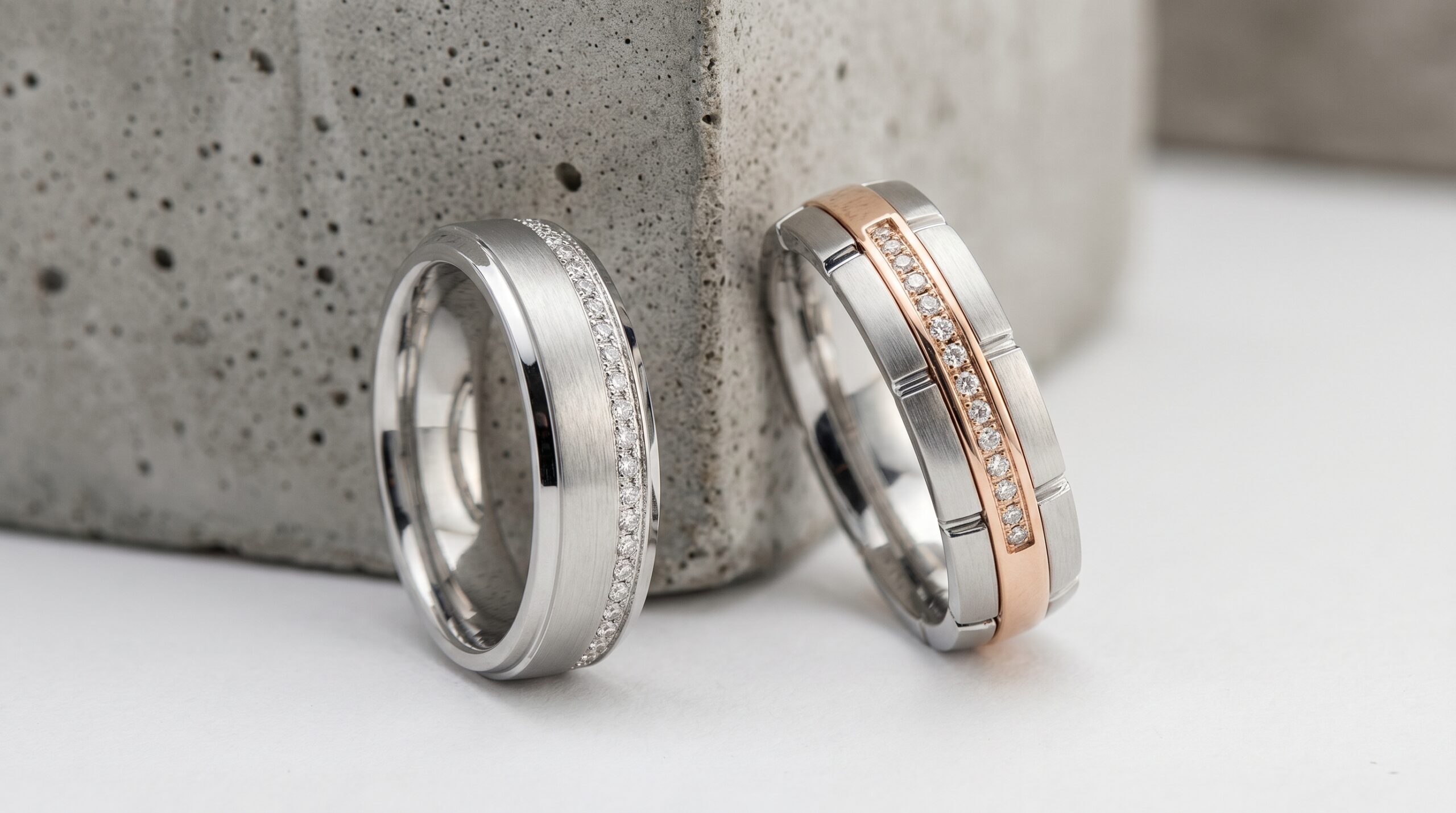
A men’s wedding band looks like a simple decision from the outside: pick a metal, pick a width, done. In practice, the choice involves several factors that don’t show up until the ring has been worn for a few months, things like how a finish holds up against tools or a keyboard, whether a wider band feels stable or bulky, and whether the ring can be resized later if your hand changes. This guide covers the material, width, fit, and finish decisions that actually affect how a band performs over years of daily wear.
The strongest or most expensive material isn’t automatically the right one. A tungsten band that resists scratching is a poor fit for someone who wants the option to resize later. A high-polish gold band looks formal but shows scuffs faster than a brushed finish. The right choice depends on how you use your hands day to day, what you want the ring to look like, and how much long-term flexibility matters to you.
What Defines a Men’s Wedding Band Style?
More Than a Plain Ring
A men’s band is shaped by more variables than its overall look suggests. Metal determines weight, color, and durability. Width changes both the visual presence of the ring and how secure it feels on the finger. Profile refers to the cross-section shape, whether the ring is flat, rounded, or domed. Edge detail, such as a beveled or stepped edge, adds structure without necessarily adding decoration. Finish affects how visible everyday scratches and scuffs are. Comfort construction, meaning how the interior of the band is shaped, affects how the ring feels during long stretches of wear.
Traditional vs Modern Styles
Classic bands in gold or platinum have been standard for generations and remain a common default. Modern alternative metals like tungsten, titanium, and ceramic entered the market more recently and appeal to buyers who want something more scratch-resistant, lighter, or less traditional in appearance. Neither category is objectively better. Gold and platinum offer resizing flexibility and a traditional look that ages well. Alternative metals often trade that flexibility for durability or a different aesthetic.
Popular Men’s Wedding Band Materials
Gold Wedding Bands
14K gold is a common choice for men’s bands because it balances durability with workability. Pure gold is soft, so 14K gold is alloyed with other metals to increase hardness while keeping the warm color associated with gold. One practical advantage of gold is that it can generally be resized more easily than most alternative metals, which matters if your finger size changes over time.
Platinum Wedding Bands
Platinum is denser than gold, which gives a platinum band a noticeably heavier, more substantial feel on the hand. It’s also naturally hypoallergenic and holds up well over decades, which is part of why it’s often chosen for rings meant to be passed down. The tradeoff is cost: platinum is typically more expensive than gold at a comparable size and design.
Tungsten Wedding Bands
Tungsten carbide is known for scratch resistance, which makes it appealing for people who work with their hands or want a ring that keeps its finish without regular polishing. The limitation is that tungsten generally cannot be resized, because the material’s hardness that makes it scratch-resistant also makes it difficult to cut, stretch, or reshape using standard jewelry techniques. If there’s a real chance your ring size will change, this is worth weighing seriously before buying.
Titanium Wedding Bands
Titanium is significantly lighter than gold or platinum, which some wearers prefer, especially if they’re not used to wearing rings. It’s also commonly considered a good option for people with metal sensitivities, since titanium doesn’t contain nickel, a common allergen in some metal alloys. Like tungsten, titanium has limited resizing options compared to gold or platinum.
Ceramic Wedding Bands
Ceramic bands are lightweight and often finished in a deep matte black or other colors not achievable with traditional precious metals. The tradeoff is brittleness: unlike metals that scratch or bend under stress, ceramic can crack or shatter if struck hard enough, for example if the ring gets caught on something during a fall or impact.
| Material | Look and Feel | Durability | Resizing | Best For |
| 14K gold | Warm, traditional | Good with normal care, can scratch over time | Generally resizable | Buyers who want a classic look with future flexibility |
| Platinum | Heavy, substantial, naturally white | Very durable, develops a soft patina over time | Generally resizable | Buyers who want an heirloom-quality ring and don’t mind the higher cost |
| Tungsten | Hard, high-shine or matte options | Highly scratch-resistant | Not resizable in most cases | Buyers confident in their size who prioritize scratch resistance |
| Titanium | Light, modern | Durable, resists corrosion | Limited resizing | Buyers who want a lightweight ring or have metal sensitivities |
| Ceramic | Sleek, often black or colored | Scratch-resistant but can crack under impact | Not resizable | Buyers drawn to modern colors and finishes who accept the impact risk |
Men’s Wedding Band Width Guide
Common Widths
Men’s bands are commonly available in widths around 4mm, 6mm, 8mm, and 10mm, though exact sizing varies by manufacturer.
Choosing Width by Hand Size and Comfort
A width between 6mm and 8mm is a common range for men’s bands, though this isn’t a rule. Someone with narrower fingers might prefer a 4mm or 5mm band because a wider ring can look disproportionate, while someone with larger hands might find an 8mm or 10mm band better balanced. The only reliable way to know is to try a few widths on in person, since photos and measurements alone don’t capture how a width will look on a specific hand.
Wider Bands and Ring Rotation
A wider band has more surface area in contact with the finger, which can make it feel more stable and less likely to twist during the day. That’s not guaranteed, though: fit still depends on the specific shape of your finger and the ring’s interior construction. A wide band that’s poorly fitted can feel less comfortable than a narrower band that fits well, so width should be tested for comfort rather than chosen for stability alone.
| Width | Visual Effect | Typically Suited For | Notes |
| 4mm | Slim, understated | Narrower fingers, minimalist style | May feel less substantial to some wearers |
| 6mm | Balanced, versatile | Most hand sizes | A common middle-ground choice |
| 8mm | Noticeable presence | Larger hands or bolder style preference | Can feel heavier during long wear if not comfort-fit |
| 10mm | Bold, statement width | Larger hands, wearers who want the ring to stand out | Benefits from a comfort-fit interior to offset the added surface area |
Comfort Fit vs Standard Fit
What Is Comfort Fit?
A comfort-fit ring has a slightly rounded or domed interior, rather than a flat one, so the inside surface that touches the finger is smaller and smoother. That shape lets the ring slide on and off more easily and reduces the pressure points that can build up during a full day of wear.
Why It Matters for Daily Wear
Hands move constantly through the day, gripping tools, typing, washing dishes, adjusting objects. A ring with a flat interior can create more friction and pressure against the finger over those hours than one with a rounded interior. This becomes more noticeable with wider bands, since a flat 8mm or 10mm interior covers more skin than a flat 4mm one.
Sizing Considerations
Comfort-fit bands often measure slightly differently than standard-fit bands of the same labeled size, because the rounded interior changes how the ring sits. If you’re used to a certain size in a standard-fit ring, it’s worth trying on the comfort-fit version rather than assuming the same number will feel identical.
Men’s Wedding Band Finishes
High Polish
A high-polish finish is smooth and reflective, giving the ring a formal, traditional look. The tradeoff is that scratches and small scuffs show up more visibly against a mirror-like surface than they would against a textured one.
Brushed Finish
A brushed finish has fine, parallel lines across the surface, which softens the reflection and makes small marks less obvious against the existing texture. It’s a common choice for people who want a ring that looks intentional between polishings rather than needing frequent maintenance to look clean.
Matte Finish
A matte finish has little to no shine, giving the ring an understated, modern look. Like a brushed finish, it tends to make everyday wear less visually obvious than a high-polish surface, though the effect depends on the metal and how deep the matte texture is.
Beveled Edges
A beveled edge is a flat, angled cut along the outer rim of the band rather than a fully rounded edge. It adds a defined line to the ring’s profile without adding ornamentation, which is why it’s a common choice for buyers who want some structure but not a heavily decorated look.
Matching a Band to Lifestyle
For Active Jobs or Manual Work
Tungsten and titanium are common choices for people who work with their hands regularly, since both resist scratching and denting better than softer precious metals. Someone in this category should weigh the resizing limitations of both materials against how confident they are in their current ring size.
For Formal or Professional Style
Gold and platinum, particularly in a high-polish or refined brushed finish, tend to read as more formal and are a common choice for people in client-facing or traditional professional settings.
For Outdoor or Lightweight Comfort
Titanium’s low weight makes it a common choice for people who spend a lot of time outdoors or who simply don’t want to feel a heavier ring throughout the day. Pairing it with a comfort-fit interior adds to that ease of wear.
For Modern Personal Style
Ceramic bands, black finishes, and mixed-texture designs appeal to buyers who want something that departs from the traditional gold band look. This is a matter of personal style rather than practicality, so it’s worth weighing against the durability tradeoffs covered in the material comparison above.
| Lifestyle | Common Material Choices | Finish Considerations | Notes |
| Manual or active work | Tungsten, titanium | Brushed or matte to reduce visible wear | Confirm resizing limitations before buying |
| Formal or professional | Gold, platinum | High polish or refined brushed | Traditional look, easier to resize later |
| Outdoor or lightweight preference | Titanium | Matte or brushed | Pair with comfort fit for long wear |
| Modern personal style | Ceramic, black finishes, mixed textures | Matte or textured | Weigh impact resistance against style preference |
Diamond and Inlay Men’s Wedding Bands
Diamond Accents
A band set with diamonds adds visual detail beyond a plain metal surface, but the setting requires more attention over time than a plain band. Prongs holding diamonds in place can loosen with wear, so a diamond-set band benefits from periodic inspection.
Inlay Styles
Some men’s bands include inlays made from wood, carbon fiber, ceramic, or other contrasting materials set into a metal band. These add a distinctive look but function differently from the metal itself, since inlay materials often have different durability characteristics than the surrounding band.
Maintenance Considerations
More design detail generally means more to check on. A plain band has fewer places for wear to show. A band with diamonds, inlays, or mixed materials has more components that can loosen, chip, or wear unevenly, so it’s worth building periodic inspection into your maintenance routine if you choose one of these styles.
Sizing, Resizing, and Online Buying Confidence
Size at the Right Time
Fingers can swell slightly over the course of a day due to activity, temperature, and hydration. Measuring later in the day, when your hands are more likely to be at their largest, gives a more reliable size than measuring first thing in the morning.
Test for Real Daily Wear
Before finalizing a size or style, think through how the ring will interact with your actual routine: whether you wear gloves for work, how often you wash your hands, and whether you’ll be gripping tools or equipment regularly. A ring that feels fine in a jewelry store for five minutes can feel different after a full day of normal use.
Know Resize Limitations
Gold and platinum bands are generally easier to resize than most alternative metals, since jewelers can cut, stretch, or add metal to adjust the fit. Tungsten is generally not resizable at all, due to the hardness that makes the material scratch-resistant in the first place. If you’re between sizes or expect your finger size to change, this is a real factor in choosing a material, not a minor detail.
What to Look for Online
A trustworthy online listing should include width and fit diagrams, metal composition, a clear resize policy, information about hallmarks (the stamped markings that indicate metal purity), and real product photography rather than only rendered images. The Federal Trade Commission publishes guidance on how jewelry sellers should disclose metal content and quality markings, which is useful background if you want to understand what a hallmark is actually certifying. You can review the FTC’s jewelry guides for more detail.
Care and Maintenance
Weekly Cleaning
Mild soap and warm water, applied with a soft brush, is generally sufficient for cleaning most metal bands. This removes the buildup of lotion, soap residue, and everyday dirt that dulls a ring’s finish over time.
Avoid Harsh Chemicals
Gold, in particular, can be affected by exposure to chlorine and other harsh chemicals over repeated contact, which is why many jewelers recommend removing gold rings before swimming in a chlorinated pool or using strong cleaning products.
Annual Checkups
An annual inspection can catch fit changes, wear on the band, or loosening in diamond or inlay settings before they become bigger problems. This matters more for bands with diamonds or inlays than for plain metal bands, since those designs have more points that can shift or wear unevenly.
Storage Guidance
When you’re not wearing your ring, store it separately in a soft pouch or a lined ring box rather than tossing it into a drawer with other jewelry or hard objects. Contact with harder materials, including other rings, is one of the more common causes of unnecessary surface scratching.
Frequently Asked Questions
What is the most popular men’s wedding band width?
Widths between 6mm and 8mm are common choices for men’s bands, since they tend to look proportional on a typical hand without feeling too slim or too bulky. That said, the right width depends on hand size and personal preference, and narrower or wider bands are both reasonable choices depending on the wearer.
Is tungsten a good wedding band material?
Tungsten is a strong choice for scratch resistance and low maintenance, which makes it appealing for people who work with their hands or don’t want to think about polishing their ring. The main limitation is that tungsten generally can’t be resized, so it works best for buyers who are confident in their current ring size and don’t anticipate needing adjustments later.
Can tungsten rings be resized?
In most cases, no. Tungsten carbide’s hardness, the same property that makes it resistant to scratching, also makes it difficult for jewelers to cut, stretch, or reshape using standard resizing methods. If there’s a reasonable chance your finger size will change, a more resizable material like gold or platinum may be worth considering instead.
Is titanium good for sensitive skin?
Titanium is commonly considered a good option for people with metal sensitivities, since it doesn’t contain nickel, which is a frequent trigger for skin reactions in other metal alloys. If you’ve had reactions to jewelry in the past, titanium is worth discussing with a jeweler, though anyone with a known metal allergy should confirm the specific alloy composition before buying.
Is comfort fit worth it?
For many wearers, yes, particularly with wider bands or for anyone who plans to wear the ring daily without removing it often. The rounded interior reduces pressure points and makes the ring easier to put on and take off. It’s not a strict requirement, though, and some people find a standard-fit band perfectly comfortable, especially in narrower widths.
Which finish hides scratches best?
Brushed and matte finishes tend to make small scratches and everyday wear less visually obvious than a high-polish finish, since the existing texture on a brushed or matte surface blends with minor marks rather than contrasting against a mirror-like shine. A high-polish band will still develop scratches at the same rate; the difference is how visible they are.
Are diamond men’s wedding bands practical?
They can be, but they come with more maintenance than a plain band. Prongs holding diamonds in place can loosen over time and should be checked periodically, which isn’t a concern with a plain metal band. If you like the look and are willing to build in occasional inspections, a diamond-set band is a reasonable choice rather than an impractical one.
What metal is best for active jobs?
Tungsten and titanium are common choices for people whose work involves frequent hand use, tool contact, or exposure to rough surfaces, since both resist scratching and denting better than softer metals like gold. The tradeoff is limited resizing, so it’s worth being confident in your size before choosing either material for this reason alone.
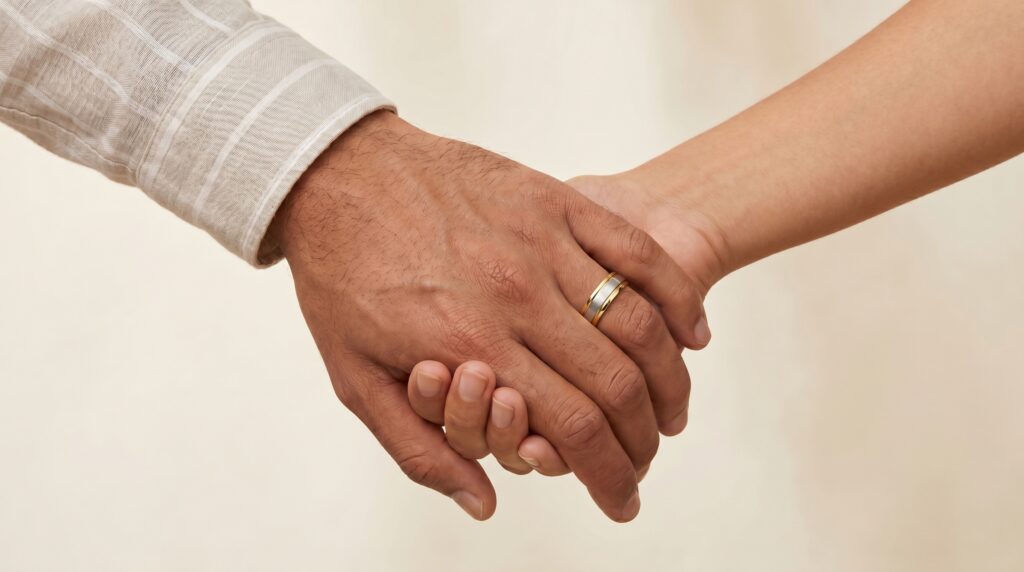
Should men’s wedding bands match their partner’s ring?
This is a matter of personal preference rather than a requirement. Some couples choose matching metals or finishes for a coordinated look, while others select bands independently based on each person’s style and daily needs. Neither approach is more correct than the other.