
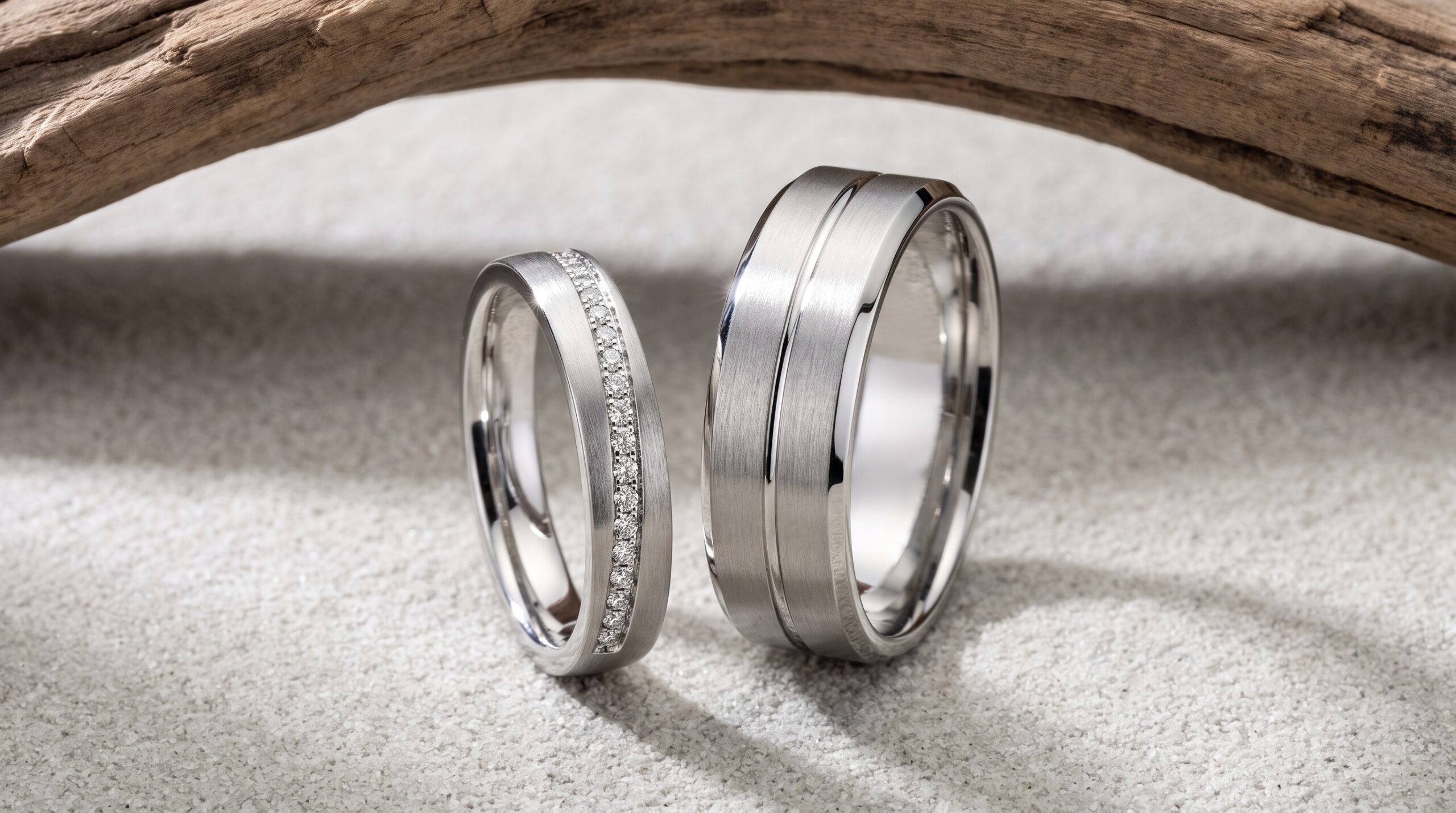
Platinum gets described as the premium wedding band metal more often than any other, but most buyers can’t say exactly why. Is it just white gold with a higher price tag? Does it scratch less, or just scratch differently? What does the “Pt950” stamp on the inside of the band actually mean?
Those questions matter because a wedding band gets worn daily for decades, and platinum’s price premium only makes sense if you understand what you’re actually paying for: purity, natural color, and a way of aging that most buyers have never had explained to them clearly.
What Is a Platinum Wedding Band?
A platinum wedding band marked Pt950 is 95% pure platinum, alloyed with a small percentage of other metals, commonly ruthenium, iridium, or cobalt, to give the metal enough workability and strength for jewelry manufacturing. That purity level is high compared to gold. An 18-karat gold ring, by contrast, is only 75% pure gold, with the rest made up of alloy metals that affect color and hardness.
Platinum shows up in wedding bands for a few concrete reasons. It’s naturally white, so it doesn’t rely on a surface treatment to look bright. It holds up to decades of daily wear without losing structural integrity. In high-purity grades, it’s generally well tolerated by sensitive skin. And because it’s one of the densest metals used in jewelry, a platinum band has a weight and solidity that’s immediately noticeable next to a gold ring of the same size.
Platinum vs White Gold: What Is the Difference?
This is the comparison that confuses the most buyers, because both metals look similar in a display case. The difference is what’s actually happening at the surface.
Platinum is white on its own. White gold is gold, an inherently yellow metal, alloyed with white metals like palladium or nickel to lighten its color, then usually finished with a rhodium plating to achieve the bright white look most buyers expect. That plating wears down over years of contact and friction, which means a white gold ring often needs to be replated periodically to keep its original brightness. Platinum doesn’t have this problem, because there’s no plating to wear through in the first place.
| Feature | Platinum | White Gold |
| Natural color | Naturally white | Usually plated for a bright white finish |
| Maintenance | No replating required | May need rhodium replating over time |
| Feel | Heavier | Lighter |
| Purity | Often Pt950 | Varies by karat |
| Skin sensitivity | Often suitable in pure grades | Depends on the specific alloy |
Skin sensitivity depends heavily on the exact alloy in either metal, so “platinum vs white gold” isn’t a clean win for platinum on every point. It’s a tradeoff between upfront cost and long-term upkeep.
Is Platinum Durable?
Platinum is well suited to daily wear, but the way it wears is different from gold in a way that surprises a lot of first-time buyers. When platinum gets scratched, the metal is displaced rather than removed. A small amount of material shifts to the side of the scratch instead of flaking off, which means the ring keeps nearly all of its original mass even after years of visible surface wear. Gold, by comparison, tends to lose small amounts of material with each scratch and polish cycle over time.
That said, durability still depends on how the ring is built. A very thin platinum band can bend or warp under enough pressure, so band thickness and construction matter as much as the metal itself.
The visible result of platinum’s wear pattern is called patina.
Platinum Patina: Should Buyers Embrace It or Polish It?
Patina is the soft, satin-like finish that develops on platinum’s surface after repeated contact and light scratching. It’s not damage. It’s the natural result of the metal being displaced rather than worn away, and it’s the same process that gives platinum its long-term structural stability.
Some buyers like patina. It gives the ring a lived-in, heirloom quality that a lot of people associate with a wedding band that’s actually been worn, not kept in a box. Others prefer the sharper look of a fresh polish and choose to have their ring professionally polished periodically to restore the original shine. Neither preference is wrong. It’s a matter of personal taste, and it’s worth deciding in advance so you’re not surprised when the ring’s finish starts to soften after the first year of wear.
Choose to let patina develop if you like a matte, understated look that changes gradually with the ring’s history. Choose periodic polishing if you prefer the ring to look close to new indefinitely and don’t mind scheduling occasional maintenance.
Comfort, Weight, and Everyday Wear
Platinum is denser than gold, which means a platinum band feels heavier than a gold band of the same dimensions. For some wearers that weight reads as premium and reassuring. For others, particularly people who have never worn a ring before, it takes a period of adjustment.
| Feature | Buyer Experience |
| Heavier weight | More substantial feel on the hand |
| Comfort-fit interior | Smoother fit for all-day wear |
| Density | Contributes to a stable, grounded feel |
| Narrower widths | Feel noticeably lighter than wide bands |
Comfort-fit construction, where the interior of the band is slightly rounded rather than flat, helps offset the weight by reducing friction against the finger. If you’re unsure whether the added weight will bother you, trying on a platinum band in person before ordering online is worth the extra step.
Platinum Wedding Band Quality: What to Look For
Platinum quality isn’t just about the metal’s purity. Two Pt950 rings can wear very differently depending on how they were made.
Look for the Pt950 hallmark stamped inside the band, along with disclosure of the specific alloy metals used, since ruthenium, iridium, and cobalt each affect hardness and workability slightly differently. Check that the band thickness is adequate for the ring’s width and intended use; an overly thin band, especially in a wide style, is more prone to bending. Look for smooth, consistent finishing with no visible tool marks, and confirm the weight is proportional to the ring’s stated dimensions. If the setting holds a diamond or other stone, the prongs and setting structure need to be secure enough to handle decades of daily wear.
Is Platinum Good for Diamond Wedding Bands?
Platinum is a standard choice for diamond settings because its strength holds prongs securely in place over long-term wear, and its natural white color doesn’t compete with or discolor the stone the way certain gold alloys can over time. But the metal alone doesn’t guarantee a secure setting. Craftsmanship still determines whether a diamond stays put for decades or works loose.
Before buying a platinum diamond wedding band, check the prong quality and count, confirm the stone sits securely with no visible gaps, verify the band thickness is sufficient to support the setting, check the setting height relative to the band, and look for a smooth, even finish around the stone. If the ring includes a diamond above a minimal carat weight, ask whether it comes with grading documentation from a recognized laboratory such as the Gemological Institute of America, which evaluates cut, color, clarity, and carat weight using standardized criteria.
Platinum vs Yellow Gold and White Gold
| Feature | Platinum | White Gold | Yellow Gold |
| Color | Natural white | White with plating | Warm yellow |
| Maintenance | Low | Replating may be needed | Occasional polishing |
| Weight | Heaviest | Medium | Medium |
| Hypoallergenic | Strong in pure grades | Depends on alloy | Depends on alloy |
| Style feel | Modern, refined | Classic white metal look | Traditional warmth |
The choice among the three usually comes down to color preference and how much long-term maintenance you’re willing to take on, not one metal being objectively superior. Yellow gold suits buyers who want warmth and tradition. White gold offers a similar bright white look to platinum at a lower upfront cost, with the tradeoff of periodic replating. Platinum costs more initially but requires the least ongoing maintenance to keep its natural color.
How to Care for a Platinum Wedding Band
Clean the ring with mild soap and warm water, using a soft cloth to avoid introducing new surface scratches during cleaning. Professional cleaning or polishing is optional and depends on whether you want to maintain a bright, fresh finish or let the patina develop naturally. Don’t mistake patina for damage or assume the ring needs repair because it’s developed a softer sheen; that’s expected wear, not a defect. When storing the ring, keep it separate from other jewelry to reduce surface contact that can accelerate scratching.
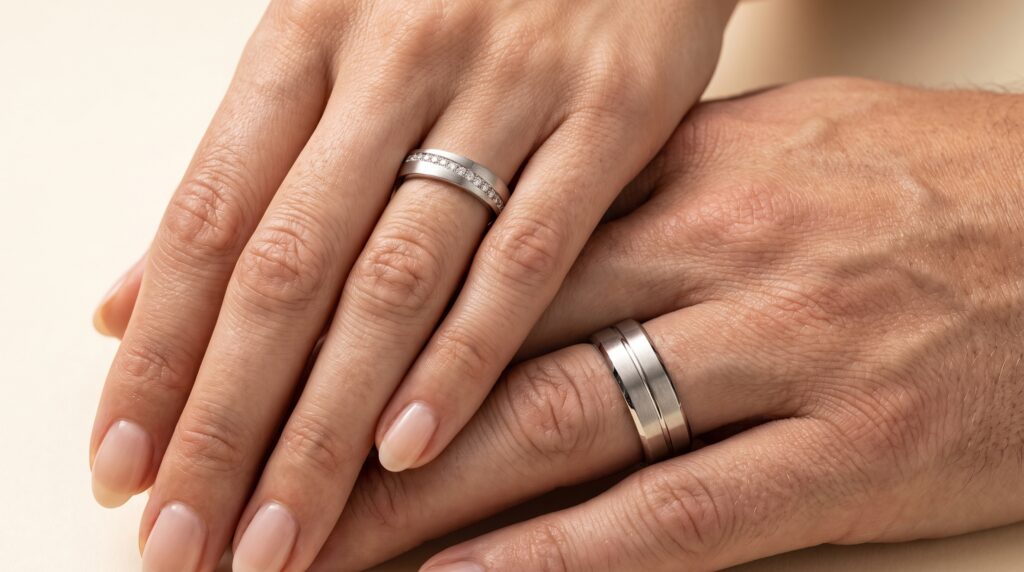
What to Check Before Buying Platinum Online
Before purchasing a platinum wedding band from an online retailer, confirm the ring is marked Pt950 and that the alloy composition is disclosed rather than left vague. Check that width and thickness are listed in millimeters, not just described as “standard,” and that the total ring weight is provided, since weight is one of the more reliable indicators of authentic platinum construction. Look for close-up images of the hallmark stamp. If the ring includes diamonds, ask whether certification is available. Review the return, resizing, and warranty policies before you buy, not after.
Be cautious of listings with no Pt950 hallmark, no stated metal purity, platinum priced suspiciously close to white gold (a sign the “platinum” may actually be a lower-purity alloy or plated substitute), claims of unusually lightweight platinum with no explanation for the reduced weight, or no dimensions listed at all.
Buyers with questions about acceptable disclosure standards for precious metal jewelry can also review the FTC’s Jewelry Guides, which set federal requirements for how metal purity and composition must be marketed and labeled.
A well-made Pt950 band with disclosed alloy composition, adequate thickness, and clear sizing information is the safest starting point for an online purchase. Anything vaguer than that is worth a direct question to the seller before you commit.
Frequently Asked Questions
What does Pt950 mean?
Pt950 indicates that the ring is 95% pure platinum by weight, with the remaining 5% made up of alloy metals such as ruthenium, iridium, or cobalt that add workability and strength. It’s the most common purity standard for platinum wedding bands and is typically stamped inside the band as a hallmark.
Is platinum better than white gold?
Neither metal is better in every respect. Platinum is naturally white and doesn’t require replating, which reduces long-term maintenance, but it costs more upfront and feels heavier. White gold is lighter and less expensive initially, but its bright white color usually comes from a rhodium plating that wears down and needs periodic replating to maintain. The right choice depends on whether you’d rather pay more now for lower upkeep or less now with occasional maintenance later.
Does platinum scratch?
Yes. Platinum is durable, but it’s not scratch-proof. What makes it different from gold is what happens when it does scratch: the metal is displaced rather than removed, so the ring retains nearly all of its original mass even as the surface develops fine marks over time. That accumulated surface texture is the patina discussed above.
What is platinum patina?
Patina is the soft, satin-like finish that develops on a platinum ring’s surface from years of normal contact and light scratching. It’s a natural result of how platinum wears, not a sign of damage. Some buyers prefer to let it develop as a marker of the ring’s history, while others have the ring periodically polished to restore a brighter finish.
Can platinum wedding bands be resized?
Yes, platinum can be resized by a qualified jeweler, though the process requires more heat and expertise than resizing gold due to platinum’s higher melting point and density. It’s generally more resource-intensive than resizing a gold ring, so factor potential resizing costs into your decision if you’re not fully confident in your size.
Is platinum hypoallergenic?
High-purity platinum, such as Pt950, is generally well tolerated by people with sensitive skin, since the metal itself is not a common allergy trigger. Reactions are more likely tied to the specific alloy metals used in the remaining 5%, so buyers with known metal sensitivities should ask which alloy metals are present rather than assuming all platinum rings are automatically safe.
Does platinum need rhodium plating?
No. Platinum is naturally white, so it doesn’t require rhodium plating to achieve its color, unlike white gold, which typically relies on a rhodium surface treatment for its bright white appearance. This is one of the main practical differences between the two metals and a major reason platinum requires less ongoing maintenance.
Is platinum too heavy for daily wear?
Platinum is heavier than gold at the same ring dimensions, and some first-time ring wearers need an adjustment period to get used to the added weight. Whether it feels “too heavy” is subjective. Buyers who want a substantial, noticeable ring on their hand often prefer the weight, while those who dislike the feel of jewelry may find a narrower band or a different metal more comfortable.
Is platinum good for diamond wedding bands?
Platinum is a standard and reliable choice for diamond settings because its strength secures prongs over decades of wear and its natural white color doesn’t discolor or compete with the stone. The metal alone doesn’t guarantee a secure setting, though; the quality of the prong work and setting construction matters just as much as the choice of platinum itself.
How do I know if a platinum ring is authentic?
Check for a Pt950 hallmark stamped inside the band, along with disclosed alloy composition and listed weight and dimensions. Authentic platinum rings are noticeably heavier than white gold rings of the same size, so unusually light weight for the stated dimensions is a warning sign. Pricing that sits suspiciously close to white gold is another indicator worth questioning, since platinum’s material cost alone typically puts it well above white gold at comparable sizes.