
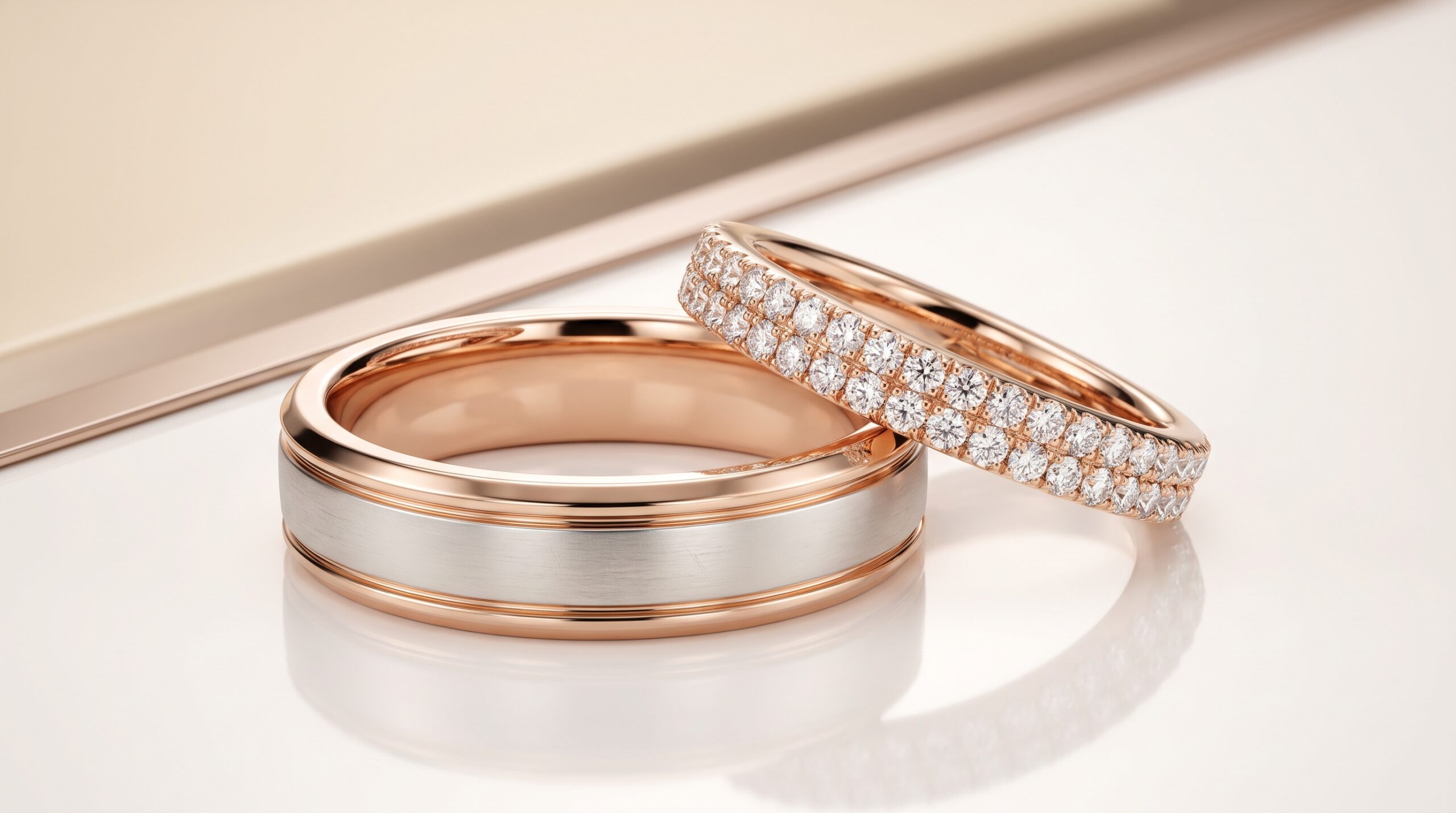
Rose gold’s pink tone isn’t a coating and it isn’t a trend color mixed in for effect. It comes from copper, alloyed directly into the gold, and how much copper goes in determines whether the ring reads as a deep, warm blush or a paler rose. That distinction matters more than most buyers realize, because it’s tied directly to karat, and karat affects color, strength, and how the ring wears over years of daily use.
This guide covers what rose gold actually is, how 10K, 14K, and 18K compare, whether the color changes with wear, and what to check before buying online.
What Is a Rose Gold Wedding Band?
Rose gold is made by alloying pure gold with copper, and often a smaller amount of silver, to produce its signature pink or blush tone. Pure gold on its own is yellow, not pink. The color comes entirely from the copper content, which is why two rings marked with the same karat can still look slightly different depending on the exact alloy formula the manufacturer uses.
Gold alone, at 24K purity, is too soft for a wedding band worn every day. Copper doesn’t just create rose gold’s color, it also strengthens the alloy, which is part of why rose gold wedding bands can hold up well to daily wear when the karat and construction are appropriate. According to GIA’s comparison of yellow gold and rose gold, the copper content in rose gold alloys is what distinguishes it from yellow gold, which typically uses a different mix of alloy metals to achieve its warmer, more traditional tone.
What Does Karat Mean in Rose Gold?
Karat measures how much of the alloy is pure gold, out of 24 total parts. The remaining portion in rose gold is largely copper (with silver sometimes included), and that ratio is what determines both the color intensity and the durability of the finished ring.
| Karat | Gold Content | Typical Color | Durability | Best For |
| 10K | Lower gold content | Deeper, more saturated copper tone | Strongest of the three | Budget-conscious or durability-focused buyers |
| 14K | Balanced gold content | Noticeable, warm rosy tone | Strong daily-wear option | Everyday wedding bands |
| 18K | Higher gold content | Softer, lighter blush tone | Softer, needs more care | Heirloom pieces or lower-impact wear |
It’s worth noting the inverse relationship here compared to yellow gold: in rose gold, lower karats often produce a deeper, more saturated color because they contain more copper, while higher karats shift toward a softer blush because they contain more gold relative to copper. Buyers expecting the same “higher karat equals richer color” pattern from yellow gold shopping can end up surprised.
10K vs 14K vs 18K Rose Gold Wedding Bands
10K rose gold has the highest proportion of copper relative to gold, which gives it the strongest structure of the three karats and typically the deepest, most saturated copper-pink tone. It’s also the most affordable option. Buyers focused on scratch resistance and daily wear durability over maximizing gold content often find 10K a practical starting point, even though it may feel less “premium” to buyers who associate higher karat numbers with higher quality.
14K balances gold content and copper in a way that produces a clearly rosy, warm tone while maintaining enough hardness for daily wear. It’s the karat most often recommended for wedding bands specifically because it doesn’t require the wearer to trade off durability for color, or vice versa, the way 10K and 18K each do to different degrees.
18K contains the most gold of the three standard karats, which produces a softer, lighter blush tone rather than the deeper copper-pink of 10K or 14K. That higher gold content also means less copper for structural strength, so 18K rose gold is softer and more prone to scratching or bending in thin designs. Buyers drawn to 18K for its subtler color should look for adequate band thickness to offset the reduced hardness.
Does Rose Gold Change Color Over Time?
Yes, to some degree, and that’s expected rather than a sign of a defective ring. Because copper is a reactive metal, rose gold can develop a patina over years of wear, meaning the surface tone deepens or shifts slightly from its original color as the metal responds to skin contact, air, and daily handling. This is a surface-level change, not damage, and it doesn’t mean the ring is deteriorating structurally.
Whether patina appeals to you is a matter of preference. If you like the idea of a ring that develops character over time, similar to how leather softens and changes with use, letting the patina develop naturally is a reasonable choice. If you’d rather the ring look close to its original tone indefinitely, periodic polishing reduces the visible patina and restores a brighter finish, though it won’t prevent the copper from continuing to react over time.
No rose gold ring should be marketed as a color that will never shift at all. Some variation over years of wear is part of owning copper-alloyed jewelry.
Is Rose Gold Durable Enough for Daily Wear?
Rose gold, especially at 14K, is generally suitable for daily wear. Copper’s presence in the alloy is actually an advantage here: it makes rose gold somewhat harder than yellow gold at the same karat, since copper is a harder metal than the silver often used in yellow gold alloys.
| Durability Factor | Why It Matters |
| Karat | Lower karat means more copper and generally more strength |
| Copper content | Adds both color and structural hardness |
| Band thickness | A thicker band resists bending better, especially in 18K |
| Lifestyle | Manual work and frequent hand contact increase wear |
| Finish | Polished surfaces show scratches more visibly than brushed finishes |
As with any gold alloy, construction quality matters as much as the karat number on the label. A well-made 14K band with adequate thickness will outlast a poorly constructed 18K band of the same nominal quality.
Rose Gold vs Yellow Gold vs Platinum
| Feature | Rose Gold | Yellow Gold | Platinum |
| Color | Pink or blush tone | Warm yellow tone | Natural white tone |
| Main alloy influence | Copper | Copper and silver | Platinum group alloy metals |
| Style feel | Romantic, works as both vintage and modern | Classic, traditional | Refined, substantial |
| Durability | Karat dependent, copper adds hardness | Karat dependent | Very strong, retains mass when scratched |
| Maintenance | May develop patina from copper | Polish as needed | Develops a natural patina |
| Skin sensitivity | Copper sensitivity possible in some wearers | Depends on specific alloy | Often suitable in high-purity grades |
Rose gold isn’t a lesser or trendier version of yellow gold or platinum. It’s a genuinely different alloy with its own color chemistry, and the choice among the three comes down to which tone and maintenance profile fits you, not which one ranks higher in some abstract sense.
Comfort, Fit, and Resizing
Rose gold wears comfortably for most people, and a comfort-fit interior (a slightly rounded rather than flat inside edge) makes any karat easier to wear over long stretches. Like other gold alloys, rose gold is generally easier to resize than rigid alternative metals such as tungsten, since a jeweler can adjust the band using standard tools within a reasonable size range.
Before buying, it helps to ask a few direct questions: is the band comfort-fit or standard-fit, what width actually feels right on your hand, is the karat you’re considering appropriate for how often and how hard you’ll wear the ring, can it be resized if your size changes, and is the band thick enough to support the karat’s softness over time, particularly for 18K.
Is Rose Gold Good for Diamond Wedding Bands?
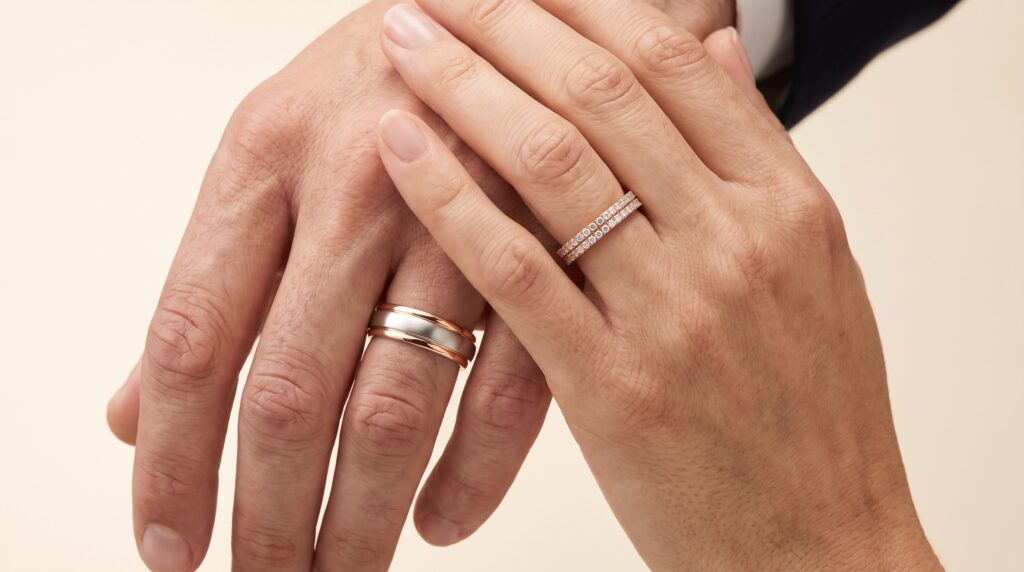
Rose gold pairs well with diamonds, and the warm pink tone creates a visual contrast that makes white diamonds stand out more distinctly than they do against yellow gold, where the warm tones can blend together more. That contrast is a stylistic reason rose gold has become popular for diamond bands specifically, beyond its appeal as a solid band metal.
As with any metal, the setting construction determines whether the diamond stays secure over decades, not the choice of rose gold itself. Check that prongs are secure with no visible gaps, confirm the band has enough thickness around the setting (especially important with softer 18K rose gold), and look for smooth, even finishing. For diamonds above a minimal carat weight, ask about grading documentation from a recognized laboratory such as the Gemological Institute of America, which evaluates cut, color, clarity, and carat weight using standardized criteria.
Rose Gold and Skin Sensitivity
Copper is the alloy metal responsible for rose gold’s color, and some people are sensitive to copper, though reactions are less common than sensitivity to nickel, which sometimes appears in white gold alloys. Rose gold shouldn’t be marketed or assumed to be automatically hypoallergenic. Buyers with known metal sensitivities should ask specifically what the full alloy composition is, not just the karat number.
Before buying if you have sensitive skin, ask what metals make up the alloy beyond gold and copper, whether the copper percentage is disclosed, whether nickel is present in the mix, whether the karat is clearly marked on the product listing, and what the return policy is if the ring causes irritation after wear.
How to Care for a Rose Gold Wedding Band
Clean the ring weekly with mild soap and warm water, using a soft cloth rather than an abrasive one to avoid introducing new scratches. Polish periodically if you prefer to minimize visible patina and keep the color closer to its original tone. Avoid chlorine exposure from pools and hot tubs, since it can react with the copper in the alloy over repeated contact. Periodic professional servicing catches loose settings or thinning bands before they become bigger problems, and storing the ring separately from other jewelry reduces surface scratching from contact.
What to Check Before Buying Rose Gold Online
Confirm the karat is clearly listed with a visible 10K, 14K, or 18K hallmark stamped inside the band. Alloy composition, including copper content, should be disclosed rather than left vague, both for color expectations and for skin sensitivity reasons. Look for images that show shade differences between karats if the retailer sells multiple options, since 10K, 14K, and 18K rose gold can look meaningfully different side by side. Width and thickness should be listed in millimeters. Review return, resizing, and warranty policies before ordering.
Be cautious of listings with no visible karat hallmark, no alloy or copper content details, no indication of how color might vary between karats, missing width or thickness information, vague durability claims with no specifics, or promises that the color will never change at all, which isn’t accurate for a copper-alloyed metal.
A rose gold band chosen with the right karat for your color preference and lifestyle, adequate thickness, and clear alloy disclosure will hold up well and age the way copper-alloyed jewelry is expected to age. That gradual shift in tone is part of what rose gold is, not a flaw to avoid.
Frequently Asked Questions
Is rose gold good for wedding bands?
Yes. Rose gold is a genuine gold alloy, strengthened and colored by copper, and it holds up well to daily wear, particularly at 14K. It’s a practical choice for buyers who want a warm, distinctive color that differs from both traditional yellow gold and white metals like platinum or white gold.
Is 14K or 18K rose gold better for daily wear?
14K is generally the more practical choice for daily wear because its higher copper content adds strength compared to 18K, which contains more gold and is correspondingly softer. 18K offers a softer, more subtle blush color that some buyers prefer, but it benefits from thicker band construction and more careful wear to offset its reduced hardness.
Does rose gold change color over time?
Some color shifts are normal and expected. Copper, the metal responsible for rose gold’s pink tone, can react to skin contact, air, and daily handling over years of wear, developing a patina that deepens or slightly shifts the original color. This isn’t damaged. It’s part of how copper-alloyed metal ages, and periodic polishing can reduce the visible effect if you prefer the ring to stay closer to its original tone.
Can rose gold wedding bands be resized?
Yes, rose gold is generally as resizable as other gold alloys, meaning a jeweler can adjust the band within a reasonable range using standard tools. This makes it more flexible than rigid metals like tungsten, which can’t be resized at all.
Can rose gold cause skin sensitivity?
It’s possible for some wearers, since copper is a known allergen for a portion of the population, though less commonly than nickel. Buyers with known metal sensitivities should ask about the full alloy composition, including copper percentage and whether nickel is present, rather than assuming rose gold is automatically safe for sensitive skin.
Is rose gold more durable than yellow gold?
At the same karat, rose gold is often somewhat harder than yellow gold, because copper, rose gold’s primary alloy metal, is generally harder than the silver commonly used in yellow gold alloys. The difference isn’t dramatic, and other factors like band thickness and daily wear conditions matter just as much as the alloy type itself.
Does rose gold look good with diamonds?
Yes. Rose gold’s warm pink tone creates a visible contrast against white diamonds that makes the stones stand out more distinctly than they sometimes do against yellow gold. The setting construction, including prong security and band thickness around the stone, determines long-term durability regardless of which metal color you choose.
How do I care for a rose gold wedding band?
Clean it weekly with mild soap and warm water using a soft cloth, polish periodically if you want to minimize visible patina, and avoid chlorine exposure from pools or hot tubs, which can react with the copper content over time. Periodic professional servicing helps catch loose settings early, and storing the ring separately from other jewelry reduces surface scratching.
Is rose gold vintage or modern?
Both, depending on the setting and design. Rose gold has historical roots in early 19th and 20th century jewelry, which gives it a vintage association for some buyers, but it’s also widely used in contemporary minimalist and modern designs. The metal’s color doesn’t lock it into one style category; the ring’s overall design does that.
Can rose gold be stacked with platinum or yellow gold?
Yes, mixed-metal stacking is common and doesn’t create any structural issue, since each ring is an independent piece. Whether rose gold, platinum, and yellow gold look cohesive together stacked is a matter of personal style preference rather than a practical constraint, and many wearers pair rose gold wedding bands with white metal engagement rings or vice versa without any wear-related concerns.