
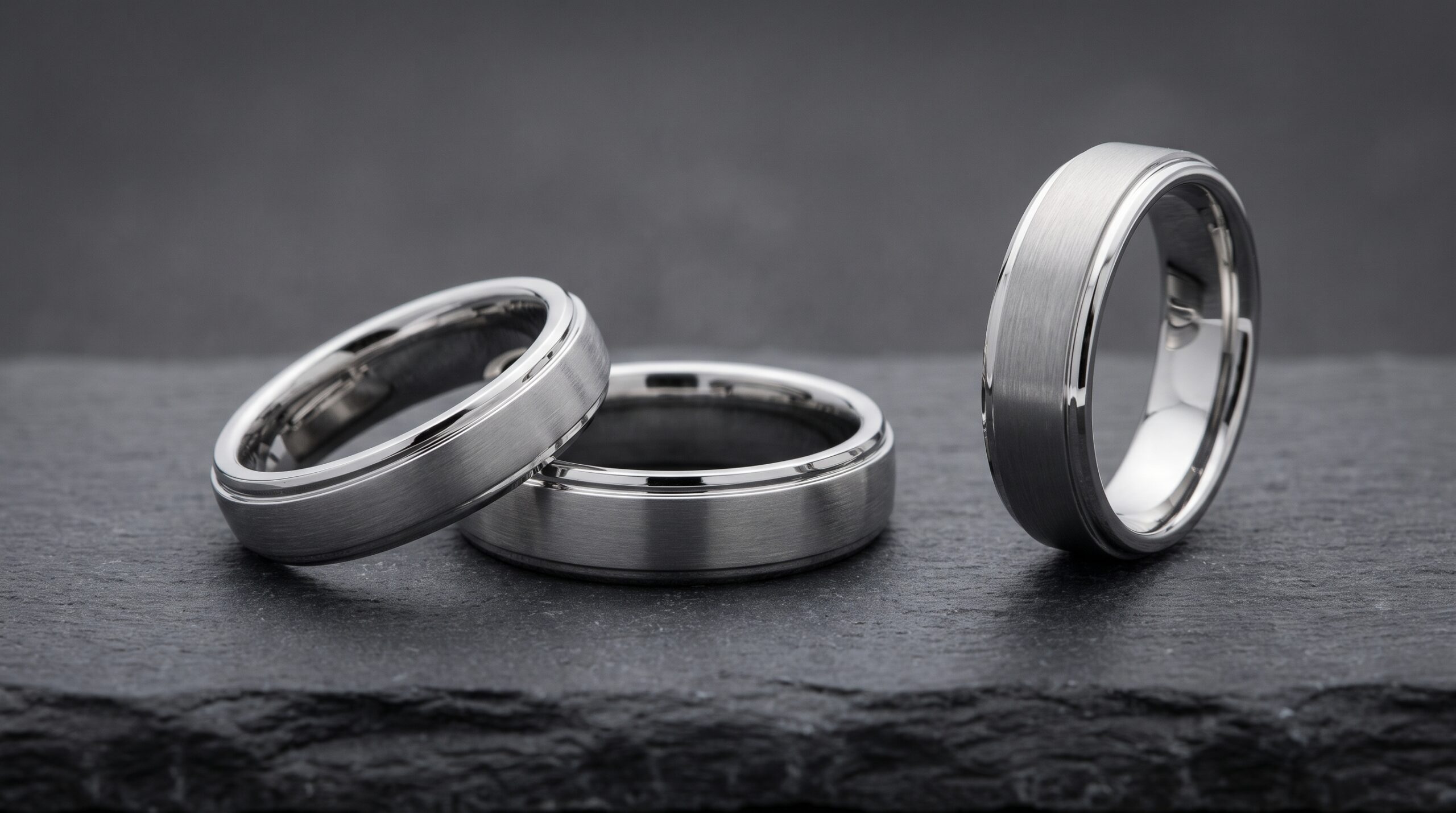
A wedding band worn behind a desk faces a different life than one worn on a construction site, in an operating room, or under a mechanic’s gloves. Impact, chemicals, friction, moisture, and machinery all put demands on a ring that go well beyond normal daily wear, and the ring that looks perfect in a jewelry case isn’t automatically the one that will hold up, or keep you safe, on the job.
Choosing a band for active work isn’t about finding the single toughest material available. It’s about matching the ring, the design, and the fit to what your hands actually do all day.
What Makes a Wedding Band Suitable for Active Jobs?
Working hands expose a ring to conditions most jewelry was never designed around: repeated impact against tools and surfaces, friction from gloves and equipment, chemical exposure, moisture, and in some cases real safety risk if the ring catches on something moving. A ring that would last decades on a desk job might scratch, crack, or need replacing far sooner under those conditions, and in some jobs a metal ring introduces a genuine hazard that a silicone one avoids entirely.
The priorities that actually matter for active work are safety, durability, comfort, a low-profile design that doesn’t snag, a material suited to the specific conditions of the job, and a ring that’s easy to clean and maintain without special handling. Style still matters, but it’s the last box to check, not the first.
Best Wedding Band Materials for Active Jobs
Titanium is lightweight and holds up well to daily physical activity, which makes it a common choice among athletes, outdoor workers, and anyone who wants a band that doesn’t feel heavy or restrictive during movement. It’s also naturally corrosion-resistant, so exposure to sweat, water, or humid conditions isn’t a concern the way it can be with some other metals. The tradeoff is that titanium scratches more easily than harder metals like tungsten, and resizing it is difficult, so getting an accurate size matters more than it would with gold.
Tungsten carbide resists scratches better than almost any other ring material, holding its polished finish through years of contact with tools and surfaces. What it doesn’t do well is absorb a hard direct impact. Tungsten is a brittle material, and a strong enough blow, getting caught in machinery or striking a hard surface, can crack or shatter it. It also can’t be resized. For lower-impact heavy-use jobs where scratch resistance matters more than impact risk, tungsten works well. For jobs involving machinery or repeated hard impact, it’s a real risk to weigh.
Platinum is a durable precious metal that holds up to daily wear and, in high-purity grades, is often suitable for sensitive skin. It has a premium weight and feel that some wearers value, and unlike plated metals, its white color doesn’t wear away over time. It’s heavier than titanium or gold, which some active wearers notice during movement, and it does show visible surface scratches over years of use, even though the metal retains its structural mass because scratches displace rather than remove material.
Silicone rings are flexible, non-conductive, and typically designed to break away under enough pressure rather than trap a finger, which is part of why they’re common in electrical work, healthcare, machinery operation, and athletics. They don’t carry the traditional look of a metal band, and they tend to wear out faster than metal, needing replacement every year or two with regular use. For jobs where a metal ring poses a genuine safety risk, silicone is a legitimate, non-lesser option, not a compromise.
Gold, particularly 14K, offers the classic wedding band look with reasonable durability for light to moderate activity. It’s softer than titanium or tungsten, which means it scratches and dents more easily under the kind of repeated contact common in physically demanding jobs. It remains a practical choice for active lifestyles that don’t involve heavy manual labor or frequent tool use.
| Material | Best Strength | Main Limitation | Best For |
| Titanium | Lightweight durability | Scratches, limited resizing | Athletes, outdoor workers |
| Tungsten | Scratch resistance | Brittle, not resizable | Lower-impact heavy-use wearers |
| Platinum | Long-term structural durability | Heavy, shows scratches | Professionals wanting precious metal |
| Silicone | Safety and flexibility | Less traditional, wears out faster | Electricians, healthcare, workouts |
| 14K Gold | Classic look, resizable | Softer, dents more easily | Light to moderate activity |
Safety First: When a Metal Ring May Not Be the Best Choice
Some work environments create real risk around wearing any metal ring, not because metal rings are inherently dangerous, but because certain jobs involve conditions where a ring can catch, conduct electricity, or interfere with equipment. This isn’t a reason to avoid a wedding band altogether. It’s a reason to think about which material fits the specific hazards of your work.
Consider silicone, or removing your ring during work hours, if you work directly with electrical systems (metal conducts electricity, which silicone does not), operate heavy machinery with moving parts a ring could catch on, wear tight-fitting gloves where a metal band creates pressure or snag points, regularly lift or handle heavy equipment, work in healthcare settings with frequent hand-washing and glove changes, or train and compete athletically where impact or grip is involved.
None of this makes a metal wedding band the wrong choice for most jobs. It’s a short list of situations where the practical risk is worth weighing seriously.
Scratch Resistance vs Impact Resistance
These are two different properties, and confusing them leads to real disappointment. Scratch resistance measures how well a material resists surface marks from contact and friction. Impact resistance measures how well it handles a sudden, forceful blow. A material can be excellent at one and poor at the other.
Tungsten is the clearest example: extremely scratch resistant, but brittle enough to crack under a hard direct impact. Titanium runs the opposite direction, showing surface scratches more readily but flexing or denting rather than cracking when it takes a hit. Gold scratches and bends relatively easily compared to either. Platinum develops visible wear marks over time but retains its structural integrity well because scratched material displaces rather than flakes away.
For active jobs specifically, impact resistance often matters more than scratch resistance, since scuffed but intact is a better outcome than shattered.
Why Low-Profile Designs Work Best for Active Jobs
A raised setting or prominent gemstone looks striking in a store, but it’s also a snag point and a weak spot under repeated impact. Raised settings can catch on gloves, tools, and equipment. Gemstones set into an active-wear ring are more likely to loosen over years of repeated shock than the same setting on a ring that spends its life at a desk. Simple bands are also easier to clean thoroughly, since there are no crevices for grime or chemicals to collect in.
For active work, favor plain bands, matte or brushed finishes that hide fine scratches better than high polish, beveled rather than sharp edges, comfort-fit interiors, and if you want a diamond accent, only a low-profile setting with genuinely secure construction. Avoid tall settings, delicate pavé work, large raised stones, sharp edges, and intricate openwork designs, all of which introduce more points of potential damage or snagging without adding practical durability.
Comfort, Fit, and Sizing for Active Wear
Hands swell during physical work and exercise, sometimes significantly, which means a ring that fits comfortably first thing in the morning can feel tight by afternoon. This matters more for active jobs than for sedentary ones, and it’s worth planning for rather than discovering the hard way.
Get professionally sized rather than guessing or using an old ring as a reference. Try the ring on at different times of day if possible, since finger size can shift. Account for how your hands typically respond to work-related swelling. If you regularly wear gloves, test the ring’s comfort under gloves before committing to a width. Choose a width that feels stable without restricting circulation or movement, and review the retailer’s resizing options before buying in case your first choice doesn’t fit as expected once you’re wearing it daily.
| Fit Factor | Why It Matters |
| Finger swelling | Can make a well-fitted ring feel tight during work |
| Ring width | Wider bands generally feel tighter at the same stated size |
| Comfort-fit | Rounded interior reduces pressure points during long wear |
| Gloves | Affects whether a given width and profile stay practical |
| Weight | Heavier metals are more noticeable during repetitive movement |
Which Wedding Band Is Best for Your Job?
| Job Type | Recommended Options | Why |
| Healthcare | Silicone, titanium, low-profile gold | Glove-friendly, easy to clean, comfortable for long shifts |
| Construction | Silicone, titanium, tungsten with caution | Balances durability against impact risk from tools and materials |
| Mechanics | Silicone, titanium, tungsten with caution | Frequent tool contact and grease exposure favor low-maintenance materials |
| Electricians | Silicone | Non-conductive, avoiding the specific risk metal rings pose around electrical work |
| Athletes | Silicone, titanium | Lightweight and, in silicone’s case, designed to break away under pressure |
| Office work plus active hobbies | Titanium, platinum, 14K gold | Balances everyday style with reasonable durability for occasional activity |
| Outdoor work | Titanium, silicone | Lightweight and resistant to moisture and corrosion |
These are starting points, not fixed rules. Someone doing occasional heavy lifting in an otherwise office-based role has different needs than someone doing manual labor eight hours a day, even within the same general job category.
Care and Maintenance for Active Job Wedding Bands
Clean the ring weekly with mild soap and a soft brush to remove buildup from sweat, dirt, and daily contact. Inspect it periodically for cracks, loosened stones, or scratches deep enough to catch on fabric or skin, since active-wear rings accumulate wear faster than rings worn in lower-impact settings. Store the ring in a soft pouch when it’s not being worn rather than tossing it loose in a bag or drawer. Avoid abrasive cleaners that can dull finishes or, on plated metals, wear through the surface faster than normal use would. Remove the ring whenever your specific work situation calls for it on safety grounds. If the band is a precious metal or includes a diamond setting, schedule periodic professional inspection to catch problems like loosening prongs before they become bigger issues.
What to Check Before Buying Online
Confirm the material type and full composition are disclosed, not just a general category like “tungsten” without alloy or binder details. If Mohs hardness is listed, use it as one data point among several rather than the deciding factor, since hardness alone doesn’t predict impact resistance. Ask about impact behavior specifically for materials like tungsten. Check resizing limitations before buying, since some materials can’t be adjusted at all. Confirm weight, width, and thickness, along with whether the band is comfort-fit. If hypoallergenic claims are made, ask what they’re based on rather than taking the claim at face value. Review warranty or replacement policy details, and confirm there’s a clear return policy in case the sizing doesn’t work out once you’re wearing it during actual work.
Be cautious of vague “indestructible” claims (no ring material is), listings with no sizing guidance, no disclosed material composition, no warranty or replacement information, raised gemstone settings marketed for heavy manual work without any caveat, or no return policy covering fit issues.
The right wedding band for active work is the one that matches your specific job’s risks and your daily comfort needs, not the one with the highest hardness rating on a spec sheet. A simple, well-fitted band in a material suited to your actual conditions will serve you better than the most durable-sounding option on paper.
Frequently Asked Questions
What is the best wedding band for active jobs?
There’s no single best material across all active jobs, since the right choice depends on the specific risks involved. Titanium works well for general active lifestyles and outdoor work because it’s lightweight and corrosion-resistant. Silicone is often the safer choice for electrical work, healthcare, or situations involving machinery, because it’s non-conductive and typically designed to break away under pressure. The best band is the one matched to your actual daily conditions rather than the one marketed as toughest overall.
Are titanium rings good for working hands?
Yes, for many active jobs. Titanium is lightweight, strong, and naturally resistant to corrosion from sweat or moisture, making it comfortable for daily physical activity. It does scratch more easily than harder materials like tungsten, and it’s difficult to resize, so getting an accurate size upfront matters more than it would with a more adjustable metal.
Can tungsten rings crack?
Yes. Tungsten carbide resists scratches exceptionally well, but that hardness comes with brittleness. A hard direct impact, such as getting caught in machinery or striking a hard surface with force, can crack or shatter a tungsten ring. It’s a reasonable choice for jobs where scratch resistance matters more than impact risk, but less ideal for work involving machinery or frequent hard impact.
Are silicone wedding bands safer for work?
For certain jobs, yes. Silicone is non-conductive, which matters directly for electrical work, and it’s typically designed to break away under pressure rather than trap a finger, which is relevant for machinery operation and some athletic activities. It’s not inherently “safer” in every context, but for the specific hazards common in electrical, medical, and high-impact athletic settings, it offers practical advantages metal rings don’t.
Should healthcare workers wear metal rings?
It depends on the specific role and workplace policy, since healthcare settings often involve frequent glove changes, hand-washing, and infection control considerations that can make a low-profile or silicone option more practical than a metal ring with a raised setting. Many healthcare workers do wear metal bands, particularly simple, low-profile titanium or gold designs, but it’s worth checking your specific workplace’s policies and considering how a ring interacts with frequent glove use.
What wedding band is best for electricians?
Silicone is generally the most practical choice for electricians specifically because metal conducts electricity and a metal ring introduces a real safety consideration around electrical work. This is one of the clearer cases where the job’s specific hazard points toward a particular material rather than requiring extensive comparison between options.
Can active workers wear diamond wedding bands?
It’s possible, but the setting matters more than the general idea of “diamonds vs no diamonds.” A secure, low-profile setting with a smaller stone close to the band’s surface holds up far better under active conditions than a tall or raised setting, which is more prone to snagging and to the stone loosening under repeated impact. If a diamond band matters to you, prioritize setting security and profile height over stone size.
How should I size a ring for physical work?
Get professionally sized rather than estimating, and if possible, try the ring on at different times of day, since hands can swell during work or exercise. Account for how your body typically responds to physical activity, and if you regularly wear gloves, check the ring’s comfort under gloves before finalizing your choice. Confirm the retailer’s resizing or return policy in case the fit doesn’t hold up once you’re wearing the ring during actual work conditions.
Which ring material scratches least?
Tungsten carbide is the most scratch-resistant material commonly used in wedding bands, holding its polished finish through years of contact that would visibly mark softer metals. Scratch resistance isn’t the same as overall durability, though, since tungsten’s hardness also makes it more prone to cracking under hard impact than more flexible materials like titanium.
Should I have a separate work ring?
It’s a reasonable option worth considering, particularly for jobs involving genuine safety risk or heavy daily wear that would put unusual stress on a primary wedding band. A simple silicone or low-cost metal band worn specifically for work protects your primary ring from daily wear and, in higher-risk jobs, may be safer than wearing your main band at all. It doesn’t diminish the meaning of your wedding band to keep it out of harm’s way during work hours.